.svg)


Frends
Quick facts
Frends (Enterprise integration platform (iPaaS)
November 2024 – Present
Nordics (primary), UK, DACH, Benelux
Fractional marketing leadership covering strategy, ABM, performance marketing, and sales-marketing alignment
Where Frends started
Frends is a European iPaaS platform that helps enterprises integrate systems and modernize workflows, particularly in regulated industries like energy, manufacturing and public sector.
The product is strong. The team is capable. But demand generation wasn't quite keeping pace with where the company wanted to go.
This is a familiar place for growing B2B companies. Marketing activity was high, but unfocused. Campaigns ran across multiple markets without clear prioritization. And while both sales and marketing were working hard, they weren't yet working from the same playbook.
Interest was being generated, but there wasn't a clean system to capture and convert it.
Frends needed a partner who could bring structure where it was missing and build something the internal team could eventually run themselves.
Why we chose to focus first
The instinct in B2B marketing is usually to go broad. More markets, more industries, more campaigns. We understand that pressure. But we've also seen what happens when you spread effort thin: you end up busy everywhere and effectively nowhere.
Working with Frends' leadership and sales teams, we identified two industries where there was real traction: municipalities (public sector) and energy. Rather than chase every possible vertical, we asked: where can we build proof fastest?
"Frends had a lot of moving parts. Multiple markets, multiple channels, and real ABM potential that hadn't been unlocked yet. Our first step was defining the frameworks, tighten operations, make performance visible. From there, we focused on bringing marketing and sales into one motion instead of two silos. That foundation is what made the results possible."
—Daria Kalinina, Performance lead, The Growth Syndicate
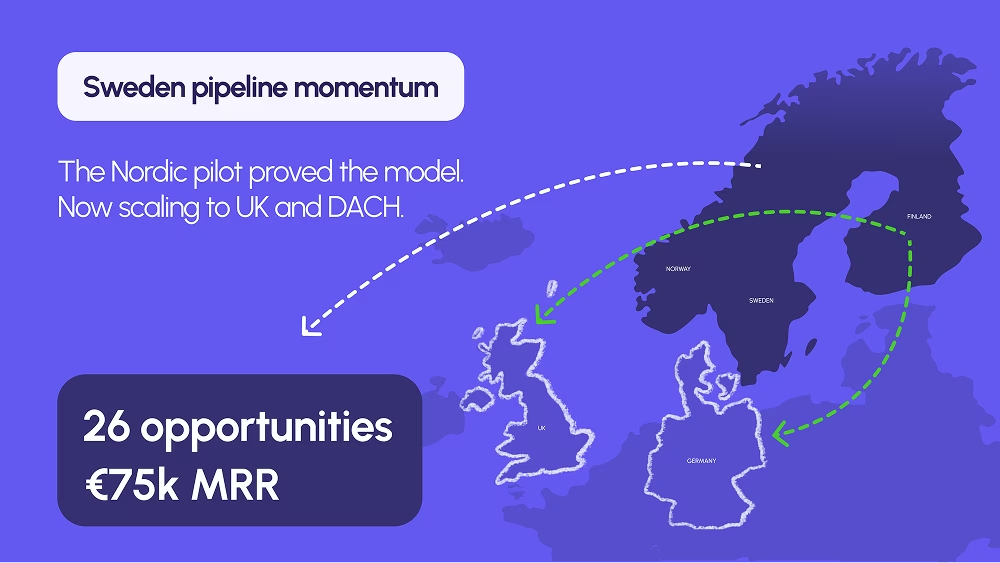
Our goal here wasn’t to limit ambition, but rather to earn the right to scale by showing the model works first. If we could make ABM succeed in Sweden for these two sectors, we'd have a blueprint to replicate across the UK, DACH, and beyond.
How we built the engine
The market for enterprise integration is saturated.
Every decision-maker in our target accounts was already getting bombarded with ads asking them to "book a demo" or "download a whitepaper." Another direct-response campaign would just add to the noise.
So we started with a different assumption: earning attention matters more than demanding it. We built the ABM motion around thought leadership content that looked and felt organic.
Posts from Frends' senior leaders addressing real pain points in municipalities and energy. The goal wasn't immediate conversion. It was to be genuinely useful.
This content served as the entry point. From there, we built a re-engagement loop:
- Thought leadership reaches target accounts and generates engagement
- Re-engagement ads reach anyone who interacted with the initial content
- Event campaigns warm accounts before industry events, then follow up afterward
- Search capture catches prospects when they're ready to learn more directly
We validated this with data. We tracked accounts that engaged with our LinkedIn campaigns and watched their subsequent behavior. This is where we spotted an interesting pattern: people engage with thought leadership, see follow-up content around events, then search for Frends directly. The multi-touch journey we hypothesized was actually happening.
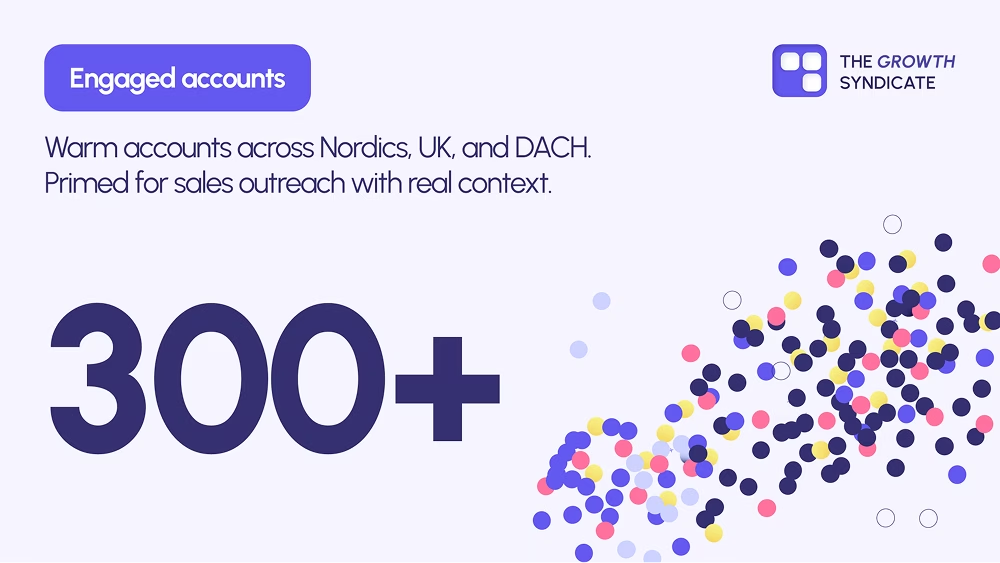
"ABM turned intent into pipeline. By focusing on the right industries and accounts, marketing created 24 direct opportunities and warmed 300+ target companies. Sales now enters conversations with real context instead of cold intros. It's the clearest link we've seen between marketing and reliable pipeline."
—Jukka Rautio, CEO, Frends
What we learned along the way
We tested a lot. Single-image ads, the standard LinkedIn format, didn't work as cold entry points. They only performed in retargeting and event-related contexts.
What did work: thought leadership posts that felt native to the platform. Content that addressed specific pain points rather than promoting Frends directly.
In a saturated market, you don't win by shouting louder. You win by being helpful first.
We also found nuance in language targeting. In the Nordics, many professionals set their LinkedIn profile to English even if they're native speakers of the local language. If you only target local-language profiles, you miss a significant portion of your audience. These details matter.
Bringing sales and marketing together
The most differentiated part of our approach wasn't a campaign. It was the process.
We created an engagement file: a shared document where we export every account that has interacted with our ads, broken down by impressions, engagements, and region. Sales reviews this weekly and marks each account as useful or not, reached out to or not, to be excluded or added to outreach.
This sounds simple. In practice, it requires marketing to be transparent about what's working and sales to invest time in feedback that shapes the next round of targeting. When both sides commit to that loop, the results compound.
This rhythm also meant sales entered conversations with context. When an account showed intent signals, the sales rep knew exactly what content they'd engaged with and when. Outreach felt like a natural continuation of the conversation, not a cold intro.
Making the website work harder
The website had a strong visual design but wasn't doing enough to convert interested visitors. This is common, and it's an easy thing to overlook.
Through workshops with leadership and sales, we identified several opportunities: the product wasn't being showcased enough, messaging didn't address specific pain points, and social proof was buried at the bottom of pages.
For a buyer trying to build an internal case for Frends, the site wasn't making their job easy.
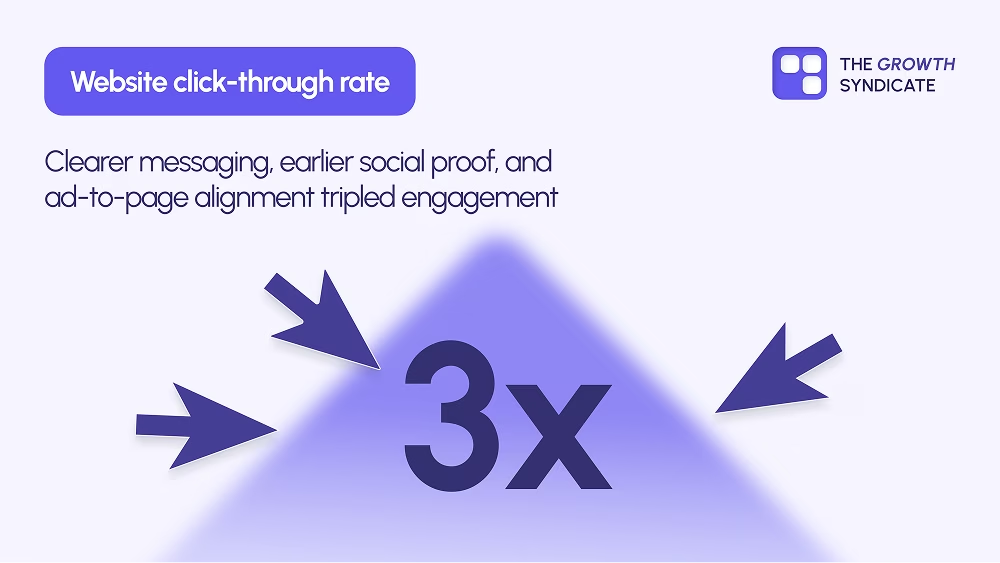
We restructured key pages to lead with clear outcomes, moved social proof higher, added walkthrough videos and guided demos, and aligned ad creative with landing page content. The goal was simple: when someone arrives interested, don't make them work to stay interested.
The results
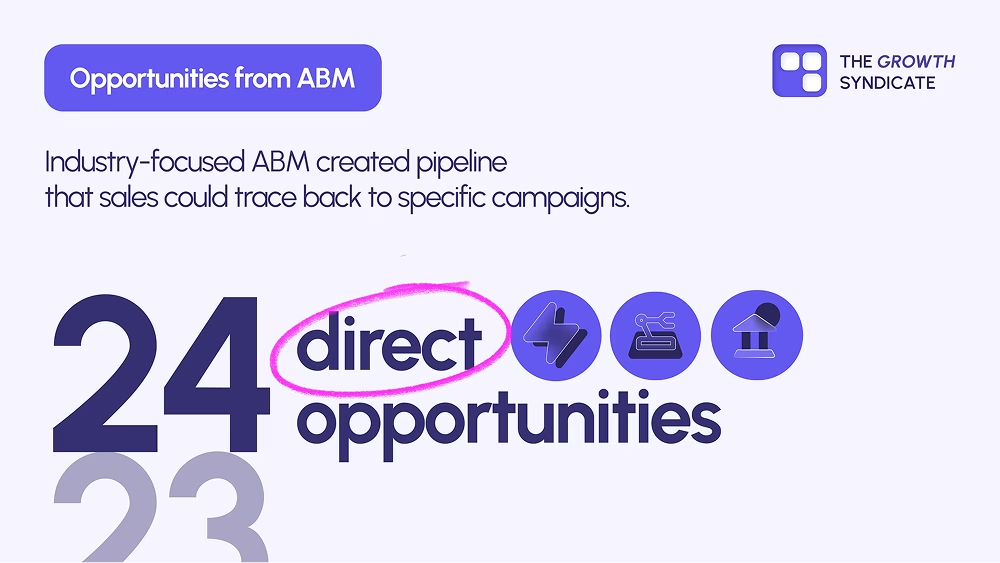
- 24 direct opportunities attributable to ABM and paid programs
- 300+ engaged high-value accounts across regions and industries
- Sweden momentum: 26 current opportunities, approximately €75k MRR
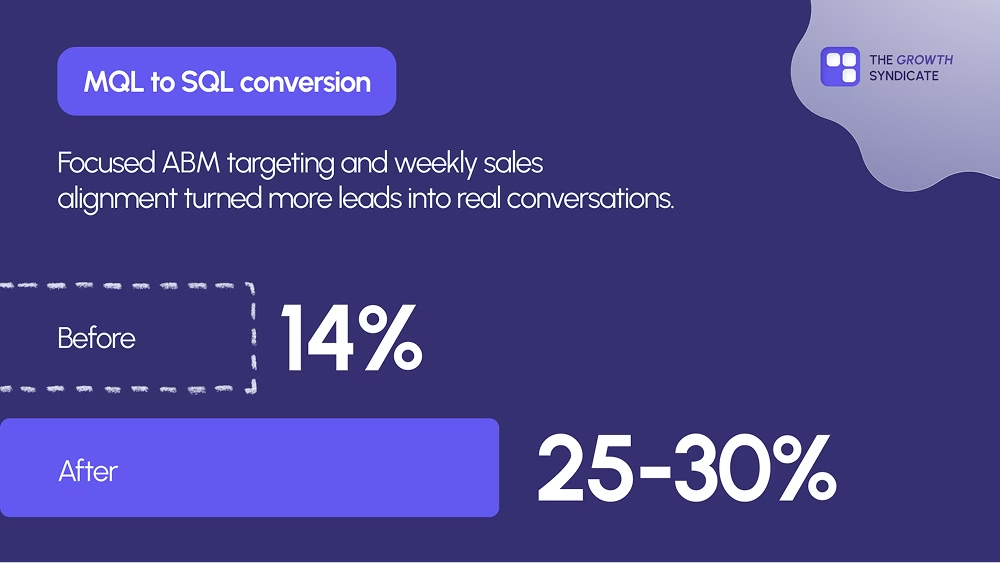
- MQL to SQL conversion: 14% → 25-30%
- Website click-through rate: 0.18% → 0.54% (3x improvement)
What made the difference
Narrowing before expanding. By focusing on two industries in one region first, we could iterate quickly and build conviction before scaling. The Sweden playbook is now being applied to the UK and DACH. Treating thought leadership as infrastructure.
"Frends didn’t need more campaigns. They needed focus. We tightened the ICP, put leadership out front, and ran ABM like a commercial motion with sales. The result was warmer starts, cleaner handoffs, and a pipeline we could actually predict."
—Joliene van Grieken, Co-founder; Fractional CMO, The Growth Syndicate
The posts powered the entire ABM motion, gave sales conversation starters, and created the engagement signals we used for targeting. Everything connected. Building process, not just campaigns. The weekly engagement file review turned a standard paid media engagement into a real partnership. Every euro went to accounts that actually mattered. Respecting the long sales cycle. Enterprise integration deals don't close from a single ad.
We designed for multiple touchpoints over months, knowing the job was to stay present and useful until the prospect was ready.
What comes next
The system built in Sweden is now being replicated across markets. UK and DACH campaigns are live, using the same ABM architecture and sales coordination process. Website improvements continue, with focus on mobile performance and a partially ungated product tour.
The foundation is in place. Now it scales.
About The Growth Syndicate
We help B2B companies build demand generation systems that create a predictable, qualified pipeline. Our approach combines strategic focus, disciplined execution, and tight sales-marketing alignment.
We also know that bringing in outside help can feel like a significant step. Our job is to make it feel like a partnership from day one.