.svg)


The most common mistake in B2B marketing isn't poor execution. It's chasing the wrong customers. Companies pour resources into lead generation, content marketing, and demand generation without first answering a fundamental question: who exactly should we be selling to?
This is where ICP marketing becomes your competitive advantage. An ideal customer profile, or ICP, is a detailed description of the company characteristics that make someone your best customer. Not just any customer who might buy, but the ones who close faster, pay more, stay longer, and refer others. When your sales and marketing teams align around a well defined ICP, everything else becomes more effective.
What is an ideal customer profile and why does it matter?
An ideal customer profile is a data driven description of the companies that get the most value from your product or service. It goes beyond basic demographics to include company size, annual revenue, technology stack, pain points, and the specific challenges that make your solution the obvious choice.
Think of your ICP as the characteristics shared by your best customers. Not your average customers, and definitely not the ones who churned after three months. Your most valuable customers, the ones with the highest customer lifetime value, the shortest sales cycles, and the strongest retention rates.
The difference between companies with a clear ICP and those without shows up everywhere. Marketing efforts become focused instead of scattered. Your sales team stops wasting time on prospects who were never going to close. Lead generation actually produces high quality leads instead of just volume.
Clem, one of our co-founders at The Growth Syndicate, puts it simply: "You have to make sure you have a clear view of which customer profiles work and which do not. Without that, everything else is guesswork."
TL;DR: An ideal customer profile ICP describes the company characteristics of your best customers, not just anyone who might buy. It's the foundation that makes all other marketing and sales efforts more effective.
Why most companies get their ICP wrong
Here's the uncomfortable truth. Most B2B companies think they have an ICP, but what they actually have is a vague description of anyone who might conceivably purchase their product. That's not an ideal customer profile. That's a target audience so broad it provides no strategic direction.
We see this pattern repeatedly when working with companies. High marketing activity, lots of top funnel noise, but minimal pipeline contribution. The root cause? No real ICP clarity, which leads to diluted messaging spread across too many audiences.
Joliene, another co-founder at TGS, calls this the "scattered marketing" problem: "Marketing teams appear busy with high activity levels but fail to drive revenue because they're reactive rather than strategic. Without clear ICPs with tailored messaging, you get scattered targeting and scattered results."
The symptoms are easy to spot. Your sales reps spend hours on calls with prospects who were never going to buy. Your marketing messages try to appeal to everyone and end up resonating with no one. Your sales pipeline is full of leads that never convert. Customer acquisition costs keep climbing while close rates stay flat.
TL;DR: A vague ICP leads to scattered marketing, wasted sales efforts, and a pipeline full of leads that never close. Specificity is what separates high performing teams from busy ones.
How to create an ideal customer profile that actually works
Building an effective ICP isn't about sitting in a conference room and brainstorming who you'd like to sell to. It's a research process grounded in customer data and validated through real sales conversations.
Start with your existing customers
The best predictor of your ideal customer is your current customers, specifically your most successful customers. Look at the accounts with the highest customer lifetime value, the fastest sales cycles, the best retention, and the strongest expansion revenue.
What patterns emerge? Consider company characteristics like employee count, annual revenue, industry, and technology stack. But also look at situational factors. What triggered their buying process? What pain points were they trying to solve? What made them choose you over alternatives?
One methodology we use at TGS involves weekly reviews where marketing and sales analyze every new customer and lost opportunity. As Clem describes it: "We would go through all the new customers and opportunities one by one, asking why did this customer close, what did they like, what concerns did they have. That helped create patterns. This is actually the message that resonates. This is what they care about. These types of companies cannot close because of X, so we exclude them from ICP."
Define the firmographic data points
Your ICP should include specific, measurable company characteristics. These typically include:
Company size measured by employee count. A 50 person company has completely different needs and buying processes than a 5,000 person enterprise. Annual revenue gives you a sense of budget capacity and business maturity. Industry and vertical help you understand the specific challenges and language that will resonate. Geographic location matters for compliance, language, and market dynamics. Technology stack indicates technical sophistication and integration requirements.
The goal is to identify companies you can actually look up and target, not abstract descriptions of "innovative companies that value quality."
Identify the behavioral and situational triggers
Beyond firmographics, your ICP should capture what makes a company ready to buy. What specific challenges or pain points drive the buying process? What triggers the search for a solution? Is it a new strategic initiative, a change in leadership, rapid growth, or a compliance requirement?
Understanding these triggers helps your marketing team create targeted content that reaches potential customers at the right moment, and helps your sales team qualify prospects based on timing, not just fit.
Validate through customer interviews
Don't build your ICP entirely from internal assumptions and customer data. Conduct customer interviews with your best customers to understand their perspective. What problem were they really trying to solve? How did they find you? What alternatives did they consider? What nearly stopped them from buying?
These conversations often reveal insights that never show up in your CRM. The real decision criteria, the internal politics, the fears and aspirations that drove the purchase.
TL;DR: Build your ICP from customer data and real conversations, not assumptions. Focus on your most valuable customers, define specific company characteristics, identify buying triggers, and validate through customer interviews.
ICP vs buyer persona: Understanding the difference
One common point of confusion: an ideal customer profile and a buyer persona are not the same thing.
Your ICP describes company characteristics. It answers the question "which companies should we target?" A buyer persona describes the individual people within those companies who influence or make purchasing decisions. It answers "who do we need to convince?"
For example, your ICP might be "B2B SaaS companies with 50 to 200 employees, $5M to $50M in annual revenue, using HubSpot for marketing automation." Your buyer personas within that ICP might include the VP of Marketing who champions the purchase, the CFO who approves the budget, and the marketing ops manager who evaluates technical fit.
You need both. The ICP tells your sales and marketing teams which accounts to pursue. The buyer personas tell them how to engage the different stakeholders within those accounts.
TL;DR: ICP defines which companies to target. Buyer personas define who within those companies to reach and how to message them. You need both for effective account based marketing.
How ICP marketing differs by deal size
One of the biggest mistakes companies make is applying the same ICP marketing approach regardless of deal size. SMB and enterprise require fundamentally different strategies, and your ICP should reflect that.
For smaller deals, typically under $20K annually, you can focus on volume tactics. Your ICP can be broader because you need more potential customers to hit revenue targets. Lead generation through content marketing, SEO, and paid search can drive self-service buying. The sales process is often transactional with fewer stakeholders and shorter cycles.
For enterprise deals above $100K, everything changes. As Clem explains: "You really have to nail down your ICP, your positioning, your messaging, and then you're going after 100, 200, maybe 300 companies. How do you create as many qualified touchpoints as possible for those target accounts? And different people are involved, so you need different journeys for the CFO, for the CMO, for the head of engineering."
This is where account based marketing becomes essential. Instead of casting a wide net, you're identifying high value accounts that match your ICP precisely and orchestrating multi-touch campaigns across the entire buying committee over 12 to 24 months.
TL;DR: SMB allows broader ICP and volume tactics. Enterprise requires narrower ICP and account based marketing with role-specific content for multiple stakeholders.
Building a data driven ICP: The key components
An effective ICP document should include several key components that your entire organization can reference.
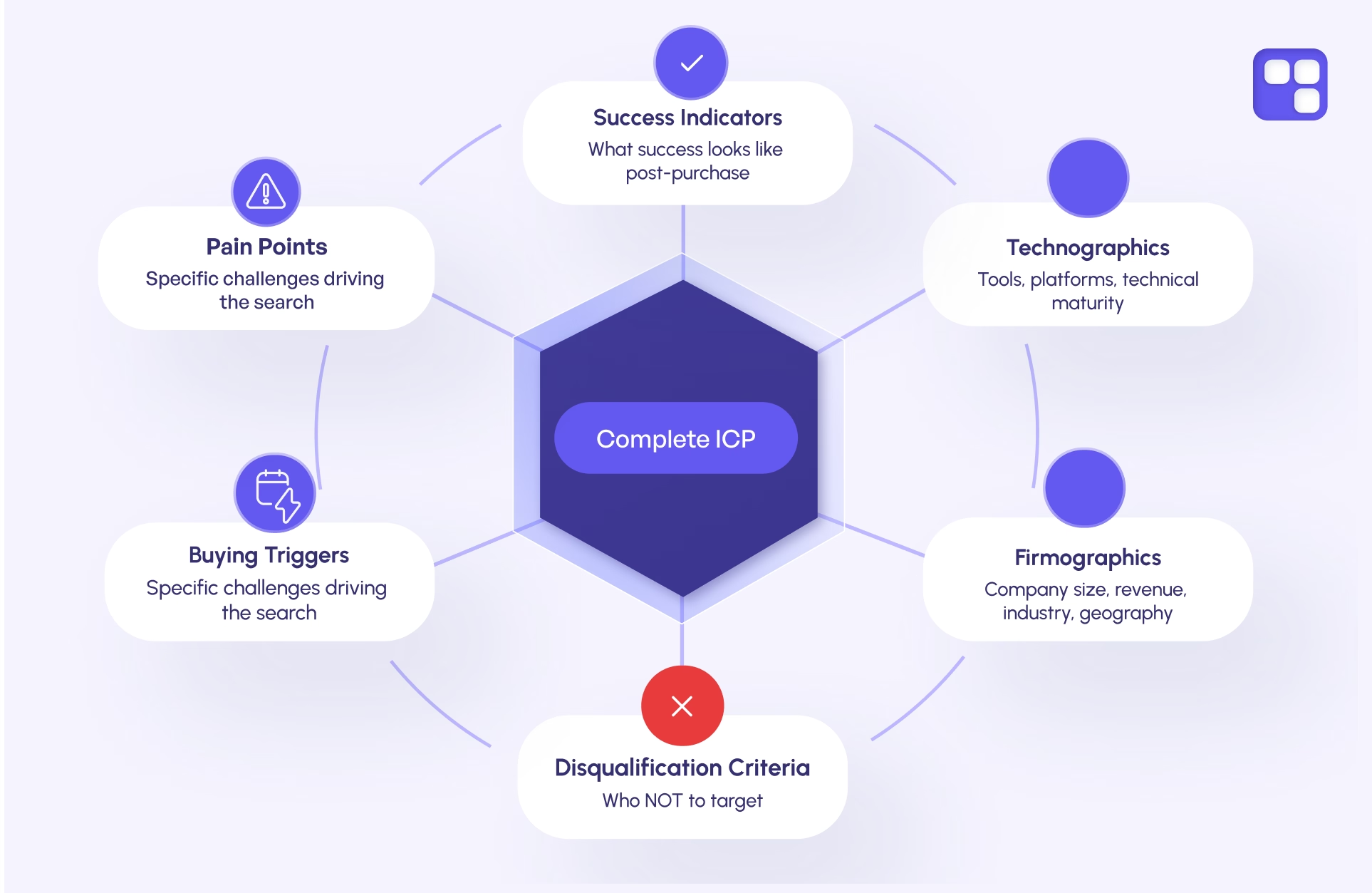
Firmographic criteria
Define the specific company characteristics that signal fit. This includes industry verticals, company size by employee count, company revenue ranges, geographic markets, and business model (B2B, B2C, marketplace, etc.).
Technographic data
Increasingly important in B2B, technographic data tells you what technology stack a company uses. This helps identify companies with compatible systems, budget for technology investment, and the technical sophistication to implement your solution.
Pain points and challenges
What specific problems does your ideal customer face? Not vague challenges like "wants to grow," but concrete issues like "struggling to attribute marketing spend to revenue" or "losing deals because their sales process takes too long."
Buying triggers
What events or circumstances typically precede a purchase? New funding, leadership changes, expansion into new markets, competitive pressure, regulatory requirements. Understanding these triggers helps you time your outreach and create content that addresses prospects at the right moment.
Disqualification criteria
Just as important as knowing who to target is knowing who to avoid. Define the characteristics that signal a poor fit. Companies too small to afford your solution, industries with regulatory barriers, organizations without the technical maturity to implement successfully. Excluding poor fit prospects from your sales pipeline is just as valuable as finding good ones.
Success indicators
What does success look like for your ideal customer after purchasing? Defining this helps you understand the value proposition that will resonate most and sets expectations for customer success.
TL;DR: A complete ICP includes firmographic criteria, technographic data, pain points, buying triggers, disqualification criteria, and success indicators. Document all of these so your entire organization works from the same playbook.
Aligning sales and marketing teams around your ICP
An ICP only creates value if it's actually used. Too often, marketing develops an ideal customer profile that sits in a document while sales continues qualifying leads based on different criteria.
True ICP alignment means marketing generates leads that match the profile, sales qualifies against the same criteria, and both teams collaborate to refine the ICP based on what actually closes.
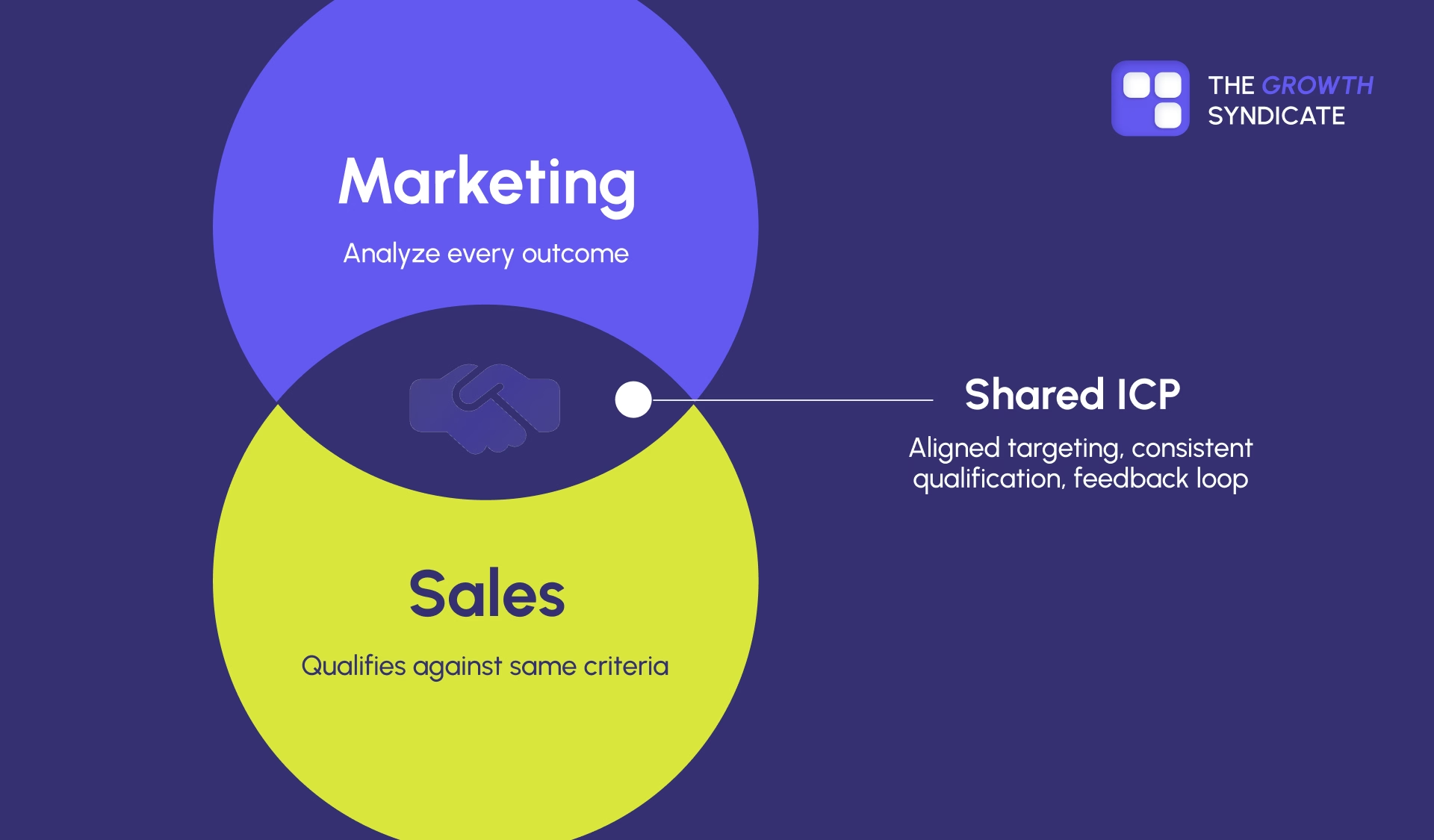
This requires ongoing communication. Weekly or bi-weekly reviews where sales and marketing teams discuss recent wins and losses. What did these customers have in common? Why did certain prospects not convert? Is our ICP still accurate, or do we need to adjust based on new data?
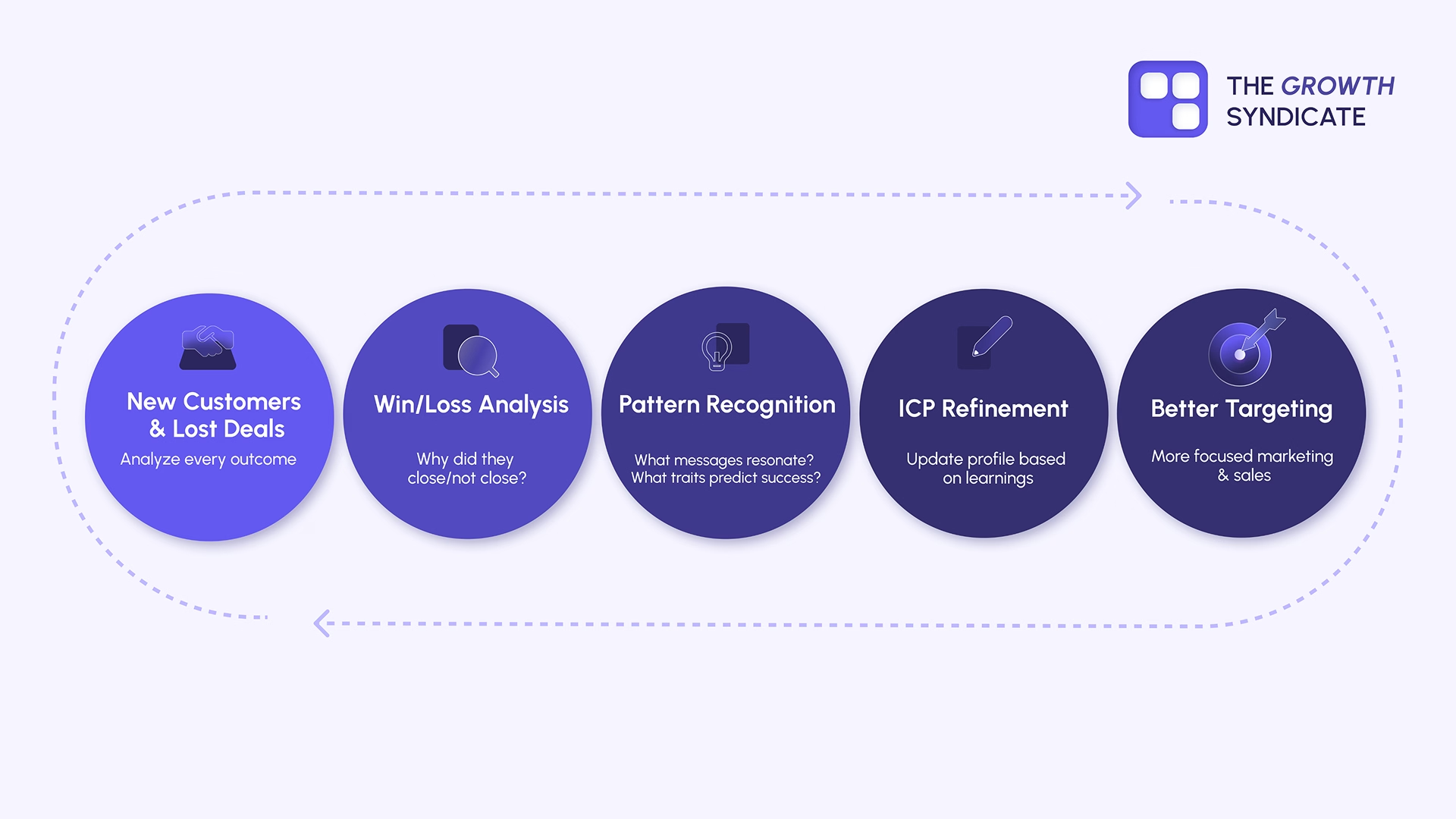
The best performing B2B companies treat their ICP as a living document that gets refined continuously through customer feedback and sales insights. What worked six months ago may not work today. Market conditions change, your product evolves, and new competitors emerge.
TL;DR: ICP alignment requires ongoing collaboration between sales and marketing. Treat your ideal customer profile as a living document that evolves based on what you learn from actual sales results.
Common ICP development mistakes to avoid
Making it too broad
If your ICP describes half the companies in your market, it's not providing strategic direction. The whole point is focus. A well defined ICP might mean you're only targeting a few hundred companies, and that's okay. Better to dominate a narrow segment than get ignored by everyone.
Relying only on assumptions
Building an ICP in a conference room without customer data or customer interviews produces a wishlist, not a profile. Your assumptions about who should buy from you may not match who actually does.
Ignoring disqualification criteria
Many companies define who they want but fail to define who they don't want. This leads to sales reps chasing prospects who were never going to close, wasting time and resources.
Setting it and forgetting it
Your ICP should evolve as you learn more about your market. Companies that treat it as a one-time exercise miss opportunities to refine their targeting based on real results.
Not aligning the entire organization
If marketing is targeting one ICP, sales is pursuing different prospects, and customer success is measuring outcomes for yet another segment, you don't actually have ICP alignment. Everyone needs to work from the same definition.
TL;DR: Avoid making your ICP too broad, relying on assumptions, ignoring disqualification criteria, treating it as static, or failing to align across teams.
How to use your ICP across marketing and sales
Once you have a well defined ICP, it should inform every aspect of your go-to-market strategy.
For your marketing team, the ICP guides content marketing decisions about what topics to cover and what pain points to address. It informs channel selection and where your target customers actually spend time. It shapes messaging and positioning to resonate with specific challenges. And it enables more precise targeting for paid campaigns and account based marketing.
For your sales team, the ICP provides clear qualification criteria for evaluating leads. It helps prioritize which prospects to pursue and which to deprioritize. It informs discovery questions and objection handling. And it enables sales reps to quickly identify high value prospects.
For the entire organization, ICP clarity improves demand generation efficiency, reduces wasted effort on poor fit prospects, shortens the sales process by focusing on better matches, and ultimately drives higher customer lifetime value through better retention.
TL;DR: Use your ICP to guide content creation, channel selection, messaging, lead qualification, prospecting priorities, and demand generation strategy across the entire organization.
Frequently asked questions about ICP marketing
What does ICP mean in sales and marketing?
ICP stands for Ideal Customer Profile. In sales and marketing context, it's a detailed description of the company characteristics that define your best fit customers. Unlike a buyer persona which describes individual people, an ICP describes the organizational attributes like company size, industry, revenue, technology stack, and specific pain points that indicate a company would be a valuable customer. Sales teams use the ICP to qualify leads and prioritize outreach, while marketing teams use it to target their campaigns and tailor messaging to resonate with the right companies.
How do I create an ideal customer profile template?
Start by analyzing your existing customers, particularly your most successful customers with the highest customer lifetime value and retention rates. Document the common characteristics including firmographic data like employee count and annual revenue, technographic data like technology stack, behavioral factors like pain points and buying triggers, and disqualification criteria. Validate your assumptions through customer interviews and sales team input. Create a template that includes specific, measurable criteria your sales and marketing teams can actually use to identify and qualify target accounts.
What's the difference between ICP and target audience?
A target audience is typically broader and describes general demographics or characteristics of people or companies who might be interested in your product. An ideal customer profile is more specific and describes the exact company characteristics of your best customers. Your target audience might be "B2B technology companies," while your ICP might be "B2B SaaS companies with 50-200 employees, $5-50M in annual revenue, using HubSpot, with a dedicated marketing operations role, currently struggling with marketing attribution." The ICP provides actionable targeting criteria while the target audience is more directional.
How often should we update our ideal customer profile?
Treat your ICP as a living document that gets reviewed and refined at least quarterly. Market conditions change, your product evolves, and you'll learn from every sales cycle. Establish regular reviews where sales and marketing teams analyze recent wins and losses to identify patterns. If you're seeing significant changes in who's closing, who's churning, or what pain points resonate, update your ICP accordingly. Companies that treat ICP development as a one-time exercise miss opportunities to continuously improve their targeting.
How do ICP and account based marketing work together?
Account based marketing relies heavily on a well defined ICP. Your ICP identifies which companies to target, and ABM provides the strategy for engaging those specific accounts. With a clear ICP, you can identify your target accounts precisely, then create personalized content and multi-touch campaigns tailored to different stakeholders within those companies. For enterprise deals especially, ABM allows you to orchestrate engagement across the entire buying committee over extended sales cycles. Without a strong ICP, account based marketing becomes inefficient because you're investing heavily in accounts that may not be good fits.
Author bio
Ferdinand Goetzen is Co-Founder of The Growth Syndicate, a fractional marketing firm helping B2B technology companies build sustainable growth engines. With experience across dozens of high-growth companies, Ferdinand specializes in helping founders transition from sales-led to marketing-led growth through strategic positioning, ICP development, and demand generation