

Coforix
Quick facts
Founded in 2023
2025 to 2026
We were brought onboard as Coforix’s first marketing function, to take four certified hospital products to market and build a pipeline its sales team could work.
How a first account-based marketing program in MedTech produced 27 engaged leads and 165 high-intent contacts in six to seven months, and a problem most early-stage companies would pay to have.
The company
Coforix was called HealthSage AI when this engagement ran, and the company has since renamed. This case study uses Coforix throughout.
Coforix had done the hard part before we met them. The products were built, the certifications a medical product needs were in place, and the company was cleared to sell. What it did not have was any marketing history: a website, a CRM, no campaigns, and nobody who owned marketing.
That is a common shape in MedTech. Regulatory work comes first, and by the time a company is allowed to market, nobody owns marketing. Large players such as Philips and GE are a different story. Startups and scale-ups selling into the same hospitals rarely invest in marketing, thought leadership or ABM in a sustained way.
The Growth Syndicate came in as Coforix's first marketing function. The timing was right: product done, certificates in hand, market entry next. We started with an audit and research into the ideal customer profile, the personas and what the market needed, then built the foundation and the messaging on top of it.
The positioning decision
Coforix had four products, each solving a specific pain inside a hospital. The obvious move was to market all four to "hospitals." We didn't.
A hospital is not one buyer. It behaves like fifty companies under one roof, each with its own team, budget and approval chain. So instead of treating the hospital as the account, we treated the team that would use each tool as the account, and mapped three roles inside it: the person who feels the problem, the stakeholder who holds the budget, and the person who signs off.
Defining that audience took real time. It also made everything downstream easier. Messaging could name the exact problem. Creative could speak to people who recognized it. And a specific, focused audience is one you can build engagement around.
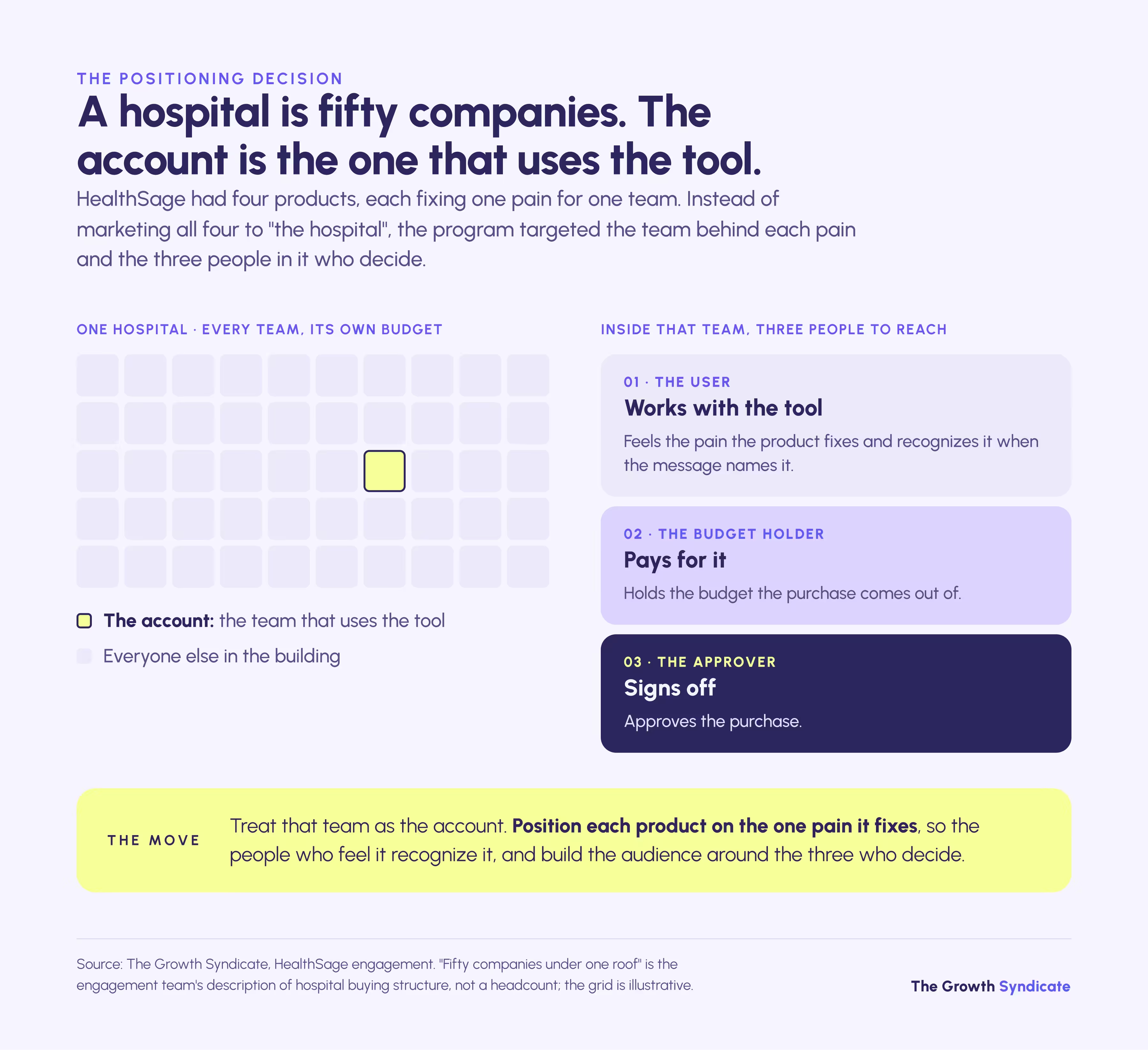

It is easy to say the hospital is your target audience. It isn't. The audience is the person who works with the tool, the person who holds the budget and the person who approves the purchase. Define those three cleanly and engagement becomes far easier to build.
What we built
Strategic foundation. An audit, research into the ideal customer profile and personas, brand messaging that named the pain each product fixes, and the marketing and sales infrastructure that let campaign engagement flow into a pipeline sales could act on.
ABM program and LinkedIn campaigns. Account-based targeting of high-fit accounts within the ICP, LinkedIn campaigns aimed at the decision-makers inside the defined hospital teams, and core sales and marketing collateral for the outbound and inbound motions. The results were clear within six weeks of launch.
Thought leadership on an existing network. Coforix's founders were already active and well connected in the industry; co-founder Marcel Alberti had built his network at Philips. The program leaned on that standing instead of building an audience from zero, which is what made engagement come quickly. Posts drew 150-plus likes, unusually high for MedTech.
Results
Over six to seven months, starting from no marketing at all, the ABM program produced:
- 27 engaged leads ready for sales follow-up
- 165 high-intent target contacts actively engaging with Coforix on LinkedIn
The results were visible within six weeks of the campaign going live. Thought leadership posts drew 150-plus likes. For context, LinkedIn company pages with under 10,000 followers average between about 10 and 40 likes a post for text and image formats, across a 1.3 million-post study (Socialinsider, 2026).
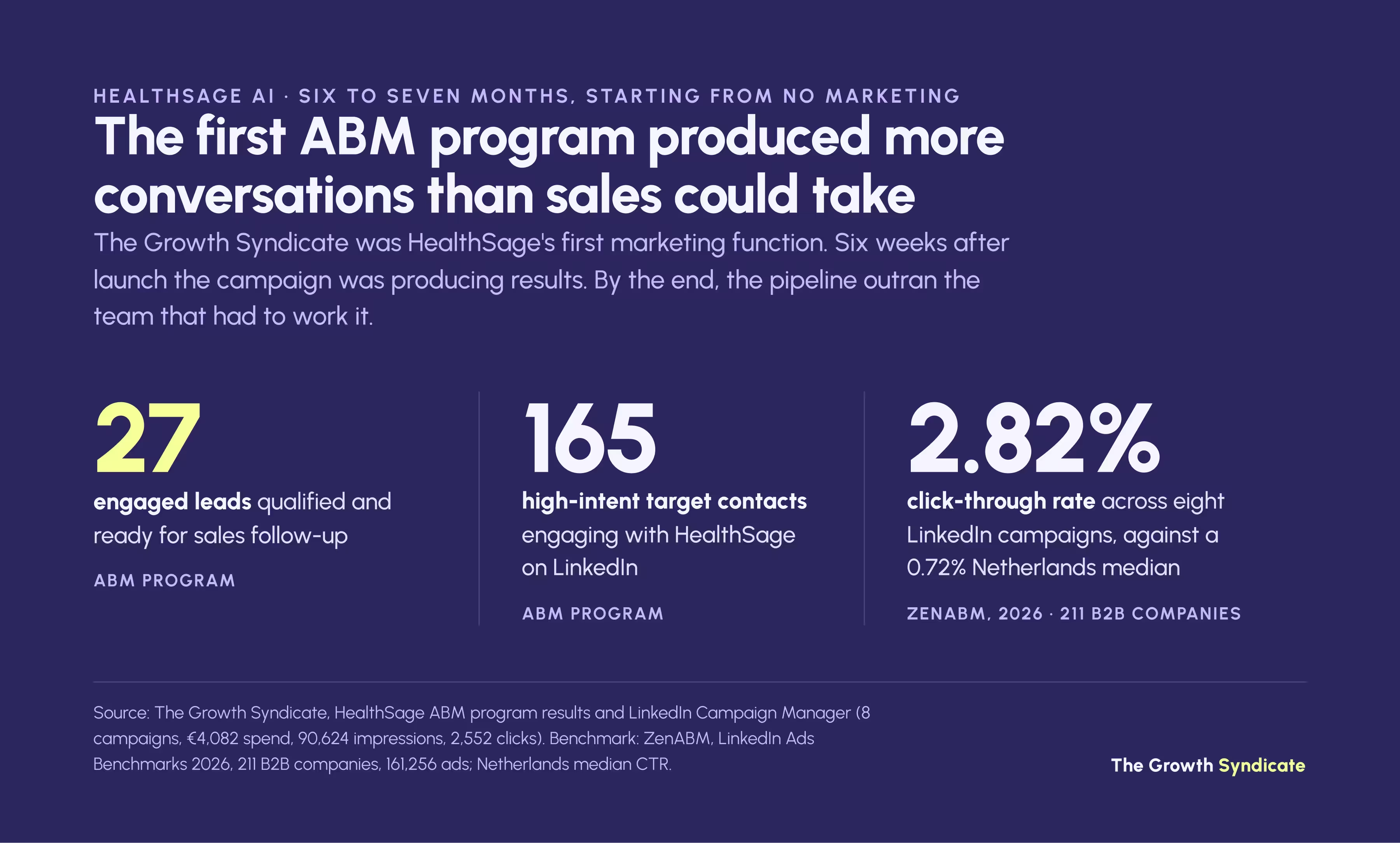
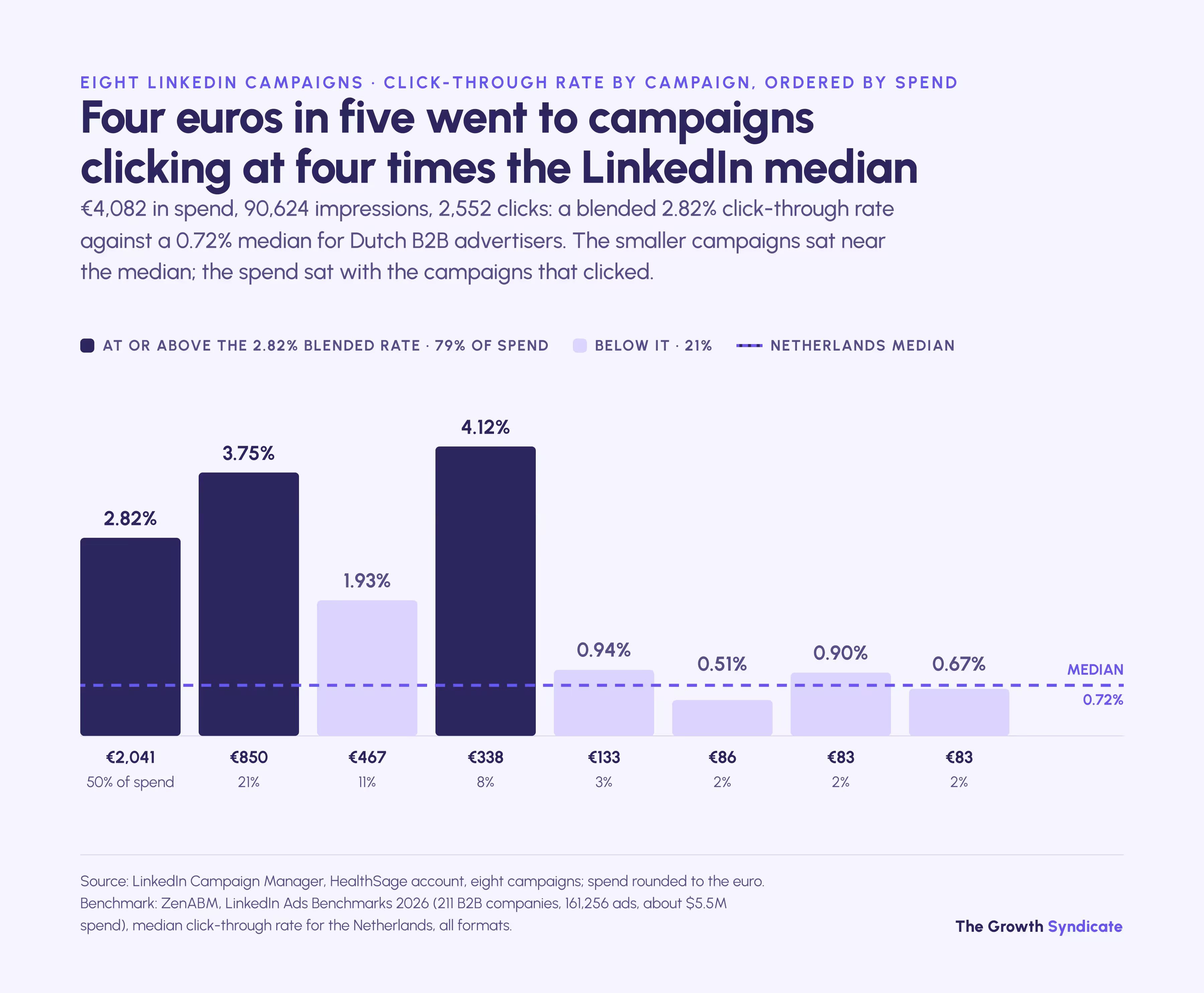
The paid LinkedIn side ran eight campaigns. Against the LinkedIn medians for the Netherlands in ZenABM's 2026 study (211 B2B companies, 161,256 ads), the click-through rate landed at almost four times the market and the cost per click at a quarter of it:
Four euros in five went to campaigns clicking at 2.82% or better; the two largest campaigns, 71% of spend, ran at 2.82% and 3.75%. Benchmark: ZenABM, LinkedIn Ads Benchmarks 2026. Euro figures are from Campaign Manager; ZenABM reports in US dollars.
The luxury problem
Coforix paused the partnership, and not for the usual reason. The ABM program was producing more qualified conversations than its sales team had the resources to follow up on properly. Filling the pipeline further while the existing one went unworked made no sense, and the company was also raising its next round. Sales follow-up and funding came first. The contract was paused, not cancelled.
We were Coforix's first marketing function, so we started with the foundation and a very specific audience inside the hospital. Within six weeks of launching the ABM campaign the results were there. The engagement paused because sales could not keep up with the follow-up, which is the rare kind of problem you want to have.
Where it ended
Coforix entered the engagement unsure what marketing could do for a certified but unknown product. It left with a working ABM foundation, a mapped buyer inside the hospital, a tested messaging approach, and proof that showing up consistently in a market where competitors barely show up is a differentiator on its own.
The partnership is paused, not closed. The foundation is in place for when sales has worked through the pipeline.

We came in with a certified product and no marketing to speak of. Within a few months The Growth Syndicate had us in front of the right people in hospitals, more of them than our sales team could follow up on.
