We help manufacturing companies build marketing strategies that account for capacity limits, long sales cycles, and technical audiences. If your current approach isn't connecting marketing activity to pipeline, let's talk about what would.
Book a free strategy sessionMarketing for the manufacturing Industry in 2026.
What the playbooks won't tell you about trust, clarity, and what engineers actually look for.
The short version:
This report covers what those constraints are, who the buyer actually is, how trust works in this sector, why clarity matters more than volume, and what the data says about marketing channels, content, and strategy that actually produce measurable business outcomes.
- Your buyer probably knows more than you. The knowledge gap between the marketer and the engineer is permanent. Your value is translation, not expertise.
- The shortlist is written before you know the deal exists. 95% of winning vendors were already on the buyer's Day One list (6sense 2025). If you are not in the buyer's memory when they start looking, you will not make it onto the evaluation.
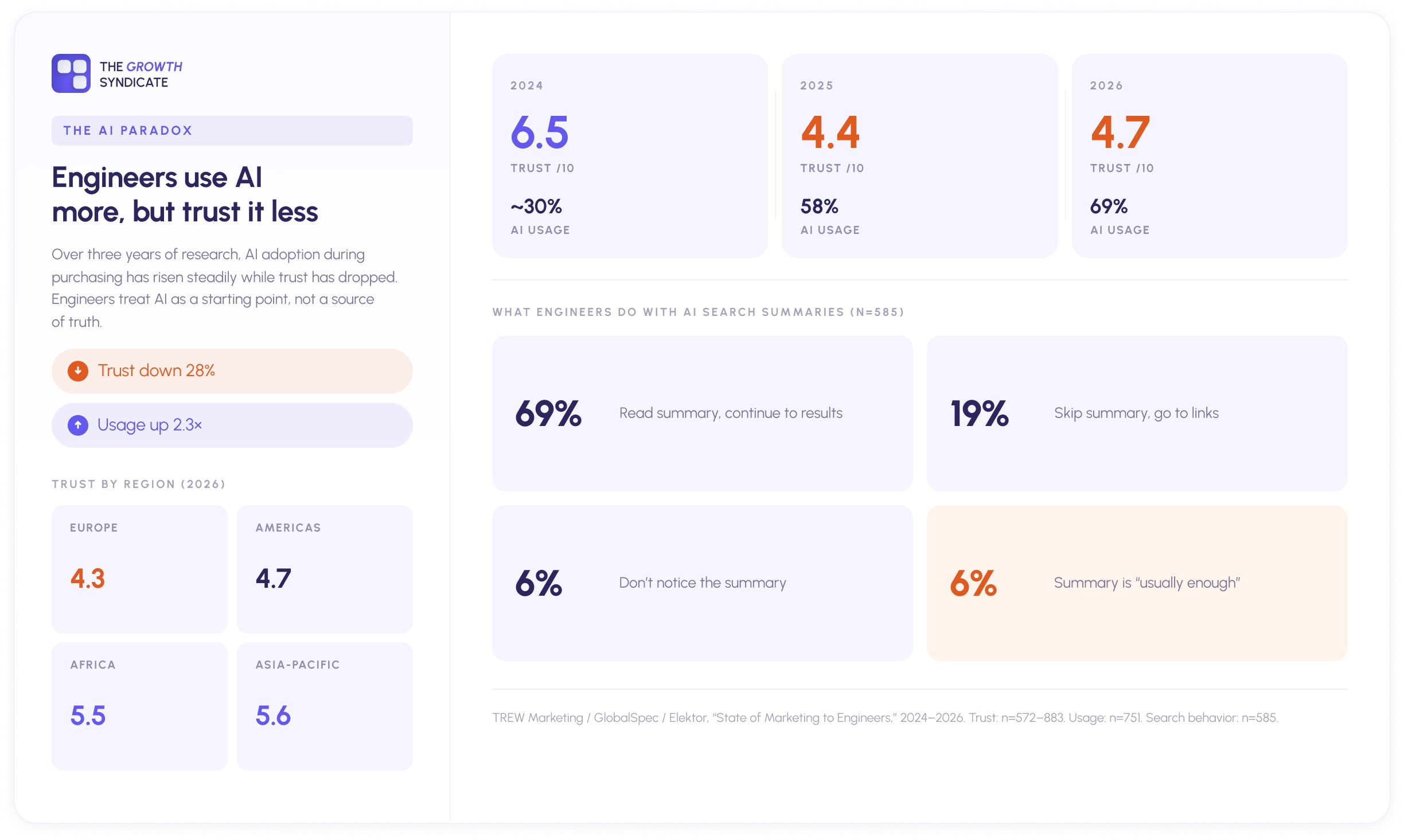
- Engineers use AI more every year but trust it less. Adoption during purchasing has gone from roughly 30% to 69% since 2024. Trust has dropped from 6.5 to 4.7 out of 10. AI is becoming a research layer, not a decision layer.
- Trust is built through content precision, not campaign volume. Engineering decision-makers judge a vendor's manufacturing quality by the quality of their marketing materials. A sloppy website signals sloppy operations.
- The single biggest gap is positioning clarity. Most manufacturers can describe what each product does. Very few can say, in one sentence, what the company stands for.
Manufacturing is a $16.83 trillion global sector that accounts for 15% of world GDP, yet the marketing knowledge written for it is a fraction of what exists for software. Most of what does exist ignores the structural constraints that make manufacturing marketing a fundamentally different discipline.
How this report was built
The Growth Syndicate works with manufacturers. We run marketing strategy, content production, and brand development for manufacturing companies across Europe, and we have spent the last several years learning the operational, commercial, and cultural realities that make this sector unlike anything else in B2B.
This report draws on five original interviews conducted for this project. Internally, we spoke with:
- Ferdinand Goetzen (co-founder, The Growth Syndicate)
- Clément Dumont (co-founder, The Growth Syndicate)
- Tiago Costa (head of sales, The Growth Syndicate)
Externally, we interviewed:
- Tom Spencer (founder, Beet Industrial; 15+ years in industrial marketing)
- Steve Patti (7x VP/.CMO; advisor to private/PE-backed manufacturing companies)
We cross-referenced their observations with data from TREW Marketing/GlobalSpec, 6sense, Bain & Company, Forrester, Deloitte, the IPA, and peer-reviewed academic research. The result is a set of valuable insights drawn from industry professionals who operate in the manufacturing sector every day.
Nothing in this report is borrowed from a SaaS playbook and relabelled. Everything in it comes from people who sell physical products to technical buyers and have learned, through experience, what that actually requires.
Section 1: Marketing inside a factory's constraints
In brief: Manufacturing marketing operates under operational constraints that most B2B playbooks ignore entirely. Growth is a capital expenditure problem. Production capacity limits what you can promise. The marketer's job is shaped by lead times, tooling costs, and supply chain resilience as much as it is by buyer demand.
Marketing a SaaS product and marketing for a manufacturing business share a vocabulary, but they share almost nothing else.
A SaaS company that doubles its customer base needs more server capacity. The cost is negligible and the scaling is near-instant. A manufacturer that doubles its customer base may need a second production line, a larger facility, new tooling, and months of lead time before the first additional unit ships. Revenue growth, in manufacturing, is a capital expenditure problem before it is a marketing problem.

If they want to produce more in the high seasons, they need to buy a machine that half the year is going to be stopped.
The commercial picture includes an entire operational dimension that most B2B marketing playbooks treat as someone else's concern. Marketing teams in this space must account for variables they cannot control: customs delays, raw material shortages, machine breakdowns, quality holds, seasonal capacity limits. A campaign that generates demand beyond production capacity does not create revenue. It creates broken promises and damaged relationships with buyers who will remember the failure for years.

One thing is getting people to order parts. The other is making sure your supply chain is resilient so you can actually deliver on time, on spec, with the right quality.
These constraints shape everything marketing can promise. They shape how aggressively you can pursue new segments.
They shape the timeline on which results become visible, because long sales cycles in manufacturing run 10 to 12 months on average and involve multiple stakeholders, typically 6 to 10 decision-makers (Gartner). And they shape the cost of failure, which in manufacturing is not a churned subscription but a physical consequence: idle workers, missed production windows, contractual penalties, and occasionally the end of a supplier relationship that took a decade to build.

The industry knows it has a problem, and the unique challenges of manufacturing marketing are part of the reason. CMI's 2025 manufacturing content marketing research found that only 22% of manufacturing marketers rate their content marketing as "very" or "extremely" successful.
The remaining 78% report moderate effectiveness or worse. Meanwhile, the workforce these marketers are trying to reach is itself under pressure: Deloitte and the Manufacturing Institute project that 3.8 million new manufacturing jobs will be needed in the US alone by 2033, with 1.9 million of those at risk of going unfilled. The audience is shrinking, aging, and harder to reach. Marketing efforts that waste their time get filtered out faster than ever.
Your buyer knows more than you
There is a knowledge gap in manufacturing marketing that does not close. In most B2B categories, a competent marketer can develop real expertise on the product within a year or two. In manufacturing, the target audience has engineering degrees and years of hands-on experience that no amount of desk research will replicate. The gap between the marketer and the buyer is permanent.
This changes what the marketer's job actually is. You are not the expert. You are the translator. Your value is in extracting knowledge from the engineers, product managers, and technical staff inside your organization and making it accessible to the engineers, procurement leads, and decision-makers outside it.
Tom Spencer has spent 17 years helping industrial companies communicate what they actually do. His description of the marketer's role captures the dynamic precisely:

You're taking something very complex and finding a context that gives people an access point into it. The skill isn't dumbing things down; it's helping very clever people communicate with each other.
The practical result is that content marketing in manufacturing is slower, more expensive, and more dependent on internal collaboration than in any other B2B category. Two-week production cycles for individual SEO articles, with multiple engineers reviewing each piece for technical accuracy, are common. That cadence is the cost of producing content that will survive contact with an audience trained to spot inaccuracy at a glance.
Cost, quality, speed: pick two
Every manufacturer, whether they name it or not, operates inside a trade-off between cost, quality, and speed. You can have two. You cannot have three. Cheap and high quality means long lead times. Fast and high quality means expensive. Fast and cheap means compromised output.
This trade-off is also a positioning question. The manufacturers who communicate clearly about which corner of this triangle they occupy, and which trade-offs they accept, build trust faster than those who imply they can deliver all three. A prototyping service that leads with turnaround speed is making a different promise than a production partner that leads with tolerance precision and supply chain resilience. Both are valid positions. The mistake is pretending you occupy all three corners simultaneously, because the engineer on the other end of that conversation knows you cannot.
Section 2: The engineer is not your typical buyer
In brief: Engineers are not opposed to marketing. They are opposed to bad marketing. They trust named experts over anonymous vendor content by a factor of six. They complete 62% of their buying process before any vendor knows they exist. And 95% of winning vendors were already on the buyer's shortlist before formal evaluation began.
Marketing a SaaS product and marketing for a manufacturing business share a vocabulary, but they share almost nothing else.
The most important thing a manufacturing marketer can understand about their audience is that engineers reward substance and punish fluff at a speed most marketers are unprepared for. Anonymous vendor marketing content scores just 2.16 out of 5.0 for trustworthiness among manufacturing buyers.

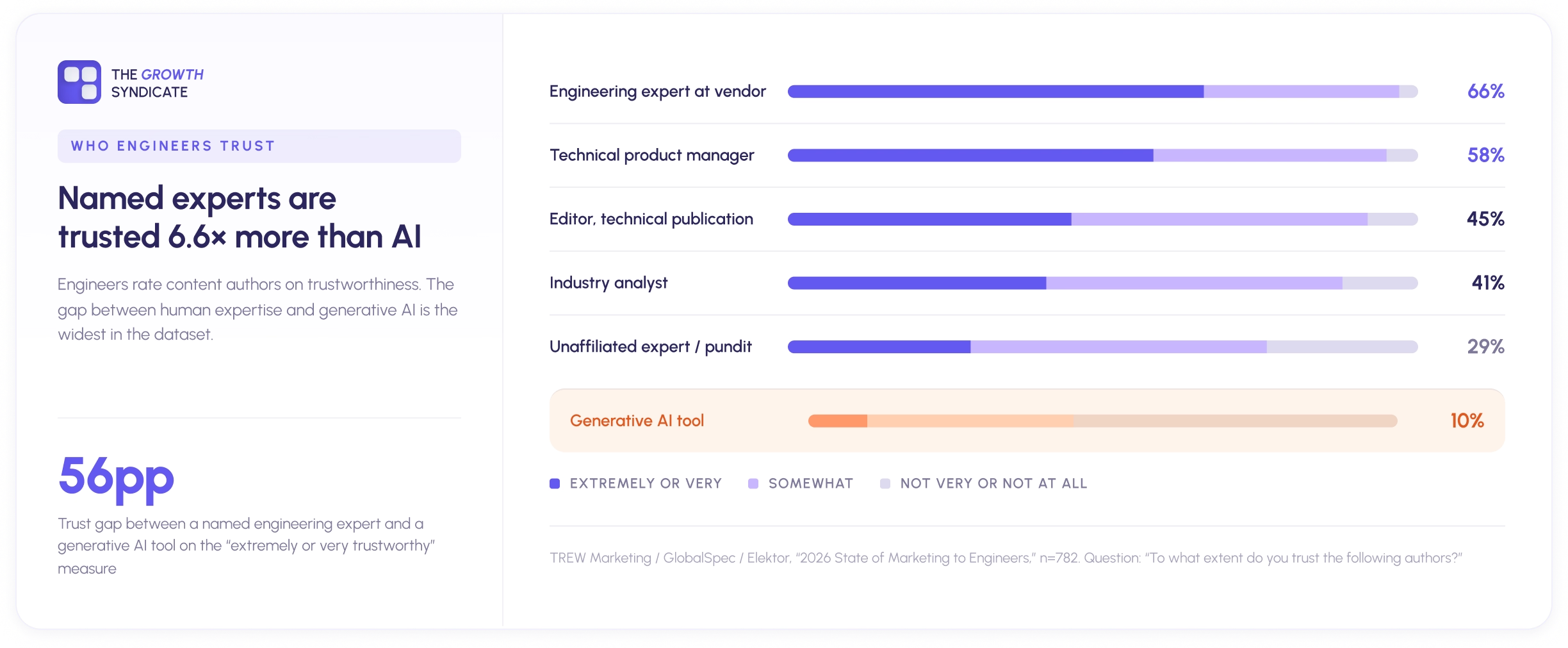
Named engineering experts at vendor companies score highest, with 66% of engineers rating them very or extremely trustworthy. Generative AI tools sit at just 10%. The 56-percentage-point gap between a named human expert and an AI tool is the widest in the dataset (TREW/GlobalSpec 2026, n=782).
Tom Spencer frames engineer skepticism not as hostility but as a quality standard.

Engineers have a cynicism, a way of asking, ‘yeah, but what actually works?’. They like stuff that works. They have a low tolerance for empty claims. But offsetting that, they've got this huge collaborative instinct. They want to fix stuff. Here's a problem, can we solve it? That's what they care about.
Where engineers actually go for information
The digital marketing channels engineers use to discover suppliers and technical information have remained remarkably stable even as options have multiplied. Online technical publications and vendor websites lead at 73% each, followed by print technical publications at 45% (rising to 50% among European engineers). YouTube is rated extremely or very valuable by 84% of engineers. LinkedIn follows at 60%. The pattern is consistent across multiple years of the TREW/GlobalSpec annual survey (n=1,002 in 2025) and aligns with what every practitioner we interviewed described independently.
Paid search performs poorly. 58% of European engineers avoid sponsored results entirely, whether through search engine ads or social media platforms. Steve Patti confirmed this pattern through primary research with manufacturing decision-makers:

I performed 12 interviews with a manufacturer's top dream accounts. Only one out of twelve said they had ever clicked on a paid or sponsored ad when doing a Google search. Meanwhile, the company was spending well over a million dollars a year on paid media. I had to go back to the CRO and tell him: you're spending the majority of your discretionary marketing budget in channels your buyers either don't go to or scroll right past.
Engineers also search differently than most B2B buyers. Over 43% report going five or more pages deep in search results, far beyond the first-page threshold that most search engine optimization strategies optimize for. They are looking for depth, not convenience, which means that website traffic from organic search rewards substance over shortcuts.

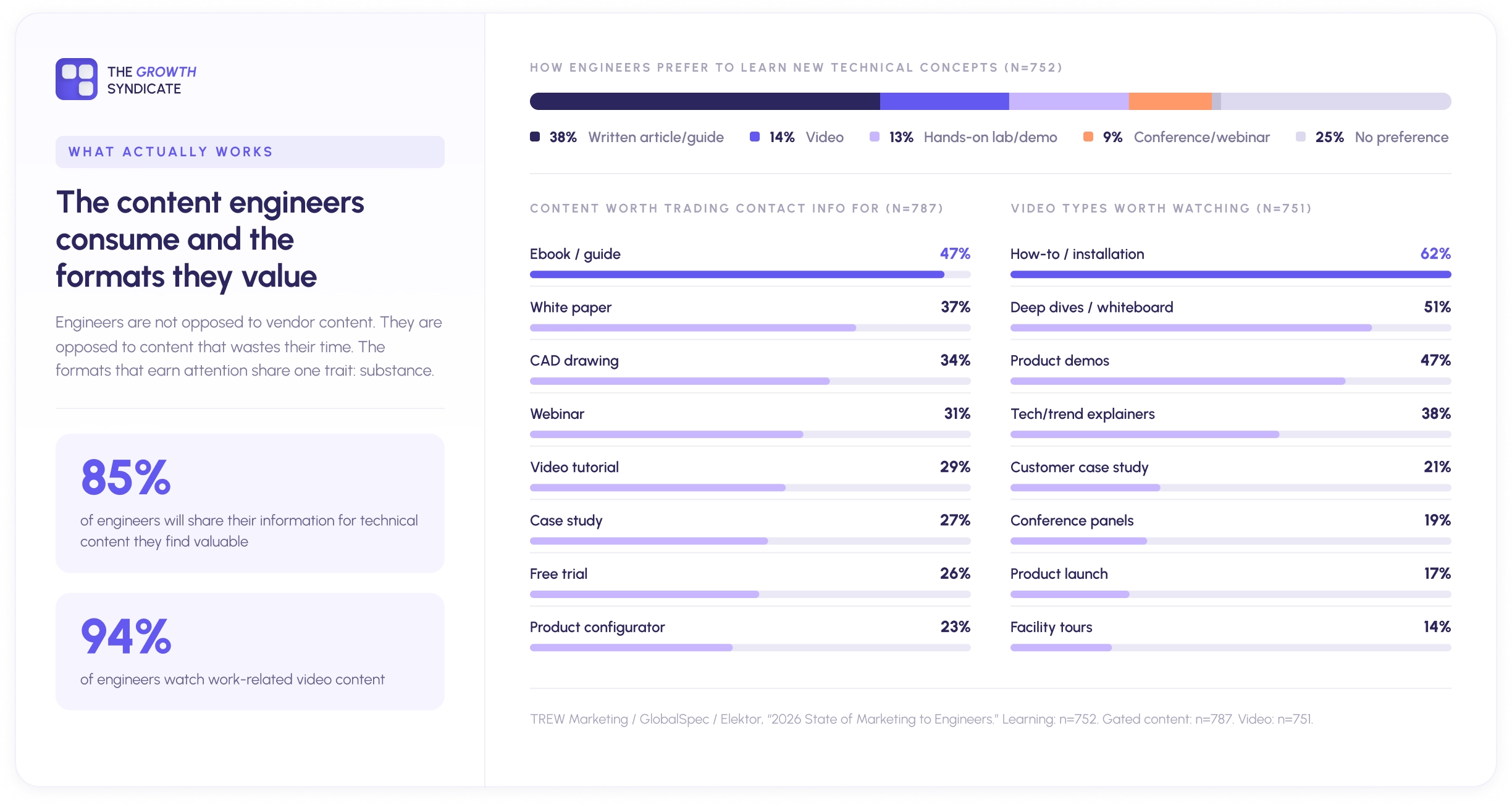
The informative content formats that earn attention follow the same logic. Datasheets lead at 79%, followed by technical articles at 61% and CAD drawings at 37%.

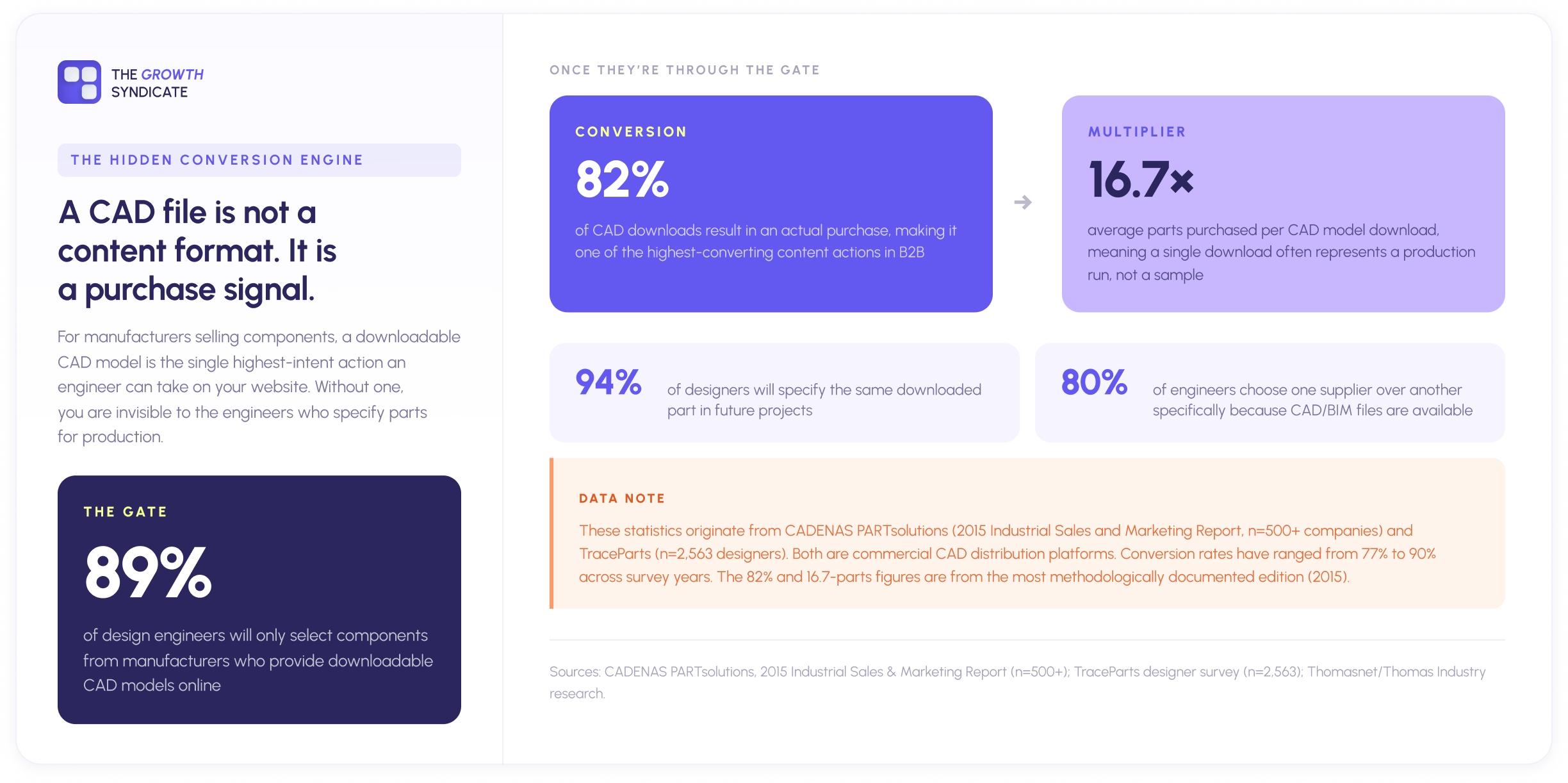
The CAD figure understates its importance: 89% of design engineers will only select components from manufacturers who provide downloadable CAD models, and 82% proceed to purchase after a CAD download (CADENAS). A manufacturer without online CAD files is invisible to the engineers who specify components for production.
Three levels of the buying committee
The engineer is the most important audience, but not the only one. Effective manufacturing marketing must address three tiers simultaneously, and these tiers are not simply different people. They represent different forms of meaning: operational, commercial, and strategic. The challenge is not just communicating to multiple audiences. It is maintaining coherence across all three levels at once.
The first tier is the operator and engineer level. They need specifications, compatibility data, integration details, and proof that the product works in conditions similar to theirs. If you lose credibility here, the rest does not matter, because these are the people who will quietly kill a vendor recommendation in a technical review meeting.
The second tier is management. They need the business case: ROI, efficiency gains, risk reduction, competitive advantage. They are translating the engineer's technical recommendation into a budget request.
The third tier is board and executive leadership. They need the strategic case: how does this fit the company's direction, what are the long-term implications, and does this vendor represent a safe choice.

You need credibility at the bottom. You need to make the business case at the middle. And you need to make the strategic case at the top.
These committees are large. Gartner identifies 6 to 10 decision-makers in complex B2B purchases. The 6sense 2025 Buyer Experience Report places buying groups at 10 or more members for deals averaging $250,000, making it clear that any effective marketing strategy must reach beyond a single contact. Within these committees, 52% include VP-level or above, and 41% already have a preferred vendor before formal evaluation begins (Forrester 2024).
The 6sense data shows that 95% of eventual winners were already on the buyer's shortlist on day one. Bain and Google's research with 1,208 B2B buyers found the same pattern from the other direction: 80-90% of buyers already have a set of vendors in mind before they do any research at all (Bain/Google, "Discovery to Devotion," 2022).
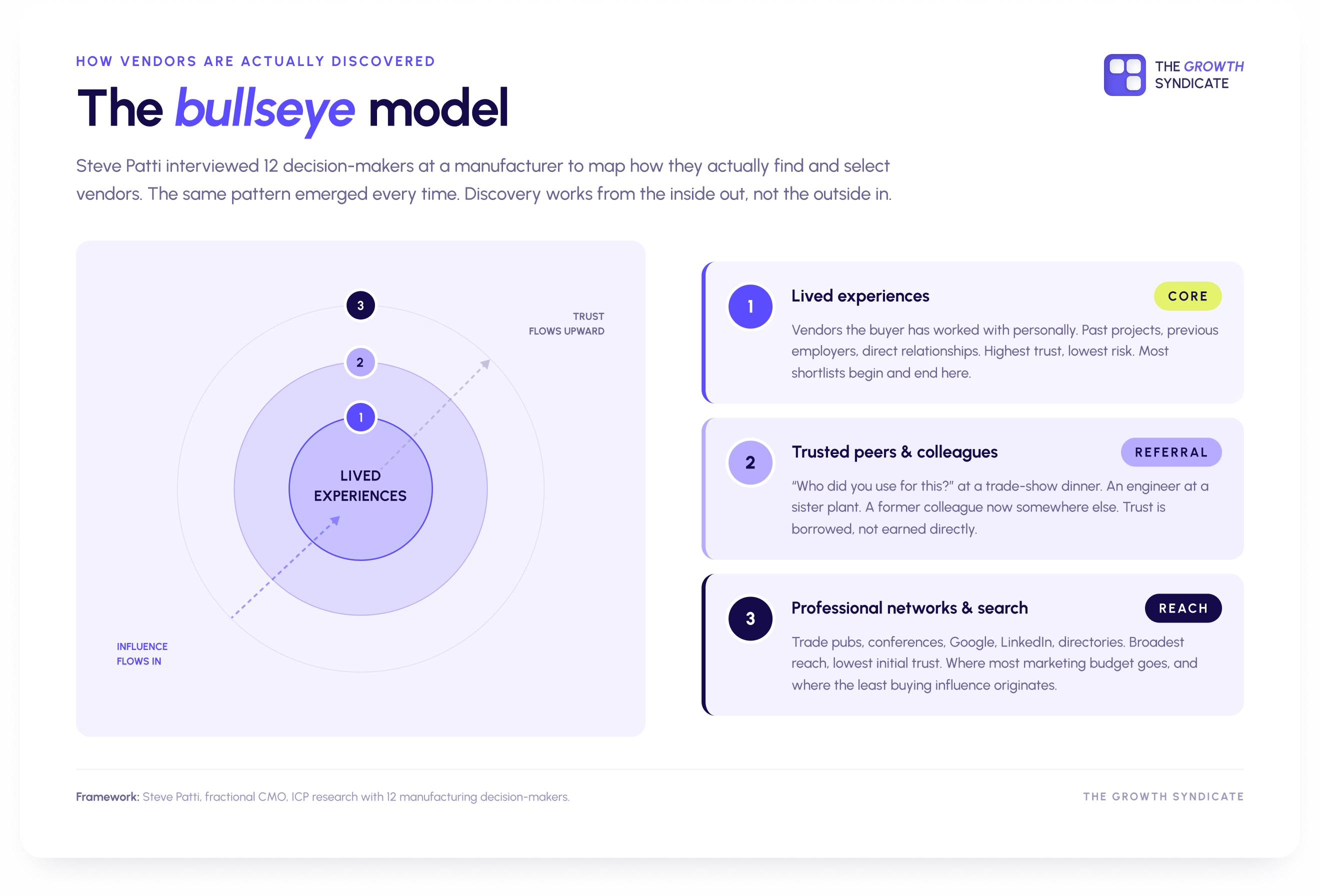
Steve Patti's primary research with the ICPs of mid-market manufacturing companies maps the same pattern as a bullseye: buyers start with lived experiences (vendors they have worked with before), then consult trusted peers (a tight inner circle of three to five people), and only then extend to broader professional networks and search. By the time a vendor sees an intent signal or receives an inbound inquiry, the shortlist has almost certainly been written.

The most consequential marketing a manufacturer does is not the campaign that generates a lead. It is the cumulative marketing activities that earn a place in a buyer's memory before the buying process has already begun.

Engineers use AI more but trust it less
Engineer adoption of generative AI during purchasing has gone from roughly 30% in 2024 to 69% in 2026. Over the same period, trust in AI-generated technical information has dropped from 6.5 out of 10 to 4.7. ChatGPT dominates at 72% of AI-using engineers. But only 6% find AI-generated search summaries "usually enough." The vast majority read the AI summary and then click through to actual sources for verification (TREW/GlobalSpec 2024-2026, n=572-883).
The pattern varies sharply by geography and age. APAC engineers show the highest AI trust at 5.6 out of 10, while European engineers sit lowest at 4.3. Engineers aged 26 to 35 rate trust at 5.8; those over 66 rate it 3.8.

For manufacturers, this means AI is becoming a research layer, not a decision layer. Engineers use AI to orient themselves, then verify through traditional channels. The manufacturers whose content shows up at the verification stage are the ones who benefit. The manufacturers whose content does not exist in a verifiable, technically rigorous form will not.
Section 3: Why trust decides everything in manufacturing
In brief: Trust in manufacturing is not a brand metric. It is the load-bearing structure underneath every commercial relationship. Engineering decision-makers judge a vendor's manufacturing precision by the quality of their marketing materials. Brand familiarity is not a tiebreaker between equal options. It is latent trust, built through years of showing up and being useful.
In most B2B categories, trust is a nice thing to have. In manufacturing, it is the foundation on which every commercial relationship sits. The cost of a wrong vendor decision is a production line that goes down, a shipment that misses a contractual window, a tolerance failure that cascades into a recall. Customer acquisition costs are extreme. Qualification processes for new suppliers can take six to twelve months in regulated industries. Relationships span years, sometimes decades, and customer loyalty once earned is durable precisely because switching is so painful. When manufacturers talk about trust, they mean whether they can sleep at night after signing a purchase order.

Reliable. On time. To spec. That's 90% of the battle.
No positioning strategy, no brand campaign, no thought leadership programme compensates for failing these fundamentals.
What makes trust interesting as a marketing question is what happens above that functional baseline. Once the basics are covered, the signals that build trust become surprisingly indirect. The quality of a manufacturer's technical content becomes a proxy for the quality of their operations. If the content is accurate and well-constructed, buyers infer that the company behind it operates with the same precision. Content quality is not just a marketing metric. It is an operational signal.
Steve Patti heard this directly from engineering VPs during ICP research for a manufacturing client. The reasoning was blunt:
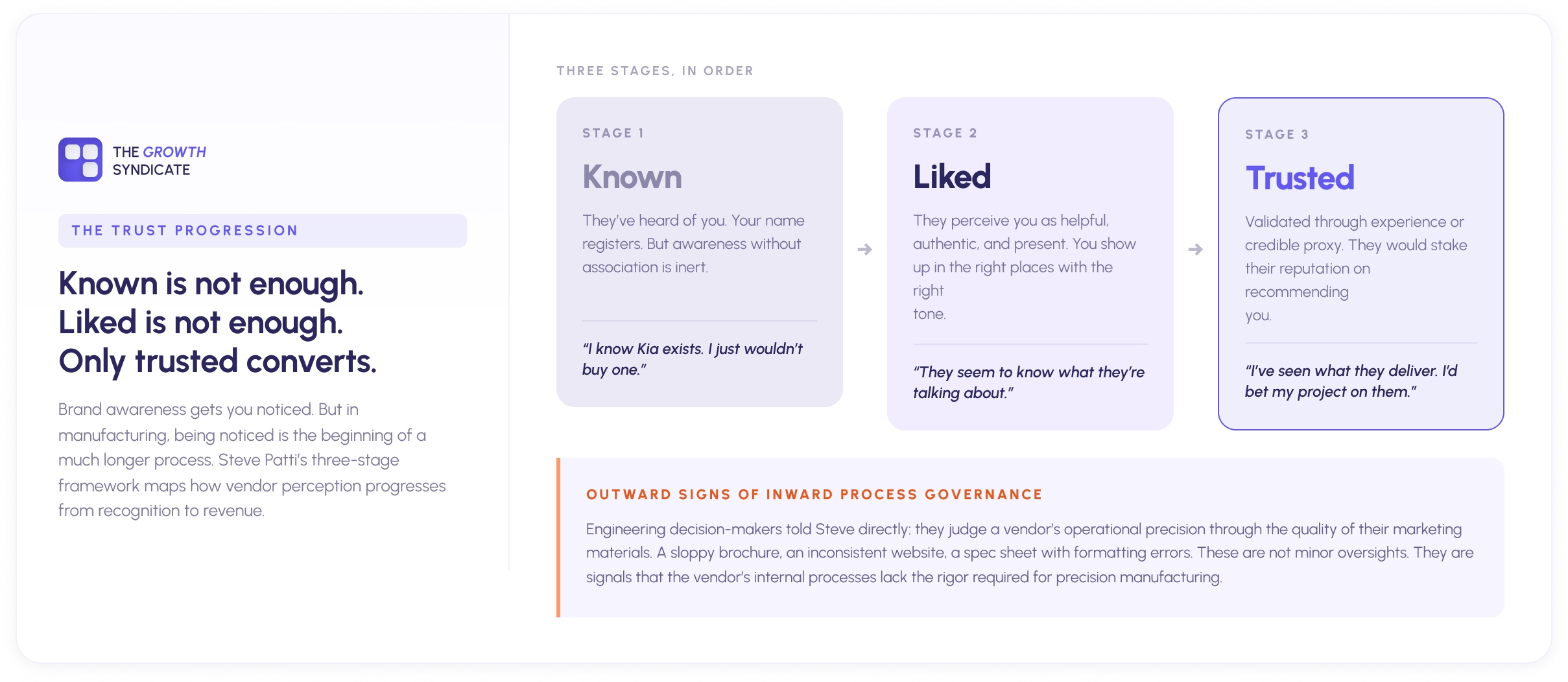
If they don't have attention to detail in how they present themselves in marketing and sales materials, what do we think the tolerance is on parts at 1/1000 of an inch?
For technical buyers, a website is evidence. Every page is a signal to potential clients about whether you operate with the precision their projects require.
Known, liked, trusted
Steve Patti frames the progression in three stages that clarify where most manufacturers get stuck.
The first stage is being known: buyers cannot choose a vendor they have never heard of. The second is being liked: buyers who are aware of you need a reason to consider you, and that reason is usually that you have been helpful, visible in their professional world, and perceived as authentic rather than transactional. The third is being trusted: validated through direct experience or through the recommendation of someone whose judgment the buyer respects.
Steve Patti uses the Hyundai example to illustrate the gap between known and trusted.

We're all aware of brands we'd never buy. I know Hyundai exists as a car manufacturer. I have nothing against Hyundai — I just wouldn't buy one. Brands need to move past simple awareness into genuine preference.
Most manufacturers invest in brand visibility through industry events, paid media, and a basic web presence, then skip directly to expecting trust. The middle stage, being liked, is where conversation channels, educational content, and consistent presence in the social media channels and communities where buyers spend time do their work. It is also where brand begins to mean something more than a logo.

Three independent research programmes converge on the same finding: brand familiarity is the mechanism that gets manufacturers onto the shortlist. 6sense found that 95% of winning vendors were already on the buyer's Day One list (n=4,510).

Bain and Google found that 80-90% of B2B buyers have a set of vendors in mind before any research begins (n=1,208). Forrester found that 41% of buyers enter evaluation with a single preferred vendor already chosen (n=11,352). The engineer-specific data tells the same story: 70% of engineers prefer the better-known brand when two solutions are technically equivalent, and an informative, well-maintained website scores 4.0 out of 5.0 as a credibility indicator, ahead of customer recommendations at 3.8 and case studies at 3.6 (TREW/GlobalSpec 2025-2026). Credibility flows from demonstrated competence, not from visibility alone. Brand familiarity is latent trust, earned through years of showing up and being useful.

How bold should your brand be?
Manufacturing brand strategy sits in a genuine tension. Technical credibility demands conservatism. Effective differentiation demands boldness. Most manufacturing companies end up in one of two default positions: polished corporate shells that could belong to any industry, or websites that look like they were last updated two decades ago. Neither serves the buyer.
The answer is not choosing between credibility and boldness. It is layering them. The functional layer (on spec, on time, IP protected, scalable, affordable) must be communicated with precision. The aspirational layer (what becomes possible when the manufacturing is handled well, the kind of products your capabilities enable) is what creates differentiation and emotional connection.

You need to be functional, realistic, and cover that technical element. That's uncompromising. But you can also be inspirational and bold.
Marketing must also bridge a persistent gap between what a product can do in ideal conditions and what it can do inside a facility running aging infrastructure with partial integrations and limited digital maturity.
Tom Spencer flags the gap that manufacturers need to acknowledge publicly rather than paper over:

You have to sell on your latest and greatest. But you have to understand that the gap between what your latest and greatest is and the industrial reality faced by most people is enormous.
The manufacturers who acknowledge this gap openly earn more trust than those who sell the vision without acknowledging the distance. "Here is what the technology can do, here is where you probably are today, and here is what your next step looks like" is a more effective message than a capability pitch that assumes the buyer's factory is running the vendor's ideal setup.
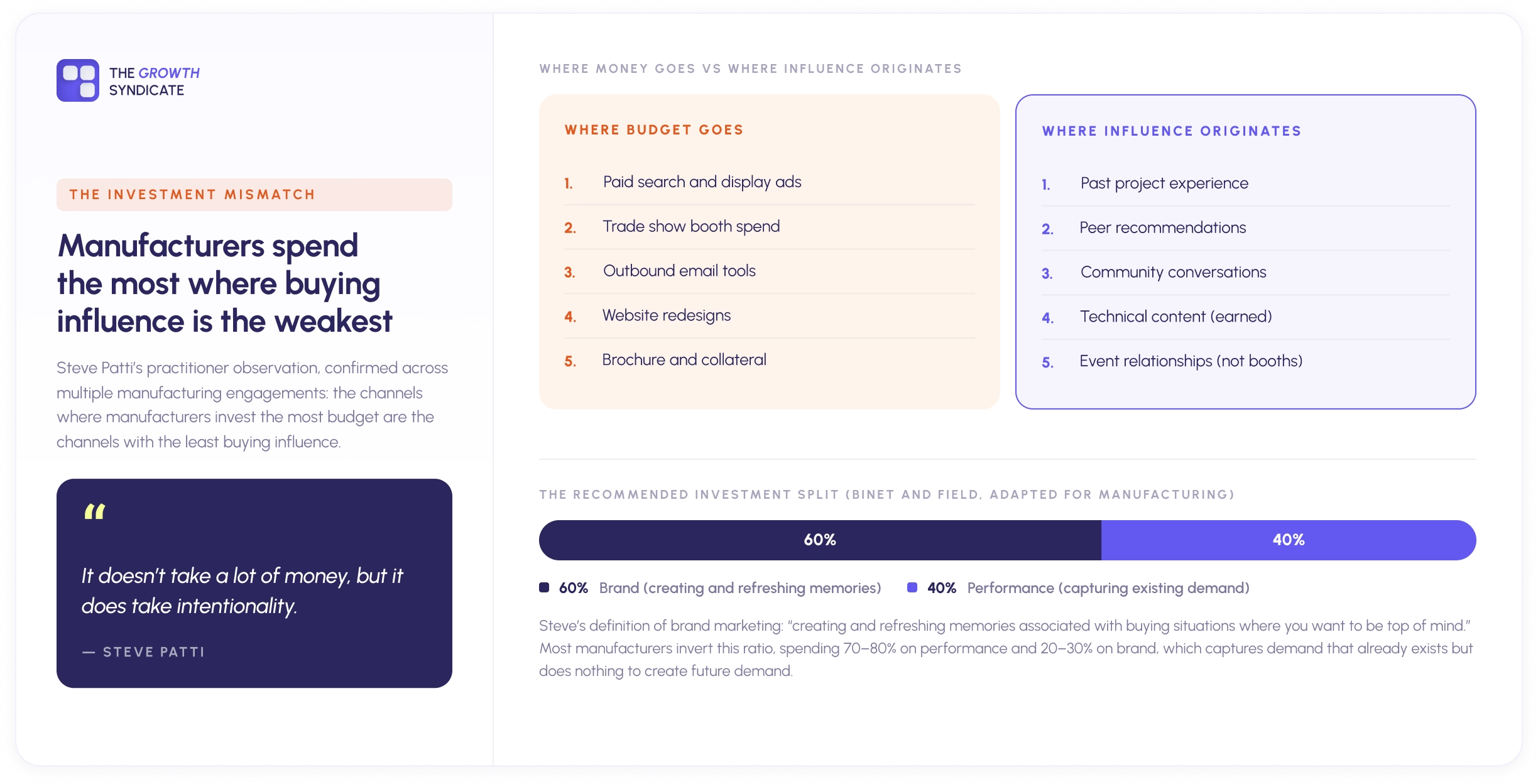
How bold a manufacturer's brand should be is a strategic decision, not a default. The starting point is not what the brand has always looked like. It is what the company wants to become, who it wants to serve, and how it wants to be perceived by the decision-makers it is trying to reach in five and ten years. Les Binet and Peter Field's IPA effectiveness research suggests that the optimal split across B2B is roughly 60% brand building (creating and refreshing memories associated with buying situations) and 40% performance marketing (capturing existing demand). Most manufacturers invert this ratio, spending 70-80% on performance and 20-30% on brand, which captures demand that already exists but does nothing to create future demand.
Section 4: The real problem is clarity
In brief: The most common marketing failure in manufacturing is not a lack of budget or channels. It is a lack of clarity. Most manufacturers can describe what each product does. Very few can say, in one sentence, what the company stands for. Clear positioning turns market noise into brand signal. Getting there starts with listening to buyers, not guessing what they want.
Most manufacturers can tell you what each of their products does. Very few can tell you, in a sentence, what the company stands for. This gap between product-level positioning and company-level positioning is so widespread that every external practitioner we spoke to identified it independently. It is the most common failure in manufacturing marketing strategy, and it cuts across company size and sub-sector.
The gap is not about spending. Gartner's 2024 CMO survey shows marketing budgets at manufacturers growing from 6.7% to 9.5% of company revenue. The money is there. But CMI's 2025 research found that only 26% of manufacturing marketers feel their organization has a clear, consistent brand voice. The problem is not underfunding. The problem is that money is being spent without a coherent answer to the question "what do we stand for?"
Tom Spencer frames the clarity problem as the real bottleneck, not content volume.

Most people think what they need to do is produce more content. What they actually need is more clarity. Less noise, more signal.
The reason this gap is so expensive in manufacturing is directly related to the complexity of the sector. A large automation vendor may have hundreds of thousands of SKUs serving fundamentally different applications across dozens of industries and niche markets. A mid-market manufacturer may make components that go into medical devices, aerospace assemblies, and consumer electronics simultaneously. You cannot build a separate message for every product in every application for every audience tier. You need a central narrative that holds, a positioning spine from which every piece of content, every sales conversation, and every trade show interaction can extend without contradiction.
The best-positioned manufacturers pick a central idea and trace everything back to it. That idea becomes the first lens for every piece of communication. People across sales, marketing, and development start talking about things in the same way. And when a new trend, a new regulation, or a new technology arrives, the company already has a starting point for its perspective rather than scrambling to develop a point of view from scratch.
Using positioning to turn noise into signal
Clear positioning pays its most visible dividend when the market gets noisy. Tom Spencer offered a formulation that captures what positioning actually does in a manufacturing context:

All market noise is an opportunity to create signal. If you know what you stand for and your positioning is clear, you can take the noise of the marketplace and convert it into your own signal.
Industry trends, regulatory changes, new technologies, supply chain disruptions, sustainability mandates: these are the noise that every manufacturer faces constantly. For a company without clear positioning, each of these becomes a separate communications challenge. For a company with a clear narrative spine, each one becomes an occasion to restate what they believe and how their perspective applies. The difference in effort is enormous. The difference in consistency is visible to every buyer who encounters the brand more than once.
How to get there
If the problem is widespread and the principle is straightforward, why does the gap persist? Partly because the people running manufacturing companies are operators and engineers, not brand strategists. They built the business on product quality and relationships, and spending money on strategic marketing feels like exactly the kind of indulgence they have spent their careers ignoring.

The most effective marketing doesn't feel like marketing. When a brand talks to me about something I'm genuinely interested in, it doesn't feel like I'm being sold to — it feels like useful information I've discovered.
Marketing in many manufacturing organizations is viewed as a cost center that produces collateral, not a function that shapes how the company is perceived and chosen. This disconnect between marketing teams and leadership is where the clarity gap begins. Tom Spencer recalls presenting a marketing initiative to a room of industrial stakeholders and having someone declare, to the room, that the entire effort was pointless. Rather than dismissing the objection, he adopted that person as his permanent quality filter. Does the work pass the test of the most skeptical person in the room? If not, it is not ready.

Be clear. Know what you want to say and know who you're talking to. Invest in clarity.
Steve Patti's approach offers a practical entry point that sidesteps the abstract nature of brand strategy entirely. He starts with primary research: interviewing 10 to 15 decision-makers at target accounts to map their buying journey. What triggers potential customers to enter the market? Where do they go for information? What are they looking for? What puts a winning vendor over the top?
Steve Patti frames the alignment benefit as a direct output of the research process itself.

Get the head of Marketing and the head of Sales aligned on the value of the insights first. Then align both functions to how the ICP actually wants to buy. The alignment problem solves itself.
The output of this research gives both the Sales team and the Marketing function a shared map of how manufacturing buyers actually make decisions, which marketing tactics to prioritize, and where to invest next.
The cost of this kind of research is modest. In Steve's experience, a focused ICP study can be completed for a fraction of a single month's campaign spend. The gap between what most manufacturers spend on marketing activity and what they spend on understanding whether that activity reaches the right people in the right way is one of the most consistent patterns across every conversation we had for this report.
Section 5: What actually works
In brief: The channels, content formats, and operational habits that produce results in manufacturing marketing share one characteristic: they prioritize the buyer's research process over the marketer's campaign calendar. The highest-performing manufacturers invest in organic visibility, technical depth, and conversation channels that most competitors ignore entirely.
Channels: be where your buyers are
The data on where engineers spend their research time tells a story that should reshape how manufacturers allocate budget. Technical publications and vendor websites dominate at 73% each. YouTube is rated valuable by 84%. Newsletters reach 94% of technical buyers. These are not paid media channels. They are earned and owned channels, and the manufacturers who invest in them consistently attract organic traffic that compounds over time rather than disappearing when the ad spend stops.

Search engine optimization remains one of the most effective lead generation channels in manufacturing, precisely because engineers search differently from most B2B buyers. They go deep. Over 43% report searching five or more pages into results. They look for technical articles, application notes, and spec comparisons that answer specific engineering questions. A manufacturer whose content appears on page three for a specific technical query will still get found, because the engineer looking for that answer will keep scrolling until they find it.
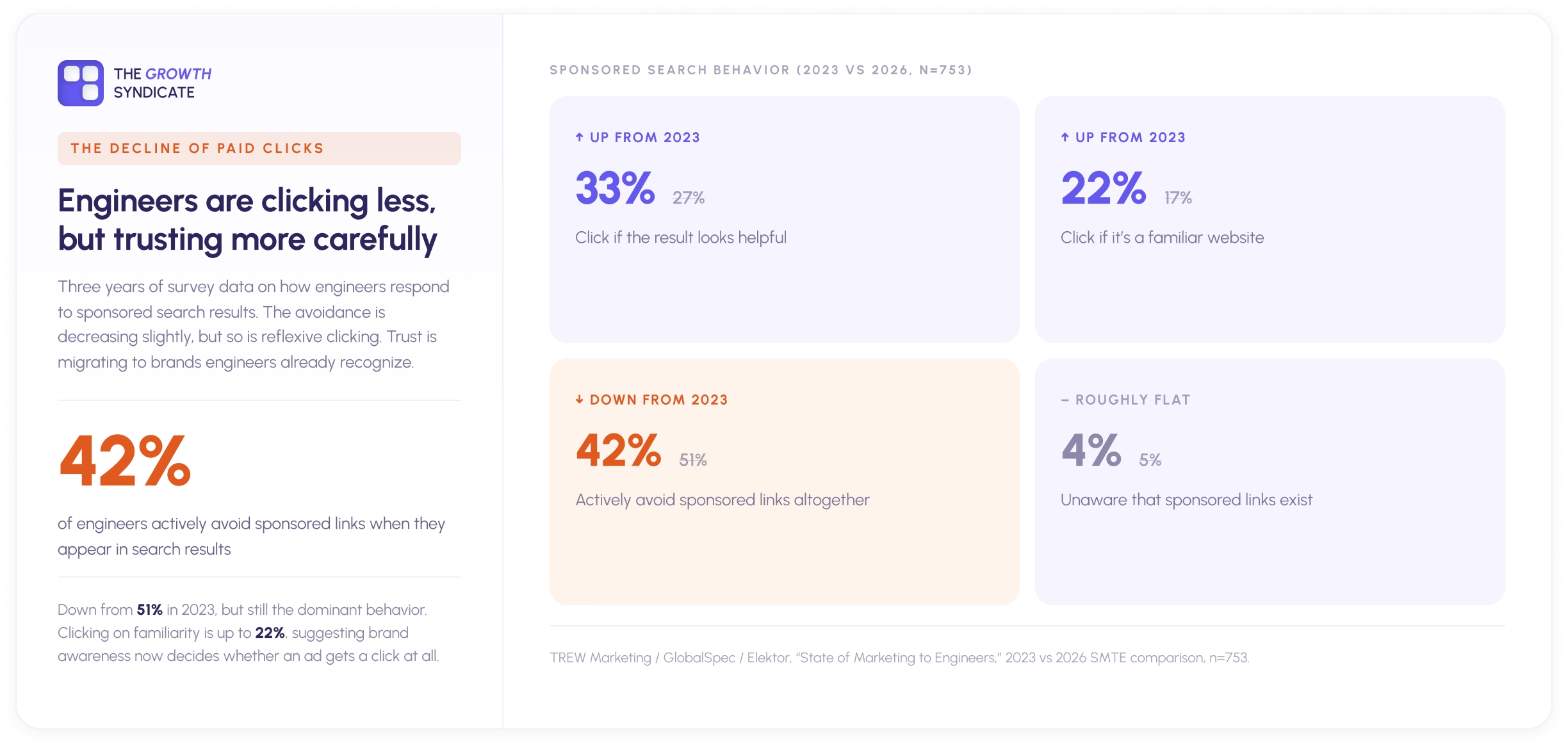
Paid search and Google Ads have a role, but it is smaller than most manufacturing companies assume. The TREW data shows the broader pattern shifting: engineers who actively avoid sponsored results dropped from 51% in 2023 to 42% in 2026, while those who click if the result looks helpful rose from 27% to 33%. Paid media is becoming less toxic but remains a minor influence channel. Manufacturers who spend 70-80% of their budget on performance marketing and 20-30% on brand are capturing demand that already exists while doing nothing to create future demand.

Email marketing and newsletters deserve particular attention. 94% of engineers subscribe to at least one work-related newsletter. The actions they take after reading are measurable and high-intent: 63% click through to read full articles, 60% download spec sheets, and 56% visit vendor websites. For manufacturers, a well-maintained newsletter is not a nurture tactic. It is a research tool their buyers actively use, and every issue is an opportunity to generate qualified leads by connecting technical content to the problems engineers are trying to solve.

Trade shows and industry events remain important, but the highest-value marketing activities happen outside the booth.
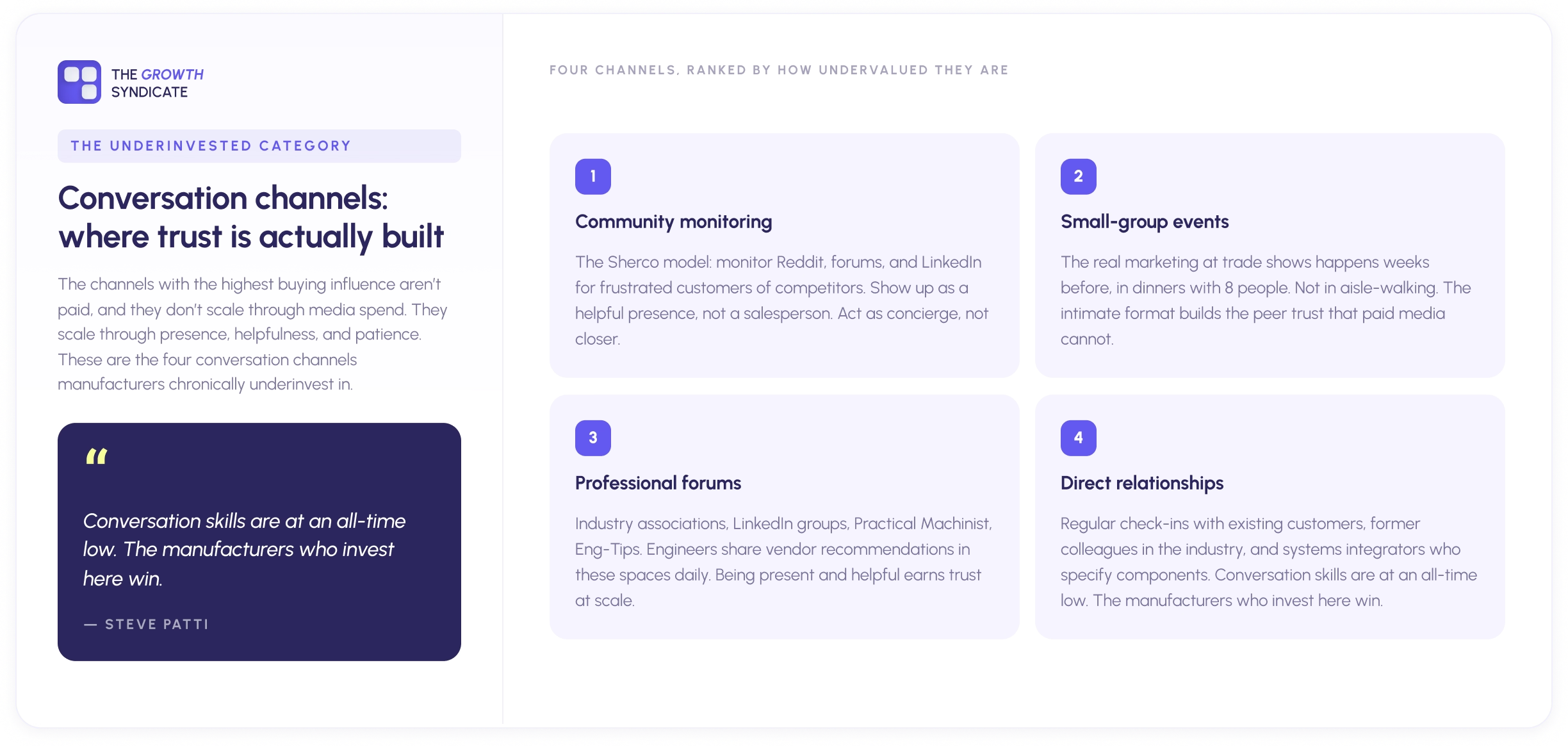
Steve Patti's recommendation is to invest in small-group dinners and targeted conversations weeks before the event, using the conference as a reason to convene the right people rather than as the marketing activity itself. The intimate format builds the peer trust that paid media cannot replicate, and it creates the kind of lived experience that lands a manufacturer in ring one of the bullseye.

Conversation channels are the category manufacturers underinvest in most. Community monitoring on Reddit, LinkedIn, and professional forums like Practical Machinist and Eng-Tips. Direct relationships with existing customers, systems integrators, and former colleagues who now work at target accounts. These channels do not scale through media spend.
They scale through presence, patience, and genuine helpfulness. In a competitive market where 95% of winners were already on the Day One shortlist, the manufacturers who show up consistently in these spaces are the ones who earn a place in the buyer's memory before the formal evaluation begins.

Content: substance over volume
The content that works in manufacturing is the content that would survive being read by the most technically demanding person in the buyer's organization. Datasheets, spec sheets, and CAD files are the non-negotiable baseline. Technical articles, application notes, and how-to videos are the layer above. Case studies with verifiable detail across different industries and company sizes provide social proof that reaches both the engineering level and the management level simultaneously.
Video content reaches 94% of engineers. The formats they value most are how-to and installation guides (62%), technical deep dives (51%), and product demos (47%). The formats they value least are product launch announcements (17%) and facility tours (14%). The pattern is consistent: engineers watch video to learn, not to be marketed to. Every manufacturer should have a YouTube channel. The content does not need to be expensive. It needs to be specific, technically accurate, and respectful of the viewer's time.
Operations: alignment before execution
The operational question underneath all of this is whether the marketing function and the sales team are working from the same understanding of how manufacturing buyers actually buy. In most manufacturing companies, they are not. Marketing produces content based on product features. Sales runs a process based on relationships and RFP responses. Neither is wrong, but without a shared map of the buyer's journey, both waste effort on activities that do not connect to how decisions are actually made.
Steve Patti's ICP research methodology is the most practical starting point we encountered across all five interviews. Interview 10 to 15 decision-makers at target accounts. Map their triggers, channels, information needs, and decision criteria. Use the output to align marketing tactics, sales processes, and content production around the way buyers actually move through their evaluation. The research itself costs a fraction of a single month's campaign budget, and it produces the shared language that makes marketing and sales alignment possible rather than aspirational.
The manufacturers who track the right key performance indicators see this clearly. Lead quality matters more than lead volume. The number of qualified leads that progress to a sales conversation matters more than the number of form fills. The percentage of deals where the company was on the Day One shortlist matters more than any metric tied to campaign impressions. Effective manufacturing marketing requires measuring what the buyer does, not what the campaign did.
For manufacturers ready to move beyond campaign-level tactics toward a more systematic approach, inbound marketing and account based marketing offer complementary frameworks. Inbound builds the technical content and organic presence that attracts potential clients during their self-directed research phase. ABM focuses resources on the specific accounts where the company has the best chance of winning, using the ICP research to identify which accounts to pursue and what those buyers need to see. Marketing automation connects the two by ensuring that the right content reaches the right person at the right stage without requiring manual intervention at every step.

It doesn't take a lot of money, but it does take intentionality.
Parting thoughts
Manufacturing marketing is not a simplified version of B2B marketing with longer sales cycles and more complex products. It is a different discipline, shaped by structural constraints that have no equivalent in software, media, or professional services. The engineers, procurement leads, and plant managers who make purchasing decisions are among the most technically rigorous buyers in any industry. They reward substance. They punish fluff. And they have already written their shortlist before most manufacturers know they are in the market.
Three things run through every conversation we had for this report, every dataset we examined, and every framework our contributors described.
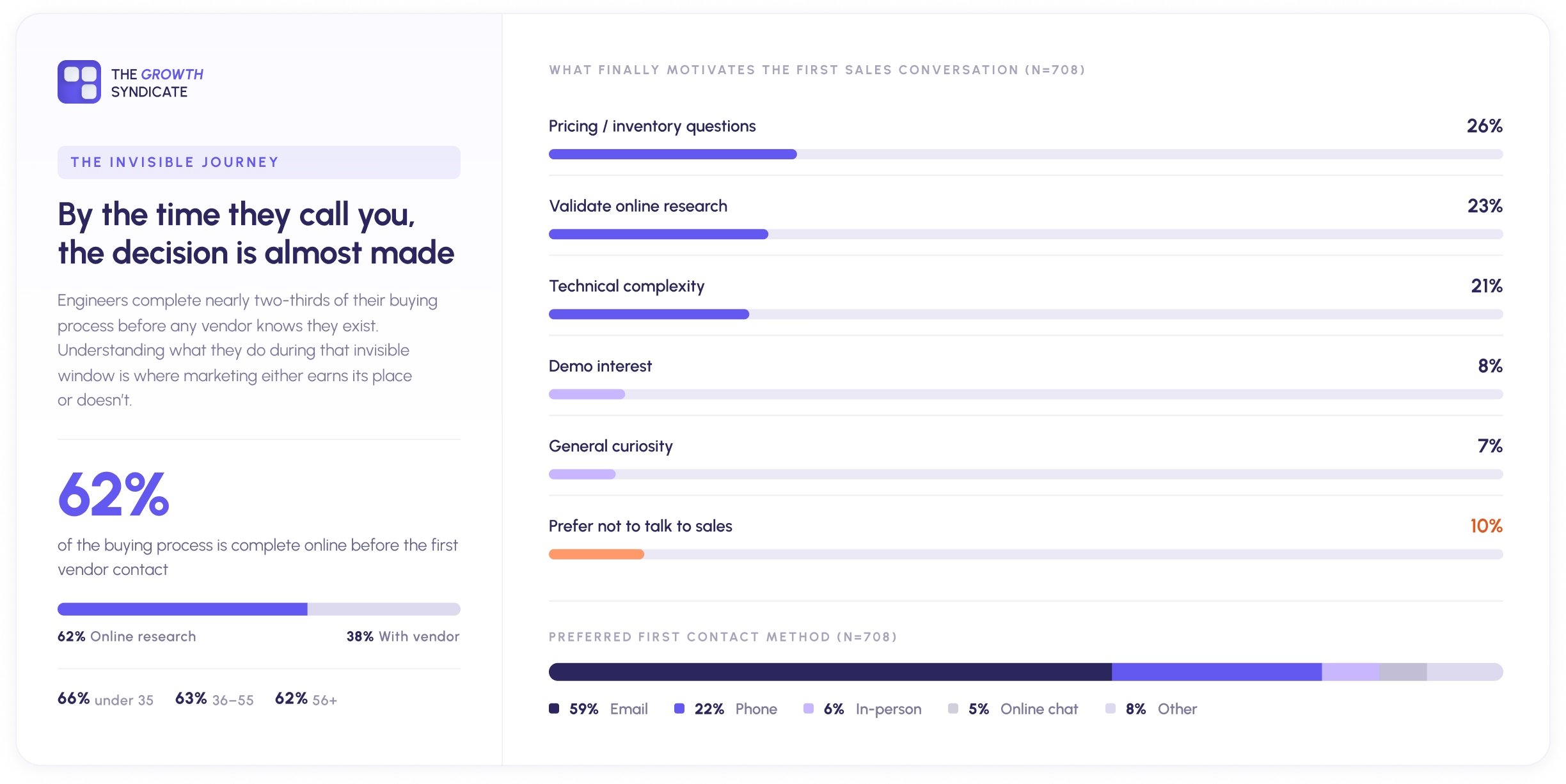
Build for the buyer who is looking but not yet talking to you. 62% of the buying journey happens before first vendor contact. 95% of winners were on the Day One shortlist. The marketing that matters most is not the campaign that generates a lead. It is the cumulative work that earns a place in the buyer's memory: the technical article that answered a question at 2am, the spec sheet that was accurate down to the last decimal, the YouTube video that showed exactly how to integrate a component into an existing assembly. This is how manufacturers generate leads that turn into revenue. Not through volume, but through the kind of depth that makes an engineer bookmark a page and come back six months later when the project is live.
Invest in clarity before you invest in channels. Every practitioner we spoke to arrived at the same conclusion independently. The manufacturers who produce the most content are not the ones who win. The manufacturers who are clearest about what they stand for, who they serve, and what they make possible are the ones whose marketing compounds over time rather than resetting with every campaign cycle. Positioning is not a branding exercise. It is the foundation that makes every piece of content, every sales conversation, and every trade show interaction more effective.
Earn trust through precision, not through polish. Engineering decision-makers judge a vendor's operational competence through the quality of their marketing materials. A website with formatting errors signals a factory with tolerance problems. A technical article that hedges on specifics signals a company that does not fully understand its own product. The manufacturers with a proven track record of technical depth in their content are the ones who progress from known to liked to trusted, and trust is what converts in this industry. Everything else is noise.
Manufacturing is a $16.83 trillion sector. The companies within it build the physical infrastructure of the modern world. The marketing those companies do should reflect the same precision, the same technical credibility, and the same commitment to substance that their products represent. The playbook for how to do that does not exist in SaaS. It exists in the accumulated experience of the practitioners, engineers, and marketers who have spent their careers learning what works inside a factory's constraints. This report is our attempt to put that knowledge in one place.
Frequently asked questions
How long does a typical sales cycle take in manufacturing, and what does that mean for marketing?
Sales cycles in manufacturing typically run 6 to 18 months, with complex capital equipment purchases often stretching longer. This has a direct consequence for marketing strategy: the work that earns a place on the buyer's shortlist happens months or years before the deal is visible. As this report's data shows, 62% of the buying process is completed before any vendor is contacted, and 95% of eventual winners were already on the buyer's Day One shortlist. Marketing in manufacturing is not about generating demand on a campaign timeline. It is about building memory and trust over the full length of that cycle, so that when a buyer enters the market, your company is already in consideration.
What is the most effective way to measure marketing effectiveness in manufacturing?
The ultimate measure of marketing effectiveness in manufacturing is revenue impact, which means tracking leads through the entire process from first touch to closed deal. Cost per qualified lead, marketing-sourced revenue, lead-to-customer conversion rates, and customer lifetime value are the metrics that connect marketing activity to business outcomes. Manufacturers who implement targeted marketing strategies can experience up to 20% higher revenue growth. But the measurement challenge in manufacturing is that the long sales cycle makes attribution harder than in SaaS or e-commerce. The practitioners interviewed for this report consistently emphasized that lead quality matters more than lead volume, and that the percentage of deals where the company was on the Day One shortlist is a more meaningful indicator than campaign impressions.
Why does SEO work differently for manufacturers than for other B2B companies?
Search engine optimization for manufacturing requires a fundamentally different approach than consumer or even typical B2B SEO. The target audience searches for highly specific technical terms with low search volumes but extremely high purchase intent. Over 43% of engineers report going five or more pages deep in search results, far beyond the first-page threshold that most SEO strategies optimize for. This means that manufacturers can rank for long-tail keywords that competitors ignore and still reach the right buyers. The content that performs is technical articles, application notes, and spec comparisons that answer specific engineering questions, not the broad awareness content that dominates most B2B SEO playbooks. Implementing SEO best practices is critical because buyers are researching online long before they ever contact a company.
How important are CAD files and interactive tools for manufacturing lead generation?
For manufacturers selling components, downloadable CAD files are the single highest-intent action a buyer can take on a website. This report's data shows that 89% of design engineers will only select components from manufacturers who provide downloadable CAD models, and 82% of those downloads convert to purchase, with an average of 16.7 parts ordered per download. Beyond CAD files, modern buyers increasingly prefer interactive tools that help them solve engineering problems. Product configurators built on 3D visualization or digital twin technology let engineers validate specifications and check compatibility without contacting a sales representative, which aligns with the broader finding that engineers want to complete as much of the evaluation as possible before initiating vendor contact. Interactive tools like ROI calculators can also help leads self-qualify, reducing the burden on sales teams while giving buyers the data they need to build an internal business case.
What content formats do engineers actually engage with?
Engineers are not opposed to marketing content. They are opposed to content that wastes their time. The TREW/GlobalSpec data cited in this report shows that datasheets lead at 79%, followed by technical articles at 61% and CAD drawings at 37%. For gated content, ebooks and guides top the list at 47%, followed by white papers at 37%. Video content reaches 94% of engineers, with how-to and installation guides (62%), technical deep dives (51%), and product demos (47%) as the most valued formats. Video demonstrations can increase brand awareness by up to 93%. The common thread across all formats is substance: the content that earns attention provides specifications, performance data, and measurable proof of capabilities. Content promotion through targeted distribution can potentially double lead volume for manufacturing companies, but only if the underlying content meets the technical standard the audience expects.
How should manufacturers approach trade shows and industry events?
Trade shows remain important in manufacturing, but the highest-value marketing happens outside the booth. This report's contributors recommend investing in small-group dinners and targeted conversations in the weeks before an event, using the conference as a reason to convene the right people rather than as the primary marketing activity. Networking at industry events is vital for lead generation because engaging in meaningful conversations and showcasing products boosts visibility and credibility within the sector. The intimate format builds peer trust that booth traffic cannot replicate, and it creates the kind of lived experience that places a manufacturer in the innermost ring of the bullseye model described in Section 2. The event itself is the excuse. The relationships built around it are the marketing.
Why do most manufacturing companies struggle with brand positioning?
The positioning gap is the most consistent finding across every interview conducted for this report. Most manufacturers can describe what each product does. Very few can articulate, in one sentence, what the company stands for. This matters because manufacturing companies often serve multiple industries with hundreds or thousands of SKUs, making it difficult to build a single coherent narrative. The result is that marketing defaults to product-level messaging without a company-level positioning spine. CMI's 2025 research found that only 26% of manufacturing marketers feel their organization has a clear, consistent brand voice, even as marketing budgets at manufacturers have grown from 6.7% to 9.5% of company revenue (Gartner 2024). The money is there. The clarity is not. Targeted, personalized content tailored to specific industries can demonstrate deep vertical expertise, but that content only compounds if it extends from a central positioning idea that holds across every audience and application.
How should marketing and sales teams work together in manufacturing?
Sales and marketing in manufacturing should function as an integrated revenue engine rather than as separate departments with separate goals. In most manufacturing companies, marketing produces content based on product features while sales runs a process based on relationships and RFP responses. Neither is wrong, but without a shared understanding of how buyers actually make decisions, both waste effort. The most practical starting point identified in this report is Steve Patti's ICP research methodology: interview 10 to 15 decision-makers at target accounts, map their triggers, channels, and decision criteria, and use the output to align both functions around the buyer's actual journey. Implementing a strong lead nurturing process with automated sequences and tailored follow-ups can further enhance conversion rates by delivering relevant content at each stage. The research itself costs a fraction of a single month's campaign budget, and it produces the shared language that makes alignment possible rather than aspirational.
What role does sustainability play in manufacturing marketing?
Buyers in 2026 increasingly prioritize sustainability and transparency over simple environmental marketing claims. For manufacturers, this means that sustainability messaging must be grounded in operational specifics: energy consumption data, waste reduction metrics, supply chain certifications, and verifiable environmental commitments. The same principle that governs all manufacturing marketing applies here. Engineers judge claims by the evidence behind them. A sustainability page with generic language about "commitment to the environment" will be ignored. A page with ISO 14001 certification details, specific emissions reduction figures, and supply chain transparency data builds the kind of trust this report describes in Section 3. Sustainability is not a separate marketing strategy. It is a positioning element that, like every other claim a manufacturer makes, must be backed by precision.
How big is the manufacturing sector, and why does that matter for marketers?
Manufacturing is a $16.83 trillion global sector accounting for roughly 15% of world GDP. In the United States alone, the sector contributed $2.3 trillion to GDP in 2023, representing 10.2% of the total. Despite this scale, the marketing knowledge written specifically for manufacturing is a fraction of what exists for software, media, or professional services. The digital transformation of industrial buyers means that engineers and procurement professionals now begin their evaluation process with online searches, making a strong digital presence essential. Yet as this report documents, 78% of manufacturing marketers rate their content marketing as moderately effective or worse. The gap between the sector's economic importance and the quality of its marketing represents both a challenge and an opportunity. The manufacturers who invest in clarity, technical depth, and the right channels will stand out precisely because so few of their competitors do.
What does an effective digital marketing strategy look like for a manufacturing company?
An effective digital marketing strategy for manufacturing companies starts with understanding where technical buyers actually spend their research time, then building presence in those channels. The data in this report shows that online technical publications and vendor websites lead at 73% each, YouTube is rated valuable by 84% of engineers, and newsletters reach 94%. Paid search plays a smaller role than most manufacturers assume: only 1 in 12 senior decision-makers in one ICP study had ever clicked a sponsored ad during a buying process. The most effective digital marketing strategies for manufacturing prioritize organic search visibility through technical content, a well-maintained YouTube channel with how-to and installation content, an email newsletter with genuine editorial value, and consistent presence in the professional communities where engineers exchange recommendations. The common mistake is spreading budget across every available digital channel rather than investing deeply in the three or four that the data shows engineers actually use.
What should a marketing plan for a manufacturing company include?
A marketing plan for a manufacturing company should begin with ICP research, not channel selection. Interview 10 to 15 decision-makers at target accounts to understand what triggers them to enter the market, where they go for information, what they look for, and what puts a vendor over the top. That research produces the shared map that makes every subsequent decision more effective. From there, the plan should include a positioning spine (the one sentence that captures what the company stands for), a content strategy built around the formats engineers value most (technical articles, datasheets, application notes, video tutorials), a channel strategy weighted toward organic search, YouTube, and email, and a measurement framework that tracks lead quality and marketing-sourced revenue rather than campaign impressions. The manufacturers who skip the research phase and jump straight to tactics end up spending money without a clear understanding of whether it reaches the right people.