.svg)


Most B2B companies approach search engine optimization the same way they approach everything else in marketing: they copy what B2C brands did five years ago and hope for the best.
The way we see it, that is a recipe for spending six months producing blog posts that rank for nothing and convert nobody.
B2B SEO operates under fundamentally different constraints than consumer search. The buying process involves multiple decision makers. The sales cycle is longer. The search terms your target audience uses are specific, technical, and often carry low search volumes that would make a B2C marketer walk away. And yet, organic search remains the single largest source of qualified traffic for most B2B companies, generating leads that convert at roughly 14.6% compared to 1.7% for outbound.

The problem is that the search landscape shifted underneath everyone in 2024 and 2025, and most B2B SEO strategies haven't caught up. AI Overviews now appear on the majority of informational queries. Position-1 click-through rates have fallen by as much as 58% on affected searches. HubSpot, once the poster child for content-led growth, lost up to 80% of its organic traffic in a single quarter after Google's algorithm updates punished their sprawling, off-topic content library.
This guide is built for B2B companies figuring out what a successful SEO strategy looks like now. The actual mechanics of keyword research, content creation, technical SEO, on page optimization, off page SEO, and measurement that produce qualified leads from organic search.
What makes B2B SEO different from everything else
Before we get into tactics, the structural differences between B2B and B2C search engine optimization need to be clear. These differences shape every decision in your B2B SEO strategy, from which search terms you target to how you create content to what success looks like.
The people you are trying to reach
B2B buyers search differently because they are solving different problems. A consumer searching for "running shoes" wants to buy something. A VP of Engineering searching for "API gateway security best practices" is trying to understand a problem before even considering vendors. B2B decision makers use search engines to diagnose issues, evaluate approaches, and build internal cases for change. They search with specific business problems in mind, not products.
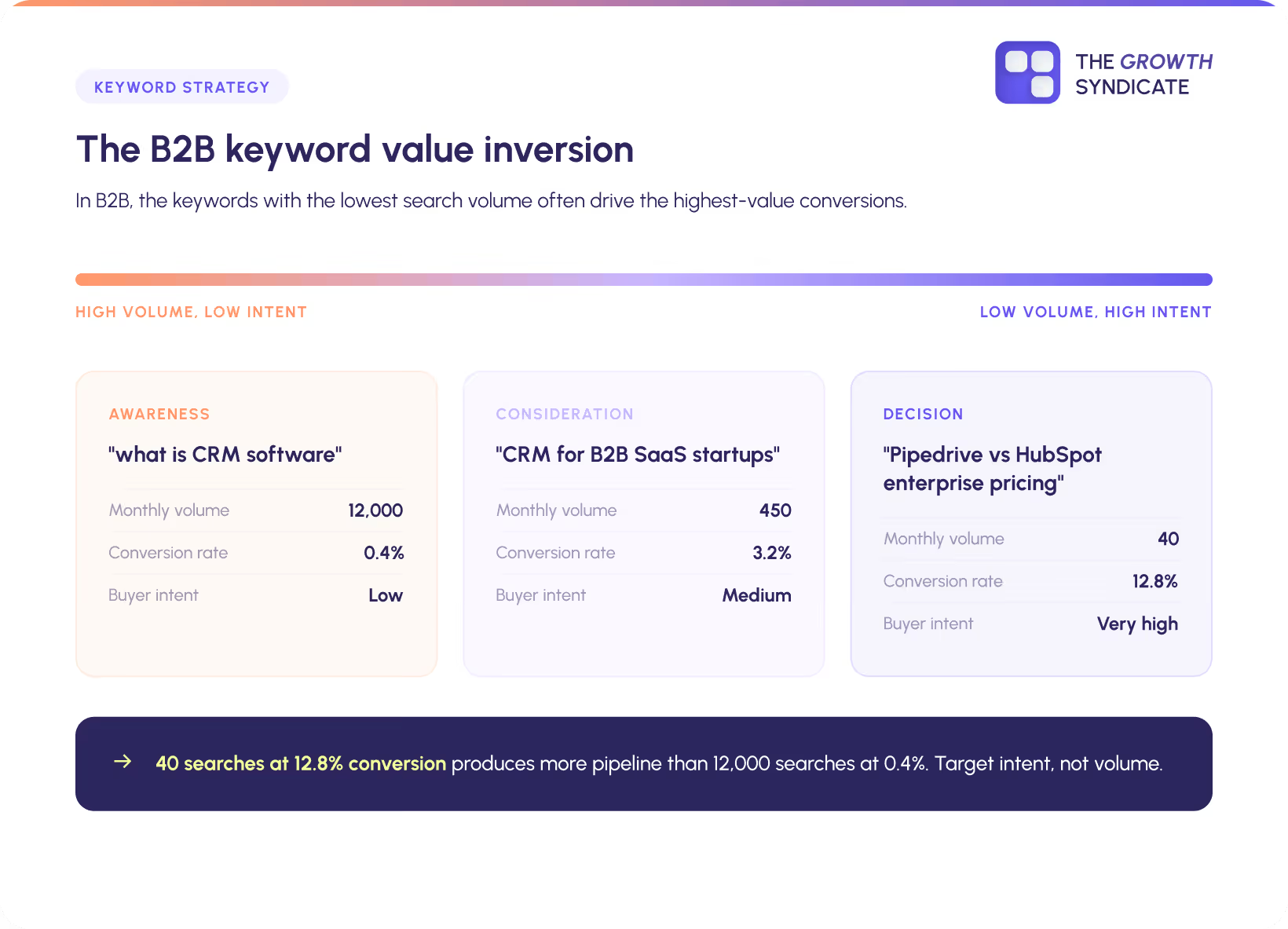
This means the search intent behind B2B queries is layered. The same person might search "what is revenue operations" (awareness), then "RevOps platform comparison" (consideration), then "Clari vs. Gong pricing" (decision) over the course of weeks or months. Your content strategy needs to meet them at every stage of the buying journey.
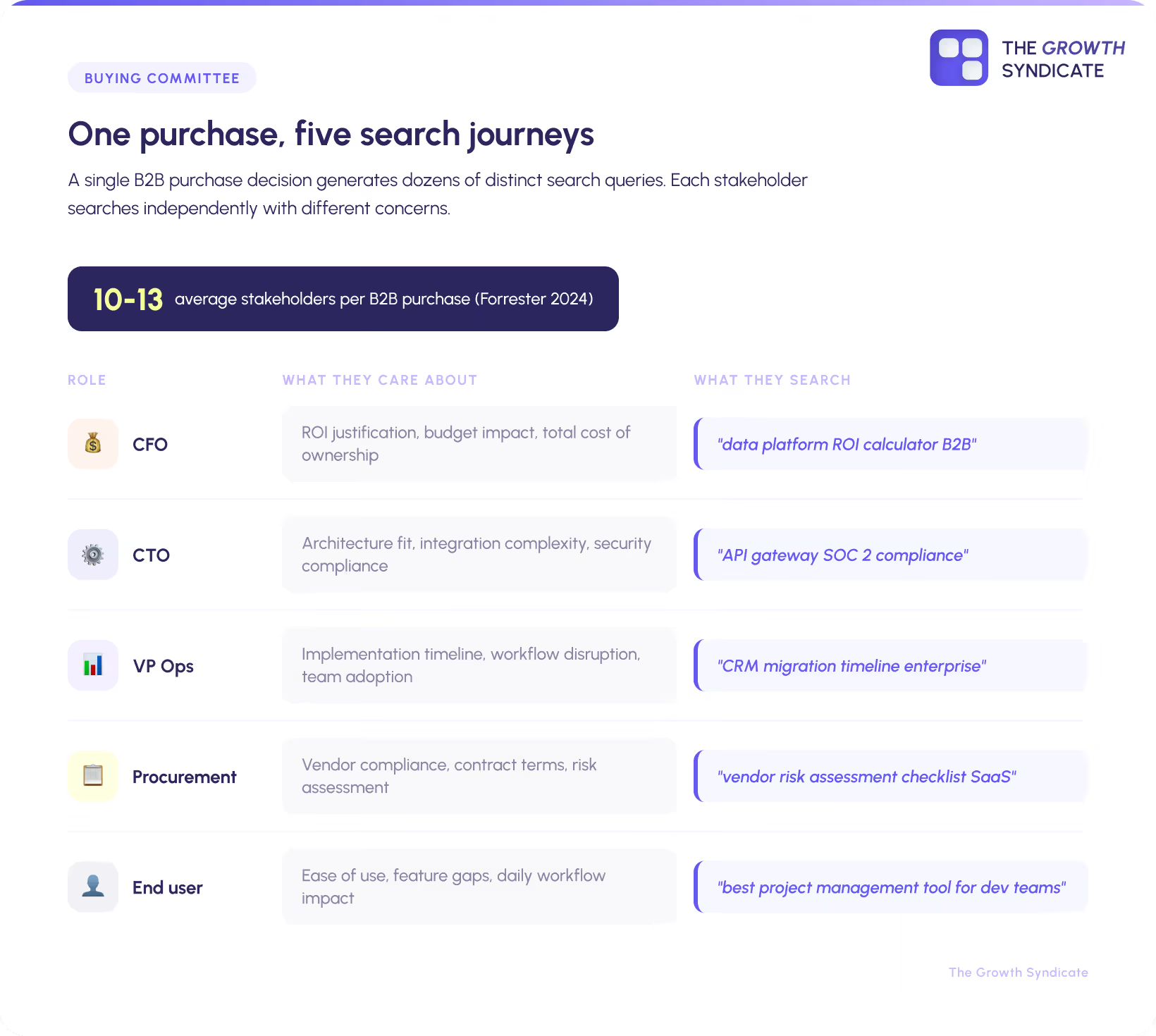
The buying process itself involves 10 to 13 stakeholders on average, according to Forrester's 2024 research. Each of those people searches independently. A CFO searches for ROI justification. A technical lead searches for integration specifications. A procurement officer searches for vendor compliance. A single purchase decision generates dozens of distinct search queries across multiple people, and your web pages need to address all of them.
Why low search volumes are actually the point
Here is where most B2B SEO campaigns go wrong. Marketers trained on B2C instincts look at a keyword tool and dismiss anything under 1,000 monthly searches. In B2B, that instinct is backwards.
B2B companies should target low volume keywords because those are the search terms that decision makers actually use when they are actively evaluating solutions. "Enterprise data governance platform SOC 2 compliant" gets 40 searches a month. But if your company sells data governance software, those 40 searches represent exactly the kind of qualified traffic that turns into pipeline.
B2B SEO is one of the most effective ways to do that, because you are reaching people at the exact moment they are looking for answers to problems your company solves.

Low search volumes and high intent keywords are not a limitation of B2B SEO. They are its defining advantage. The conversion rates on these queries are dramatically higher than what you see on broad, high volume keywords that attract people who will never buy.
Is SEO dead or evolving in 2026
Let us address this directly, because you will see this question everywhere. B2B SEO is not dead. It is, however, going through the most significant structural change since Google introduced mobile-first indexing.
What AI Overviews actually changed
Google's AI Overviews (formerly SGE) now appear on a growing share of informational queries. When an AI Overview is present, position-1 organic click-through rates drop substantially. An Ahrefs study of 300,000 keywords found a 58% CTR reduction for the top organic result when an AI Overview appeared. A separate analysis by Seer Interactive across 25.1 million impressions found a 61% organic CTR decline on AI Overview queries.
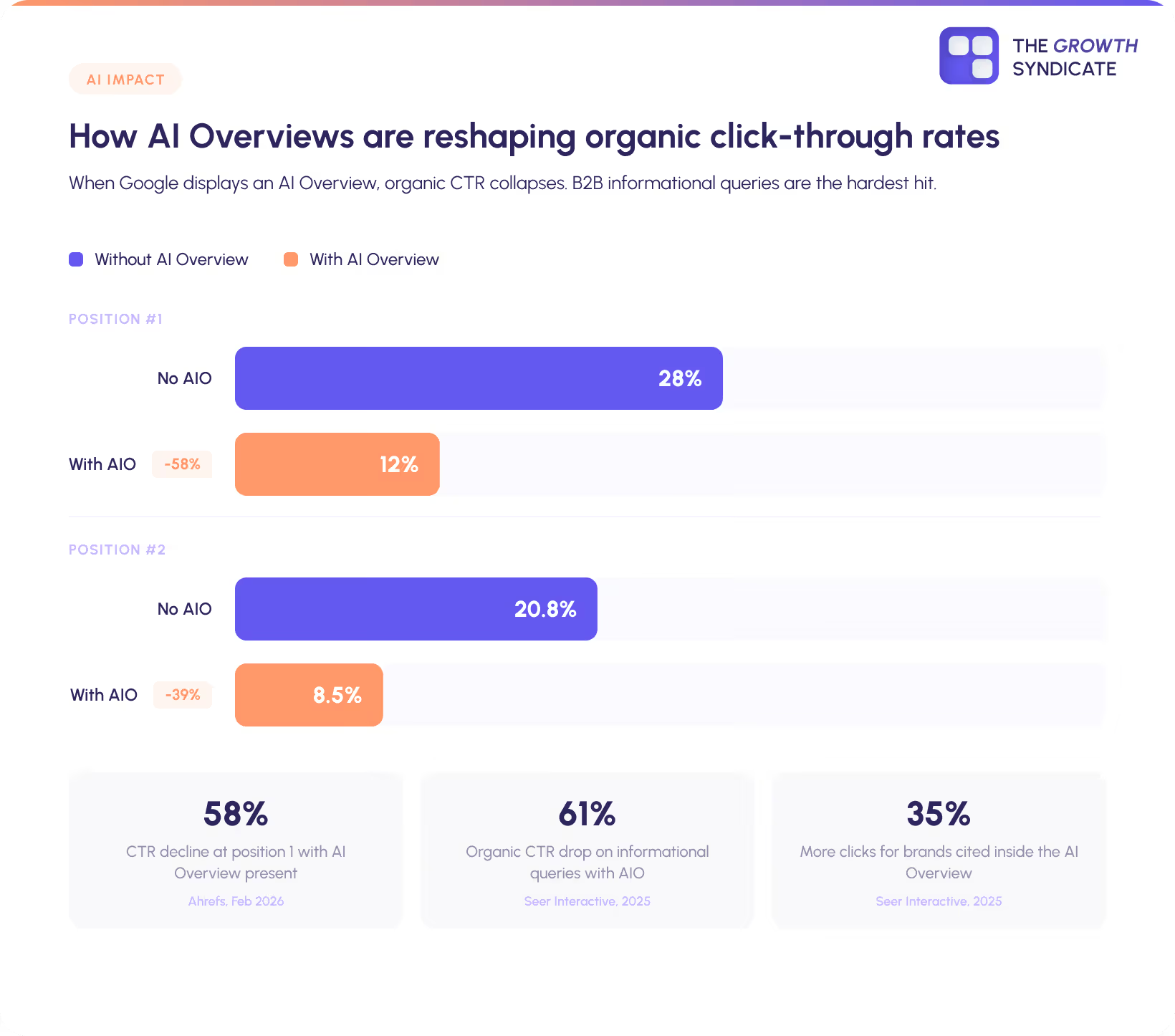
For B2B SEO, this matters because informational queries (the kind B2B buyers use early in their research) are the most affected category. The people searching "what is account-based marketing" or "how to build a sales enablement program" increasingly get their answer directly in the search engine results page without clicking through to any website.
But here is what the panic narratives miss: B2B buyers doing serious research still click. They still read. They still need depth that a three-paragraph AI summary cannot provide. The 6sense 2025 Buyer Experience Report found that 83% of buyers define purchase requirements before speaking with sales, and 63% of buyers who use AI tools still cross-check their findings on Google Search. The buying journey for complex B2B purchases has not been replaced by AI. It has been augmented by it.
The real threat is not AI. It is mediocrity.
Google's Helpful Content Update and subsequent core algorithm updates did far more damage to B2B websites than AI Overviews. HubSpot published over 18,000 blog pages, including hundreds on topics completely outside their area of expertise (cover letter templates, famous quotes, the shrug emoji). Google's updated ranking systems specifically penalize content published outside an organization's demonstrated expertise.
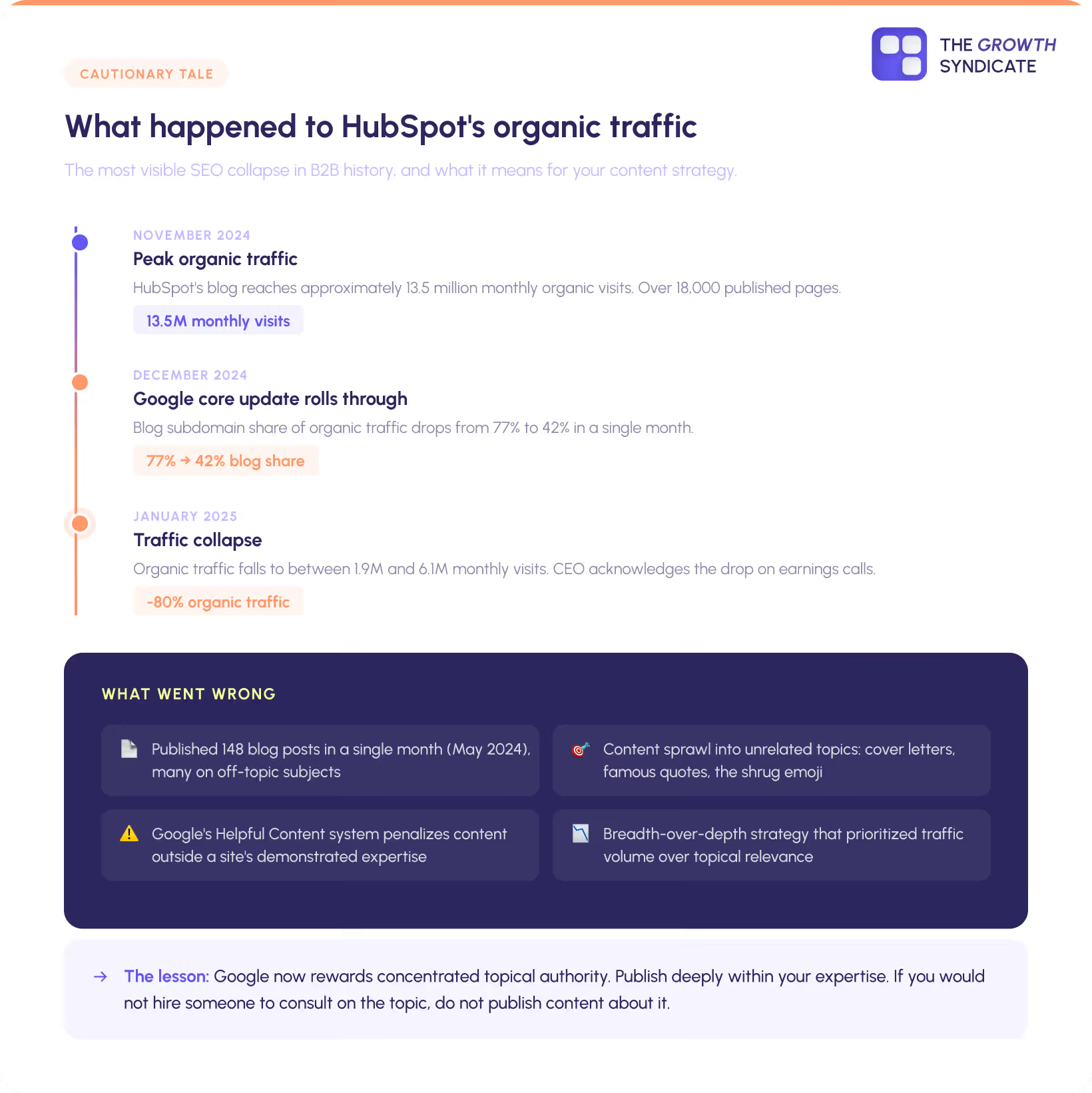
The lesson for your B2B SEO strategy is straightforward. If you are a cybersecurity company, do not publish blog posts about office management tips to chase traffic. Search engines now evaluate whether your entire site demonstrates topical authority in the areas you are trying to rank for. Depth beats breadth. Concentrated expertise beats scattered content creation.
Traditional SEO tactics like keyword stuffing, thin content at scale, and link schemes have been dying for years. What is replacing them is a B2B SEO strategy grounded in genuine expertise, original research, and content that people actually want to read.
Keyword research that targets buyers, not browsers
Keyword research for B2B SEO requires a different mindset than what most SEO tools encourage. The goal is not to find the highest search volume terms. The goal is to find the search terms that your target buyers use at different points in their buying process. Effective keyword research involves understanding the queries that potential customers use at every stage, from general educational searches to specific product evaluations.
Map search terms to buying stages
Start by understanding the buying journey your potential customers go through. For most B2B companies, this breaks down into three broad phases, each with distinct search behavior and search intent.

At the top of the funnel, people search to understand problems. They use broad, educational search terms: "why is customer churn increasing," "B2B marketing best practices," "how to improve sales productivity." These queries have higher search volume but lower commercial intent. Your content here should be educational blog posts and original research that address broad industry pain points.
In the middle of the funnel, people search to evaluate approaches. The search terms become more specific: "account-based marketing vs demand generation," "best CRM for B2B startups," "fractional CMO hiring guide." This is where whitepapers, buying guides, and comparison content do their work, helping the people who influence purchasing decisions compare solutions.
At the bottom of the funnel, people search with purchase intent. These are the high intent keywords that directly indicate someone is actively evaluating vendors: "Salesforce implementation partner pricing," "B2B SEO services for SaaS companies," specific product comparisons, and queries that include words like "demo," "pricing," or "vs." These bottom-of-funnel queries deserve dedicated landing pages, service pages, and pricing pages optimized for conversion.
How to find the right keywords
Your sales team is the most underused keyword research tool in most B2B companies. The questions prospects ask on discovery calls, the objections they raise, the specific language they use to describe their pain points: these are your keywords. No keyword tool can replicate the insight that comes from talking to the people who talk to your target buyers every day.
Beyond sales conversations, use Google Search Console to see what search terms are already driving impressions to your web pages. You may discover that you are showing up for queries you have not deliberately targeted, which indicates keyword ideas worth pursuing with dedicated content.
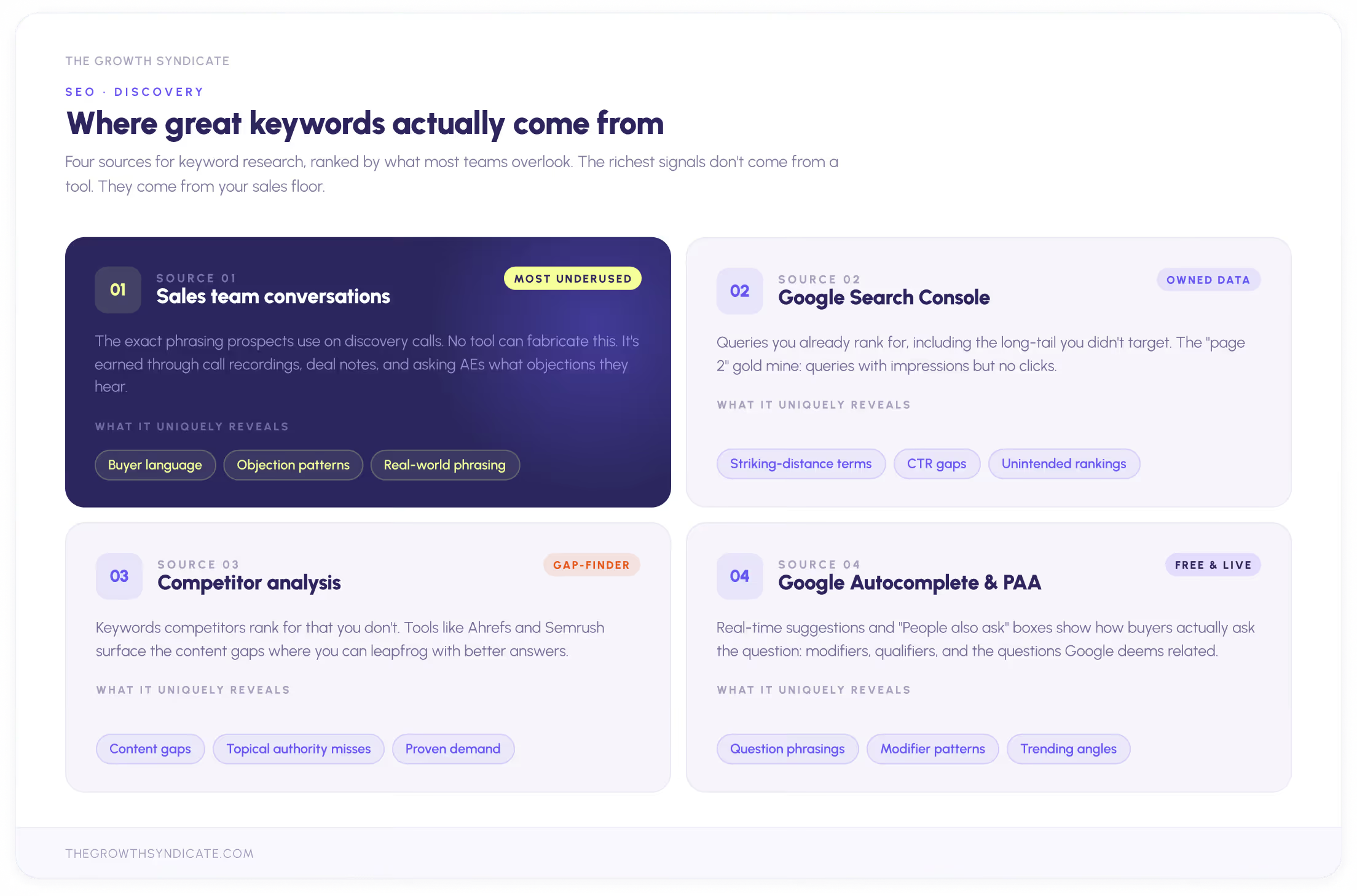
Competitor keyword analysis using tools like Ahrefs or Semrush reveals what search terms your competitors rank for and where the gaps are. Look specifically for queries where competitors rank but their content is thin or outdated. These represent opportunities where better content can win.
Google Autocomplete is another simple but effective source of keyword ideas. Type your primary topic into Google and note the suggestions. These reflect real search behavior from people in your market.
The B2B keyword strategy should emphasize niche, industry-specific, long tail keywords that focus on operational challenges and business outcomes. A keyword like "b2b seo" has 4,200 monthly searches and a difficulty score of 7. A keyword like "b2b marketing strategies" has 2,800 monthly searches but a difficulty score of 54. The first is a realistic target for a growing site. The second requires substantial domain authority to compete. Your keyword strategy should start with what you can actually rank for.
The 95/5 rule and what it means for your keyword strategy
Only about 5% of your target market is actively looking for solutions at any given time. The other 95% are out of market. They are not comparing vendors, they are not searching for your product category, and no amount of SEO campaigns will manufacture buying intent that does not exist.

This means your B2B SEO strategy needs two tracks. One targets the 5% with high intent keywords on service pages, landing pages, comparison pages, and pricing pages designed to capture people who are actively evaluating. The other targets the 95% with educational content, thought leadership, and original research that builds the familiarity and trust that gets you on shortlists before the buying process begins.
The data supports this approach. 6sense's 2025 research found that 95% of winning vendors are on the buyer's Day-One shortlist, up from 85% historically. If you are not in the consideration set before someone starts searching for solutions, your search engine optimization efforts at the bottom of the funnel will not matter.
Building content that search engines and decision makers both want
Content is where most B2B SEO strategies succeed or fail. Not because companies do not create content, but because they create the wrong content, or they create content that reads like it was assembled by an AI with no understanding of the actual problems their target audience faces. Content marketing in B2B is not about volume. It is about creating content that search engines reward and that decision makers trust enough to share with colleagues.
Write for the buying committee, not for a persona
A common mistake in B2B content marketing is writing all content for a single buyer persona. In reality, the buying process involves multiple stakeholders with different concerns. Your content strategy should address the questions that each type of decision maker brings to the table.
For executives and key decision makers, the content needs to address business outcomes, competitive positioning, and ROI. These people search for strategic frameworks, market analysis, and evidence that a particular approach drives results. They want to know what changes and why.
For practitioners and implementers, the content needs to address feasibility, integration, and process. These people search for technical specifications, implementation guides, and practical how-tos. They want to know how it works and what it takes.
For financial stakeholders, the content needs to address cost, risk, and return timelines. These people search for pricing benchmarks, TCO comparisons, and case studies with measurable outcomes.
Your blog posts, landing pages, and resource pages should collectively cover all these angles. This does not mean every piece of content needs to address every stakeholder. It means your content strategy as a whole should leave no question unanswered for anyone involved in the decision.
Why original research outperforms everything else
The 2024 LinkedIn-Edelman B2B Thought Leadership Impact Report surveyed approximately 3,500 senior decision makers and found that over 50% spend at least an hour each week consuming thought leadership. The dominant marker of quality? Robust research and supporting data. More than 55% of respondents identified original research as what separates useful thought leadership from noise.
For your B2B SEO strategy, this translates directly into a content type that earns links, drives engagement, and ranks well: original research and data-driven content. Surveys, benchmarks, industry analyses, and proprietary datasets create content that other sites cite and link to. This builds the quality backlinks and inbound links that strengthen your entire site's authority, not just the individual page.
Companies that publish original research see compounding returns. The content attracts links over time, those links improve domain authority, and that authority helps all your other web pages rank better. It is one of the few B2B SEO tactics that creates genuine competitive advantage rather than just keeping pace.
Content structure and on page SEO
On page SEO in B2B is not complicated, but it does require discipline. Every page on your site should have a clear target keyword, a title tag that accurately describes the content and includes the primary search term, meta descriptions that give searchers a reason to click, and a logical heading structure that helps both people and search engines understand the content.

Use structured data like FAQ schema, Organization schema, and Product schema where appropriate. These help search engines understand context and can improve visibility in search engine results, particularly in featured snippets and AI Overviews.
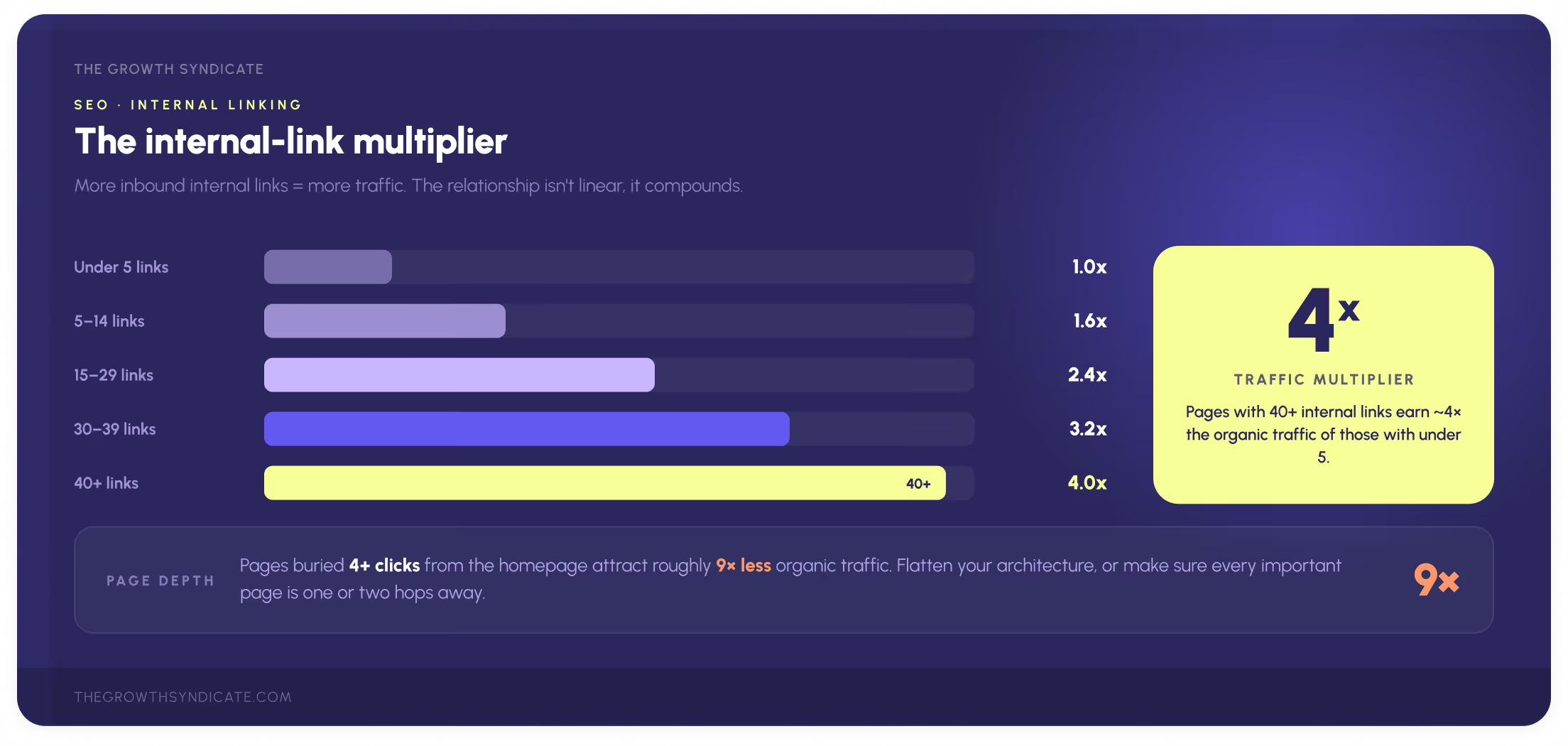
Internal links between related pages on your site are one of the most overlooked on page optimization levers. Analysis of 23 million internal links found that pages with 40 or more internal links receive roughly four times more clicks than those with fewer than five. Your web pages should link to each other in ways that reflect the logical relationship between topics.
Make sure your site is mobile friendly. While B2B website traffic skews heavily toward desktop (68-83% depending on segment), Google indexes the mobile version of your site first. If your mobile site does not surface the same content and links as your desktop version, new pages may not even be discovered by search engines.
Technical SEO: the infrastructure that makes everything work
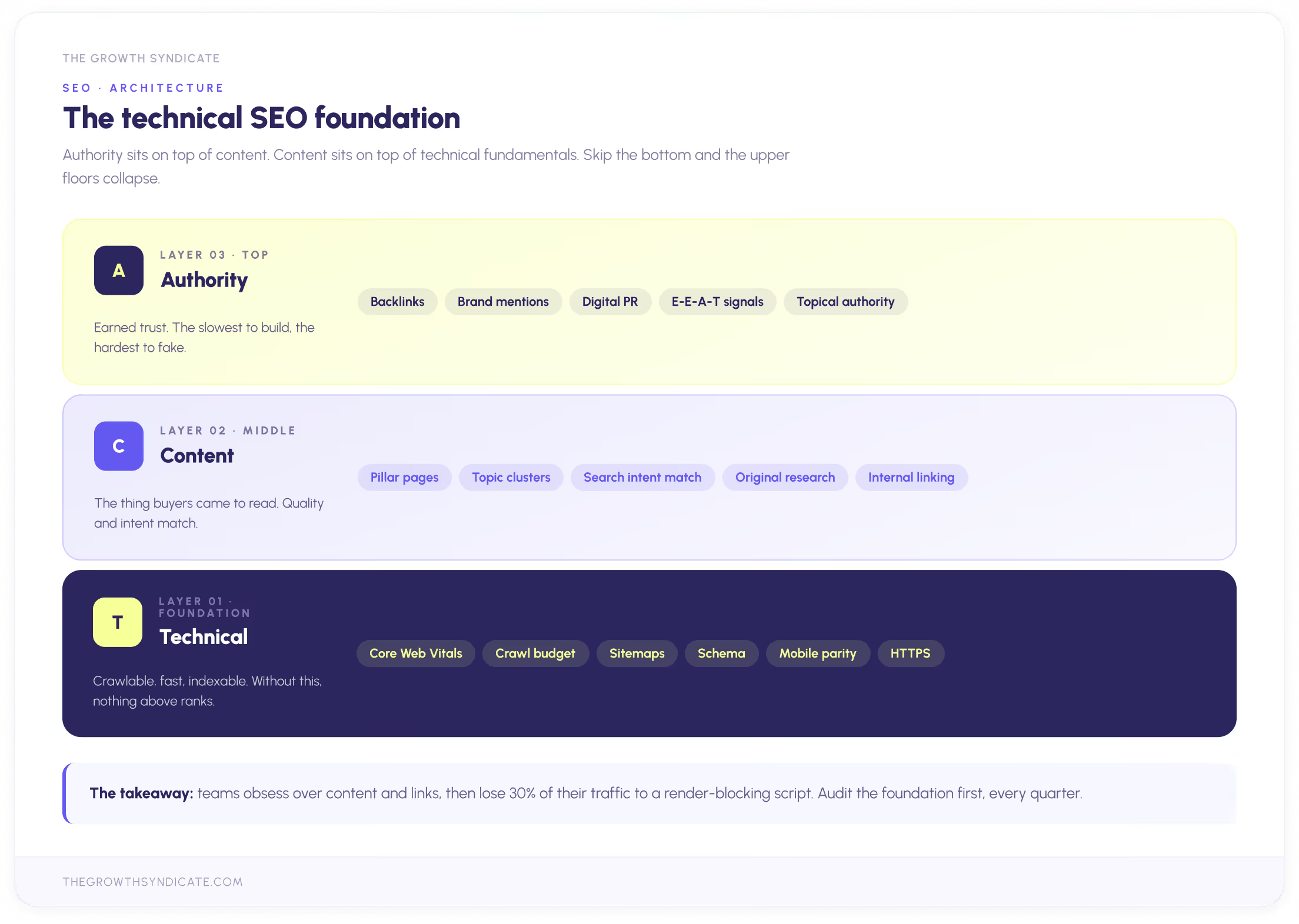
Technical SEO is the foundation that determines whether search engines can find, crawl, and index your web pages. Without it, even the best content remains invisible.
Site speed and Core Web Vitals
Core Web Vitals function as a ranking tiebreaker. They will not override strong content relevance, but when two pages are equally relevant, the faster one wins. Only 48% of mobile pages pass all three metrics, so improving performance puts you ahead of most competitors. Pay attention to Interaction to Next Paint (INP), which replaced First Input Delay in March 2024. Keep INP under 200 milliseconds.
Crawl budget and site architecture
Crawl budget is not a concern for most B2B websites. Google's documentation clarifies it only matters for sites with more than one million unique pages. What does matter is site architecture. Pages buried more than three clicks from your homepage get dramatically less traffic. Keep your most important content (service pages, solution pages, pillar articles) within two clicks of the homepage.
If your site runs on a JavaScript framework like React or Next.js, make sure you use server-side rendering. Google can render JavaScript, but the process is slower and introduces indexing delays.
Fixing broken links and maintaining site health
Broken links waste crawl budget, create poor user experiences, and signal neglect to search engines. Run regular crawls using SEO tools like Screaming Frog to find and fix broken links before they accumulate.
This also creates opportunities. Broken link building involves finding non-functioning links on other websites and suggesting your content as a replacement. If an industry publication links to a resource that no longer exists and you have comparable content, reaching out to suggest a replacement is an effective way to build links.
Off page SEO and building authority
Off page SEO for B2B companies centers on earning the trust signals that search engines use to evaluate authority. In practice, this means building quality backlinks from reputable industry sources, establishing thought leadership through external platforms, and developing a digital presence that extends beyond your own website.
How to build links that actually matter
Not all backlinks are equal. A link from a respected industry publication carries far more weight than dozens of links from generic directories. The B2B link building approach should prioritize relevance and authority over volume.
Digital PR is particularly effective. This means gaining backlinks from industry blogs and trade publications that your target audience reads, rather than chasing mainstream media coverage that rarely drives qualified traffic.
Creating helpful tools and calculators attracts backlinks naturally. People link to useful resources. If you can build an ROI calculator or a benchmark comparison tool relevant to your industry, these become link magnets that build inbound links over time.
Partner pages offer another avenue. If you work with technology partners or complementary providers, request links from their partnership pages. Publishing original data and research remains the single most effective way to earn quality backlinks at scale.
Thought leadership and search visibility across channels
B2B SEO in 2026 extends beyond Google. G2's April 2026 data shows that 51% of B2B buyers now start their research with AI chatbots more often than with traditional search. While Google remains dominant, the trend is clear: your content marketing and content creation efforts need to be visible across multiple search channels, including AI tools like ChatGPT, Perplexity, and Google's own AI Mode.
The practical implication is that your digital marketing strategy should prioritize being cited and referenced across authoritative third-party platforms. G2, Gartner, industry-specific review sites, Reddit, LinkedIn, and Wikipedia are increasingly the sources that AI tools pull from when generating recommendations. Being present and well-reviewed on these platforms directly influences whether your company appears in AI-generated answers.
.avif)
Traffic and broad MQL counts are easily gamed. Pipeline from organic search and search-adjacent channels is not.
Measuring what matters in B2B SEO
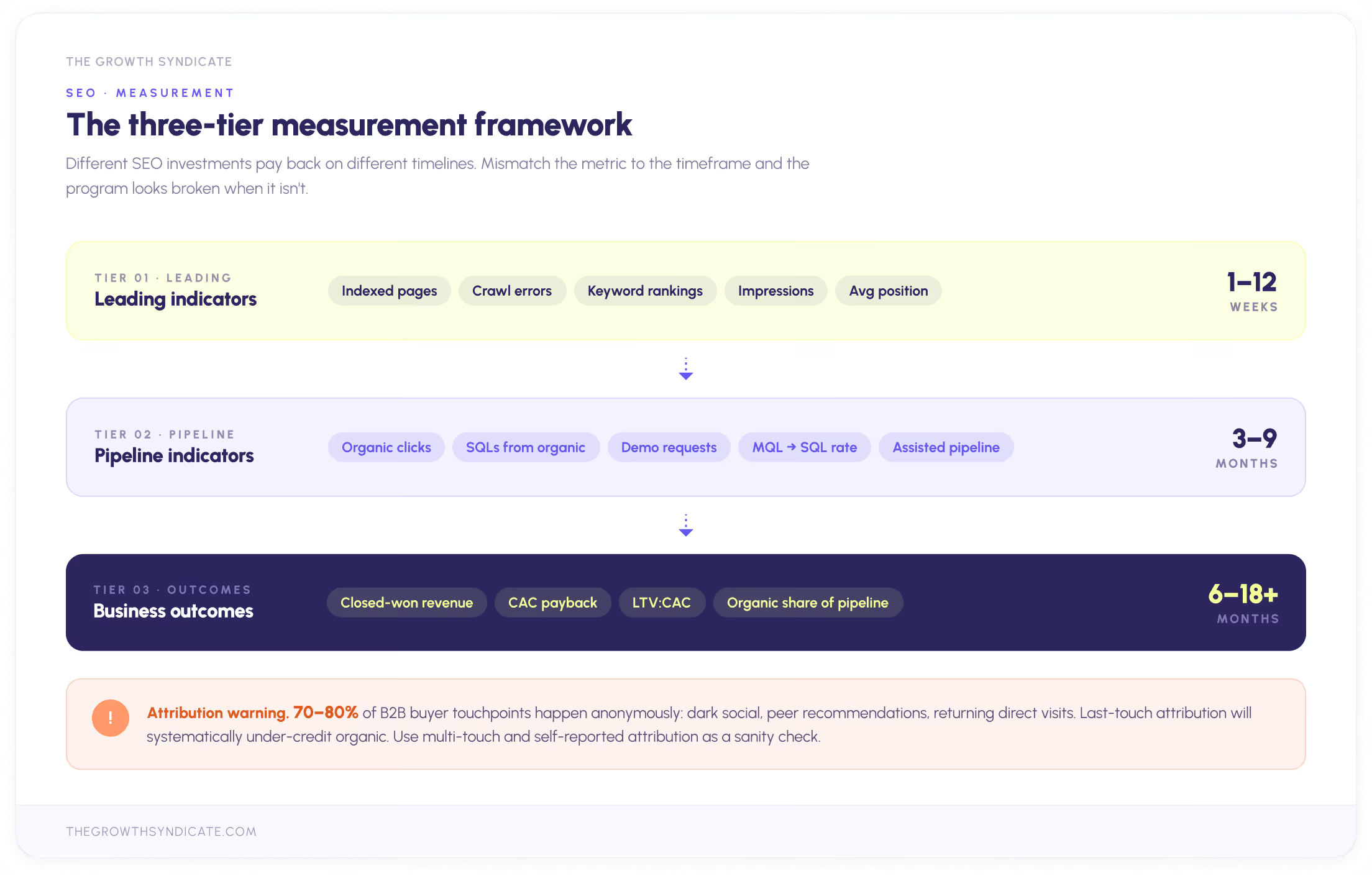
The metrics that matter for B2B SEO campaigns are different from what most SEO tools emphasize. Traffic is a leading indicator, not a goal. The metrics that connect your organic search strategy to business outcomes are the ones worth tracking.
The metrics that connect to pipeline
Organic conversions are the most important metric. How many people who arrive through organic search take a meaningful action: requesting a demo, downloading a resource, signing up for a consultation, or filling out a contact form? These are the sales qualified leads that your SEO campaigns should be optimized to produce.
Keyword positions and rankings for your target keywords tell you whether your content is gaining visibility with the right audience. Track positions for your high intent keywords (the ones that indicate someone is in the buying process) separately from your informational keywords.
Engagement metrics like time on page, pages per session, and bounce rate help diagnose whether your content is actually useful to the people who find it. A high bounce rate on a blog post might be fine (people got their answer). A high bounce rate on a service page or landing page is a problem.
Why attribution is still broken (and what to do about it)
Attribution in B2B is structurally imperfect. 35% of B2B SaaS organizations still rely on last-touch attribution, even though the average buying journey includes 7.8 touchpoints. Between 70% and 80% of touchpoints are anonymous, happening on review sites, in peer conversations, and through channels that no analytics platform captures. This means organic search ROI is almost certainly underestimated in your current reporting.
Use Google Search Console alongside your analytics platform to track impressions, clicks, and average positions. Layer in conversion tracking for your key actions. And accept that some of the value your organic search strategy creates will show up in shorter sales cycles and better close rates rather than in a dashboard.
Your organic search strategy is one of the most powerful ways to build those relationships with potential customers who do not know you yet. You create content that search engines surface at the moment someone needs answers, and that is how pipeline starts.
The ROI case for B2B SEO
Despite the disruption from AI and algorithm changes, the economics still strongly favor organic search over paid alternatives.
First Page Sage's 2026 analysis found three-year ROI of 702% for B2B SaaS companies investing in SEO. Thought leadership-focused programs delivered 748% returns, while purely technical programs returned 117%. On a cost-per-lead basis, B2B SaaS organic CPL averages $147 to $164, compared to $250 to $310 for Google Ads and other paid search channels.'
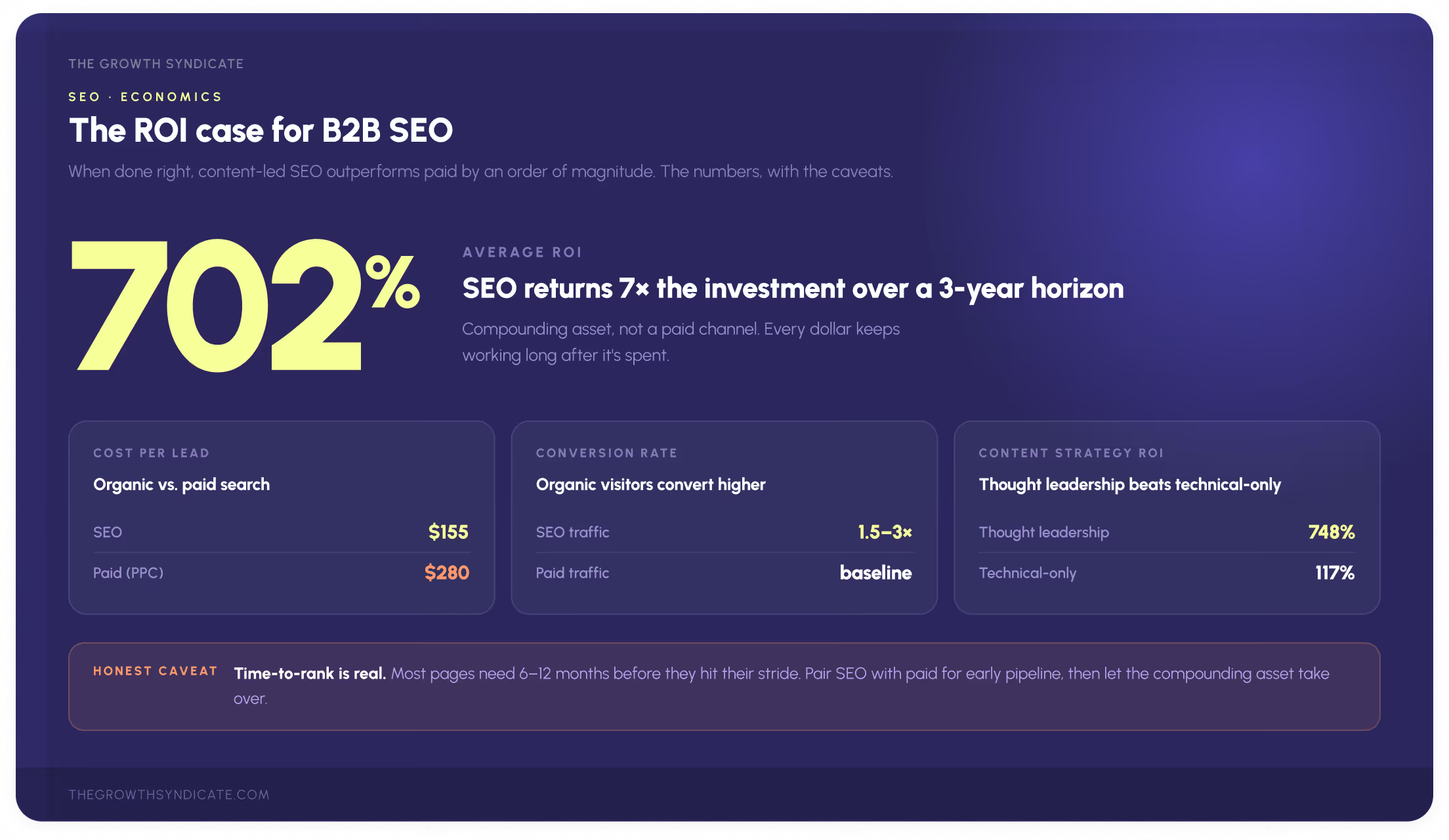
The caveat: time to rank is stretching. Only 1.74% of newly published pages rank in the top 10 within a year, down from 5.7% in 2017. For B2B companies starting their SEO efforts, the payback period typically runs six to nine months.
This makes the case for starting now stronger. Organic search compounds in ways that paid channels cannot. Every month you delay is a month your competitors are building the topical authority that will be increasingly difficult to overcome.
What a complete B2B SEO strategy looks like in practice
Pulling everything together, a B2B SEO strategy for 2026 is built on five pillars working together.
Concentrated topical authority over scattered content
Choose the topics where your company has genuine expertise and build comprehensive coverage around them. This means pillar pages supported by clusters of related content, all connected through internal links. Google's algorithm updates have made it clear that sites with concentrated depth in specific topic areas outperform sites that publish broadly across unrelated subjects.
Content built for people who make purchasing decisions
Every piece of content should be created with a specific audience and buying stage in mind. Decision makers at the top of the funnel need educational content. Those in the middle need comparison frameworks. Those at the bottom need evidence and proof points. Your blog posts, service pages, landing pages, and resource pages should collectively form a complete answer to every question your target buyers have during the sales process.
Technical foundations that do not get in the way
Make sure your site loads fast, renders properly on mobile, has clean URL structures, and does not block search engines from crawling your important pages. Technical SEO is not glamorous, but a broken foundation undermines everything else.
Authority built through expertise, not volume
Build links and off page SEO signals through original research, thought leadership, digital PR, and genuine participation in your industry. Link building in B2B is about demonstrating that real experts trust your content enough to reference it.
Measurement connected to revenue, not vanity
Track keyword positions, organic traffic, and engagement, but measure success by the qualified leads and pipeline that organic search generates. If your SEO campaigns are driving traffic but not producing sales qualified leads, something in your content strategy or conversion path needs to change.
Frequently asked questions about B2B SEO
What is B2B in SEO?
B2B SEO refers to search engine optimization designed for businesses that sell to other businesses. It focuses on reaching professionals and key decision makers who research and purchase solutions on behalf of their organizations. The content marketing approach, search terms, and conversion goals all differ from B2C because the buying process is longer, involves more stakeholders, and requires detailed information before purchase decisions are made.
What are the 4 types of SEO?
The four types are on page SEO (optimizing web pages through content, title tags, meta descriptions, and internal links), off page SEO (building authority through quality backlinks and digital PR), technical SEO (ensuring search engines can crawl and index your site, including structured data and site speed), and content SEO (creating search-optimized content that matches search intent). A successful SEO strategy integrates all four.
Does SEO work for B2B?
Yes. B2B SaaS companies investing in SEO see median three-year returns of 702%, and organic search leads convert at 1.5 to 3 times the rate of paid leads. The difference is that B2B SEO focuses on lead quality over traffic quantity, targeting search terms that key decision makers use when actively evaluating solutions.
What is the 95/5 rule in B2B?
The 95/5 rule states that only about 5% of your target market is actively searching for solutions at any given time. The other 95% are out of market. Your search strategy needs to serve both: high intent keywords for the 5% ready to buy, and educational content marketing for the 95% who will eventually enter the market.
What is the 80/20 rule of SEO?
Applied to SEO, the 80/20 rule means a small number of high-performing pages drive the majority of your qualified traffic. Identifying and optimizing those pages, then building content clusters around them with strong keyword research and search intent alignment, is often the highest-leverage SEO activity.
.png)