.svg)



Most B2B companies say their sales and marketing teams are aligned. Most of them are wrong.
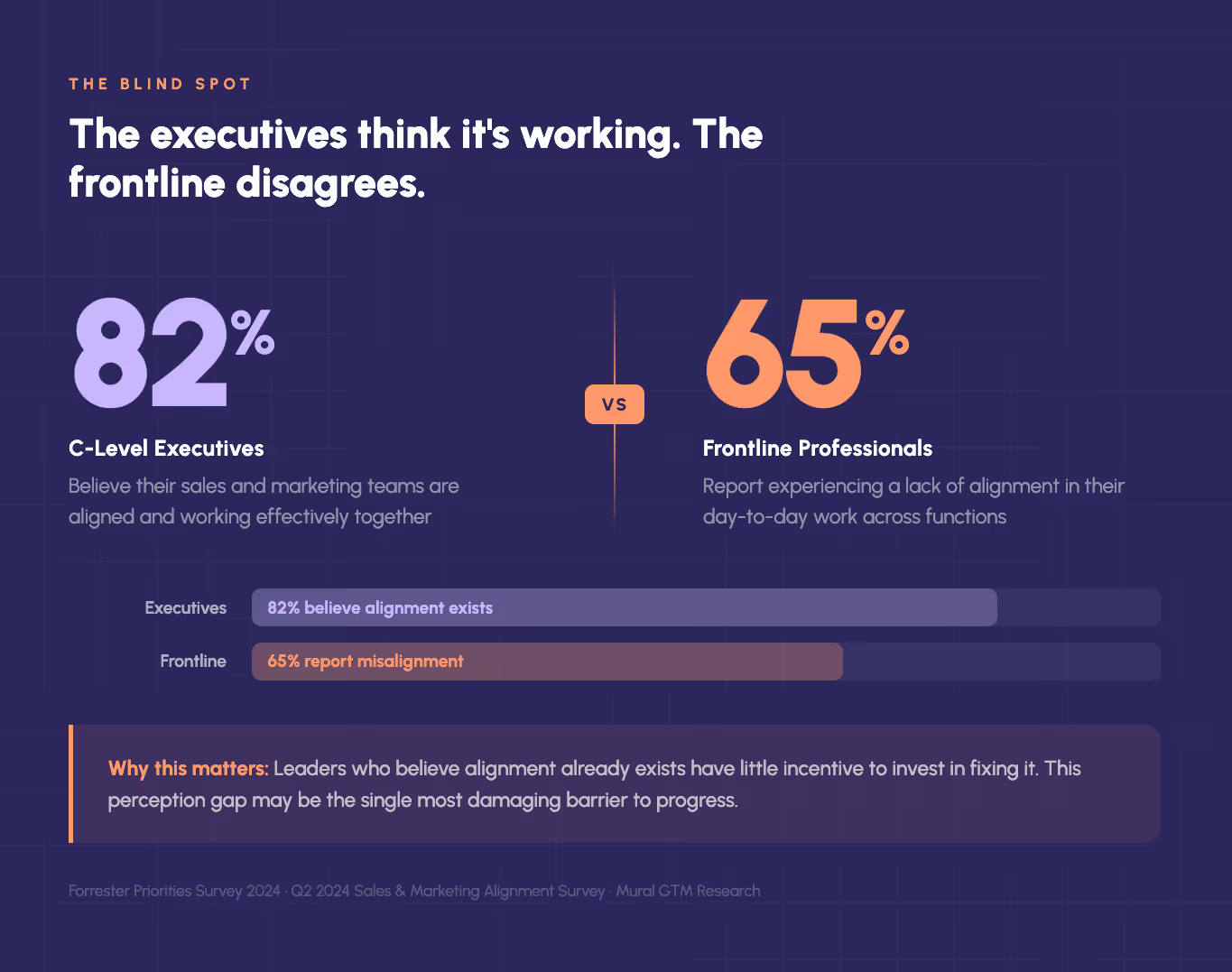
Forrester's 2024 research found that 82% of C-level executives believe their sales and marketing teams are working together effectively. Meanwhile, 65% of the people actually doing the work report experiencing a lack of alignment. That gap alone should tell you everything about why this problem persists.
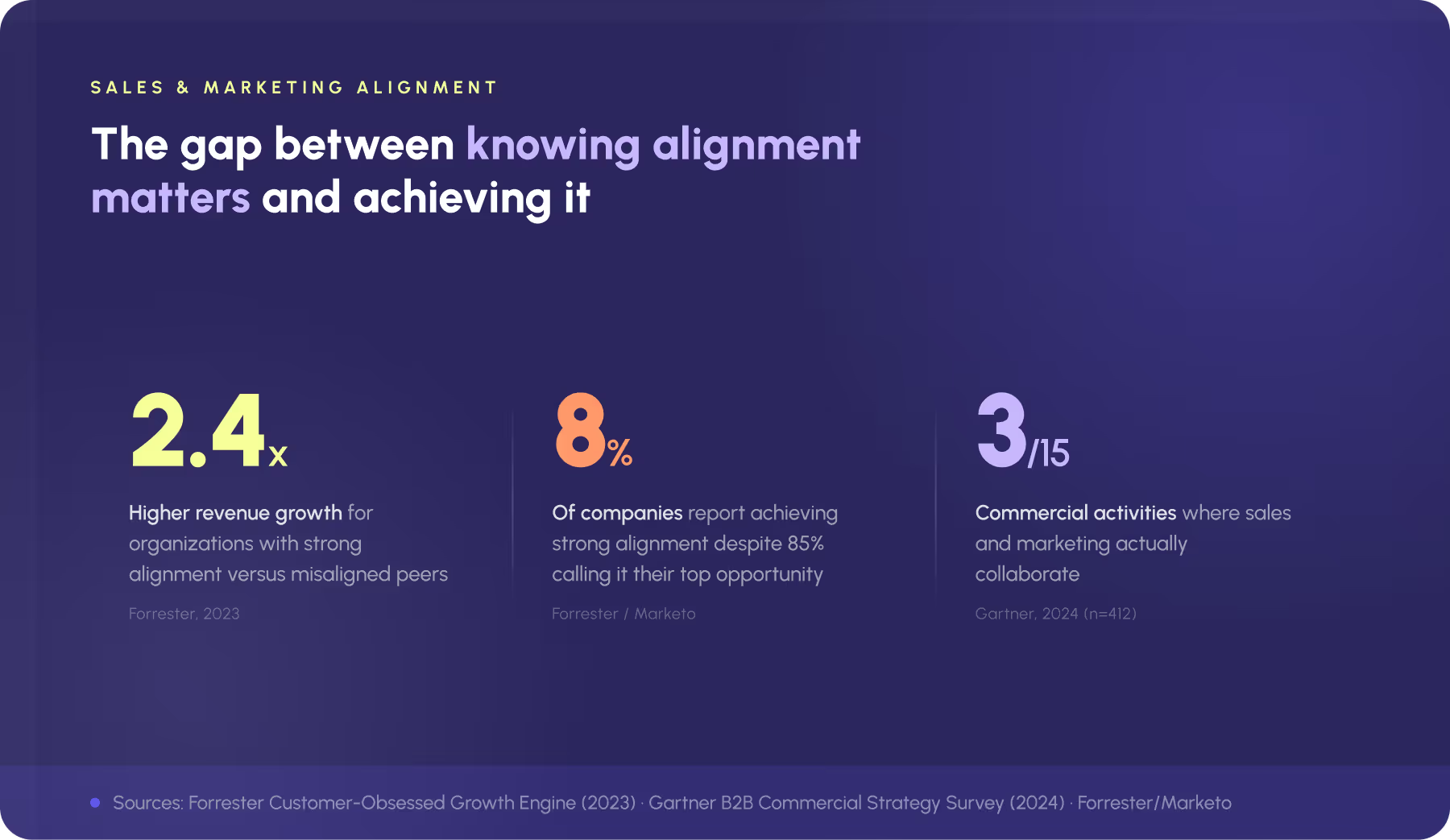
Here's the thing. The business case for sales and marketing alignment has been settled for years. Forrester found that aligned organizations achieve 2.4x higher revenue growth and 2x higher profitability growth than misaligned peers. Aberdeen Group documented a 39-percentage-point difference in year-over-year revenue between highly aligned organizations and laggards. Gartner's 2024 survey of 412 senior leaders revealed that marketing and sales teams collaborate on just 3 of 15 key commercial activities.
Nobody disputes the data. Only 8% of companies actually achieve strong sales marketing alignment. That's the gap between knowing and doing. Simple to understand. Not easy to fix.
This guide is about the how.
What is sales and marketing alignment?
Sales and marketing alignment is when your sales and marketing teams work together toward shared revenue goals instead of operating in separate silos. Sales alignment refers to the strategic coordination between sales teams and other departments, most notably with marketing teams, to ensure everyone is pulling in the same direction.
In practice, it means both departments share a common understanding of who the ideal customer is, what qualifies a lead as sales-ready, how messaging should evolve across the buyer's journey, and which metrics actually matter. Both teams are accountable for revenue, not just vanity metrics like impressions or call volume.
The marketing function defines success through lead volume and campaign engagement. The sales function defines success through closed deals and quota attainment. When those definitions diverge, every downstream process breaks. Neither function can achieve sales targets efficiently because they're optimizing for different outcomes.
That disconnect is where the money leaks.
Why sales and marketing alignment matters
The revenue impact of aligned teams
The financial evidence for aligning sales and marketing is unusually consistent. That almost never happens in marketing research, so it's worth paying attention to.
Aberdeen Group's benchmarking found that highly aligned organizations achieve 32% year-over-year revenue growth while competitors experience a 7% decline. SiriusDecisions documented 24% faster three-year revenue growth for aligned B2B organizations. Effective sales and marketing alignment can significantly enhance performance by ensuring both teams work towards common goals.
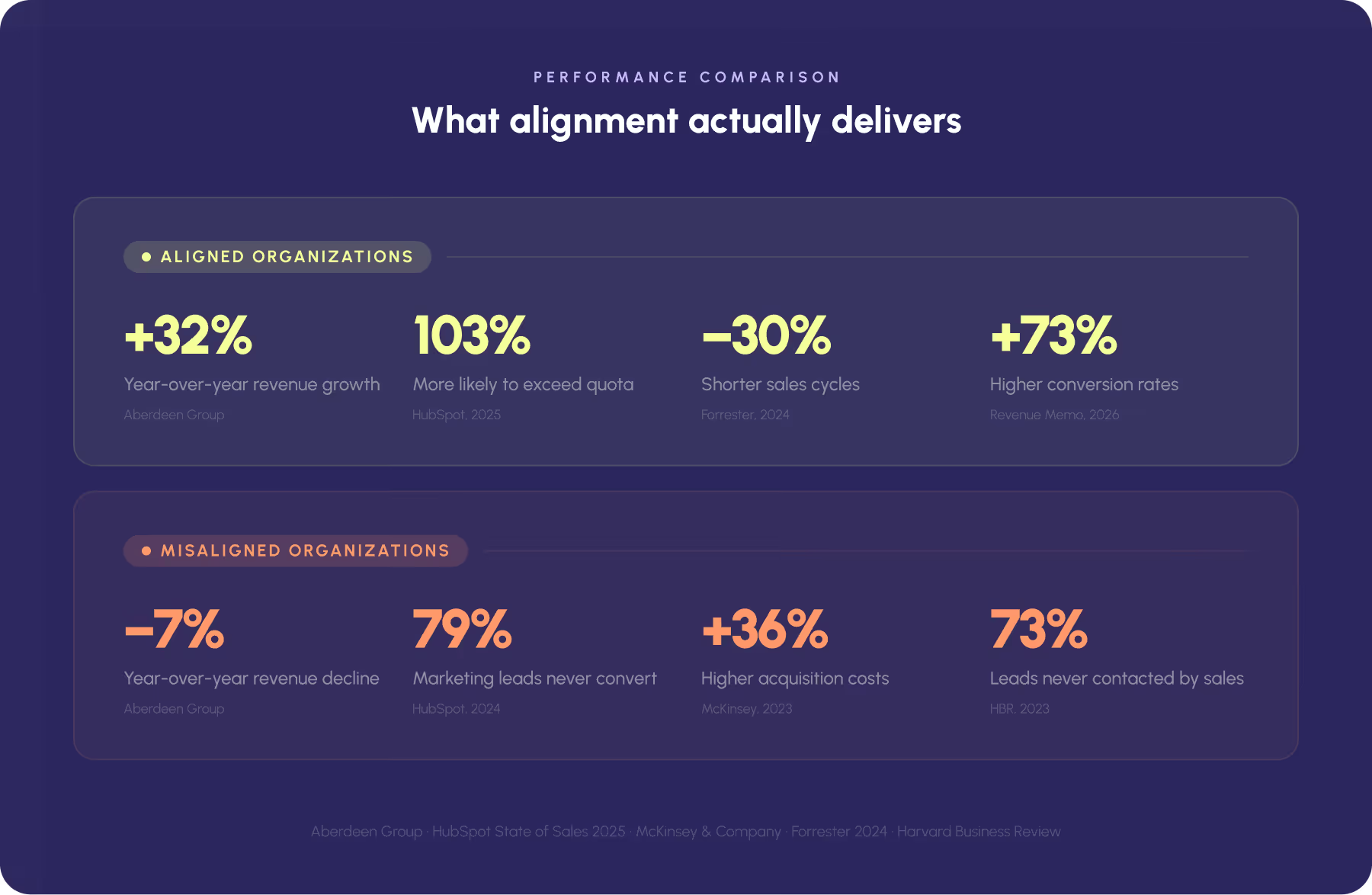
Peterson, Gordon, and Palghat surveyed 821 respondents and found strong support for alignment's positive impact across eight performance dimensions: qualified leads generation, lead conversion rates, new account acquisition, and revenue targets. HubSpot's 2025 State of Sales report found sales reps in aligned organizations are 103% more likely to exceed their targets.
Organizations that prioritize sales alignment are more likely to exceed new customer acquisition targets. Alignment reduces friction in the sales process, leading to faster deal closures and improved conversion rates. Aligned teams report shorter sales cycles (30% reduction) and 73% higher conversion rates when marketing content maps to specific buyer journey stages.
The cost of misalignment
Misalignment between sales and marketing teams leads to wasted resources and missed sales opportunities. The waste shows up everywhere once you start measuring it.
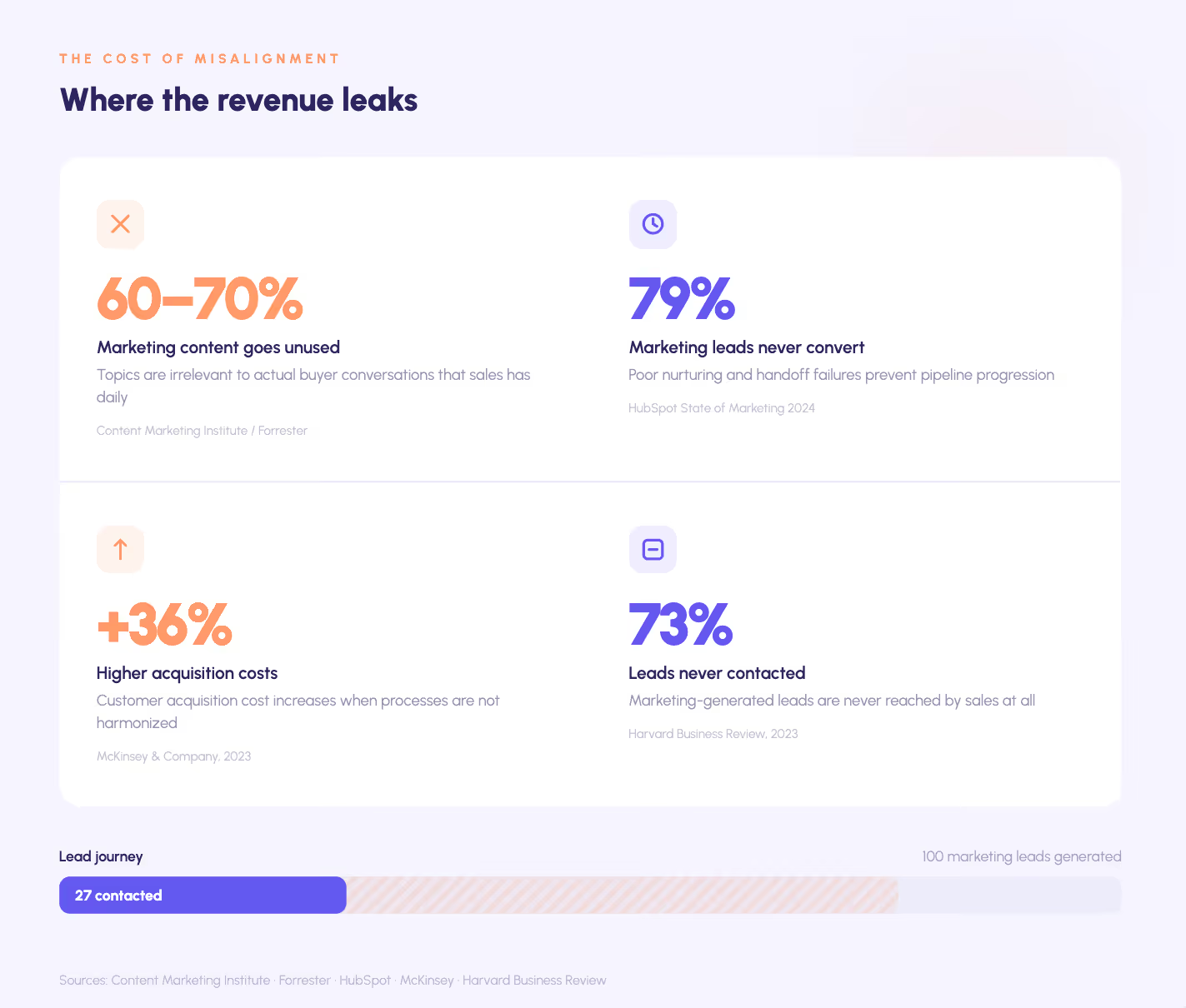
Between 60% and 70% of B2B marketing content goes unused by sales teams. The topics are irrelevant to actual buyer conversations. Meanwhile, 65% of sales reps report they cannot find marketing content to send to prospects. Think about that. Marketing is producing content nobody uses while sales can't find the content they need. That's not a content problem. That's an alignment problem.
The total cost to acquire a new customer, which decreases as alignment improves efficiency, is known as Customer Acquisition Cost (CAC). McKinsey found that customer acquisition cost increases by up to 36% when marketing processes are not harmonized. HubSpot data shows 79% of marketing generated leads never convert, primarily due to poor nurturing. 73% of marketing leads are never contacted by sales reps at all.
When sales and marketing teams operate in silos, the disconnect frustrates prospects and slows down deals. Misalignment can obscure inefficiencies and make it difficult to demonstrate the impact of marketing on revenue.

Impact on the customer journey
Aligned sales and marketing teams can create a seamless customer journey that enhances the overall buying experience. A seamless journey from marketing touchpoints to sales interactions builds trust and increases retention. But 49% of B2B buyers in Europe report encountering inconsistent messaging from sales and marketing most of the time.
Sales alignment with marketing is increasingly important as buyers engage with multiple marketing touchpoints before contacting sales. Forrester's 2024 research found the average B2B buying group now includes 13 people. Buyers spend only 17% of their time in direct contact with potential customers' vendors across the entire customer journey.
Aligned organizations achieve 36% higher customer retention and 20% higher customer lifetime value across the entire customer lifecycle.
Why sales and marketing teams fall out of alignment
Different goals, different metrics
Sales and marketing often work in silos, each with its own goals, priorities, and workflows. That creates a culture focused on individual success rather than collaboration.
Homburg and Jensen's study in the Journal of Marketing called these "thought worlds." The sales function focuses on immediate revenue targets while the marketing side prioritizes long-term brand awareness and lead nurturing. Different time horizons, different incentive structures, different professional identities. The friction is predictable.
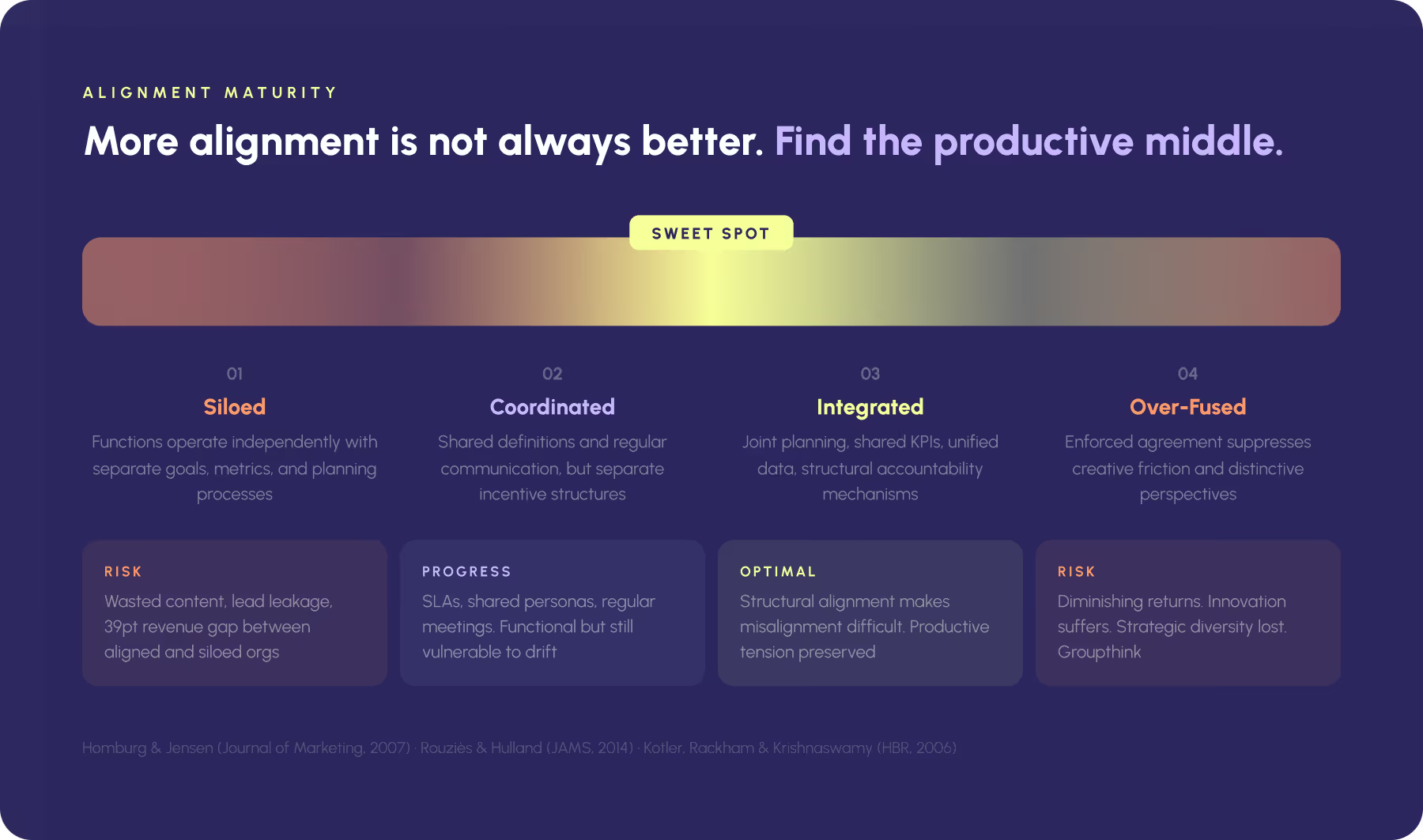
Here's what's interesting though. Homburg and Jensen found that certain differences actually improve performance. When one function advocates for customers while the other advocates for products, the organization benefits from productive tension. Only differences in perceived competence consistently damage outcomes.
That distinction matters. The goal isn't to make everyone think the same way. It's to make sure the differences are productive rather than destructive.
.avif)
"Marketing is very scattered. The team does a lot of things, but none of it connects. Most of the time that comes from the fact that they're reactive. Sales asks for a roundtable, so they do a roundtable. They need an event campaign, a webinar, an ebook. It's all the activity and never the outcome. Marketing creates a lot of top-funnel noise, but it's not driving revenue."
The lead quality disconnect
The two functions often lack a shared understanding of what qualifies a lead as "sales-ready." Gartner found that 49% of Chief Sales Officers report their organization's definition of a marketing qualified lead differs significantly from marketing's.
This single disconnect cascades through everything. Marketing generates leads that the sales function considers unqualified. Salespeople ignore marketing leads and prospect independently. Marketing points to lead volume as evidence of success. Sales teams point to low conversion rates as evidence of failure. The pipeline fills with prospects that don't match the ideal customer profile, and both sides blame each other.
I've seen this play out at dozens of companies. The pattern is always the same.
Communication breakdowns
Poor communication between sales and marketing teams hinders the exchange of critical insights necessary for a cohesive strategy. The sales function may not always provide timely sales feedback on lead quality, while marketing may not communicate campaign goals clearly enough for sales reps to adjust their approach.
The marketing function should regularly listen to recorded sales calls to gain unfiltered insights into prospect pain points and objections. Almost nobody does this. Regular, structured communication prevents siloed work and ensures content remains relevant to real-world sales conversations.
Data silos and missing information
When sales and marketing use separate platforms or data systems, it creates barriers to alignment and blind spots in the pipeline. Data silos prevent tracking how marketing and sales activities connect to closed deals. Salespeople with immediate access to marketing intelligence know exactly which content prospects consumed, which emails they engaged with, and which pain points they researched. Without unified sales and marketing data, each team operates on assumptions.
The perception gap
Forrester's 2024 research found that 82% of C-level executives believe their sales and marketing teams are aligned, while 65% of frontline sales and marketing professionals report experiencing a lack of alignment. Mural's GTM research reinforced it: 85% of teams report confidence in their go-to-market strategies while simultaneously reporting ongoing misalignment.
Long-term alignment requires cultural buy-in from leadership down to individual contributors. Marketing leaders who believe alignment already exists have zero incentive to invest in fixing it.
How to achieve sales and marketing alignment
Start with shared revenue goals
Sales and marketing alignment begins with shared revenue goals that anchor both teams to common objectives. Establishing same goals and shared KPIs can help break down the barriers between sales and marketing teams. Start by anchoring the sales function and the marketing department to shared revenue outcomes.
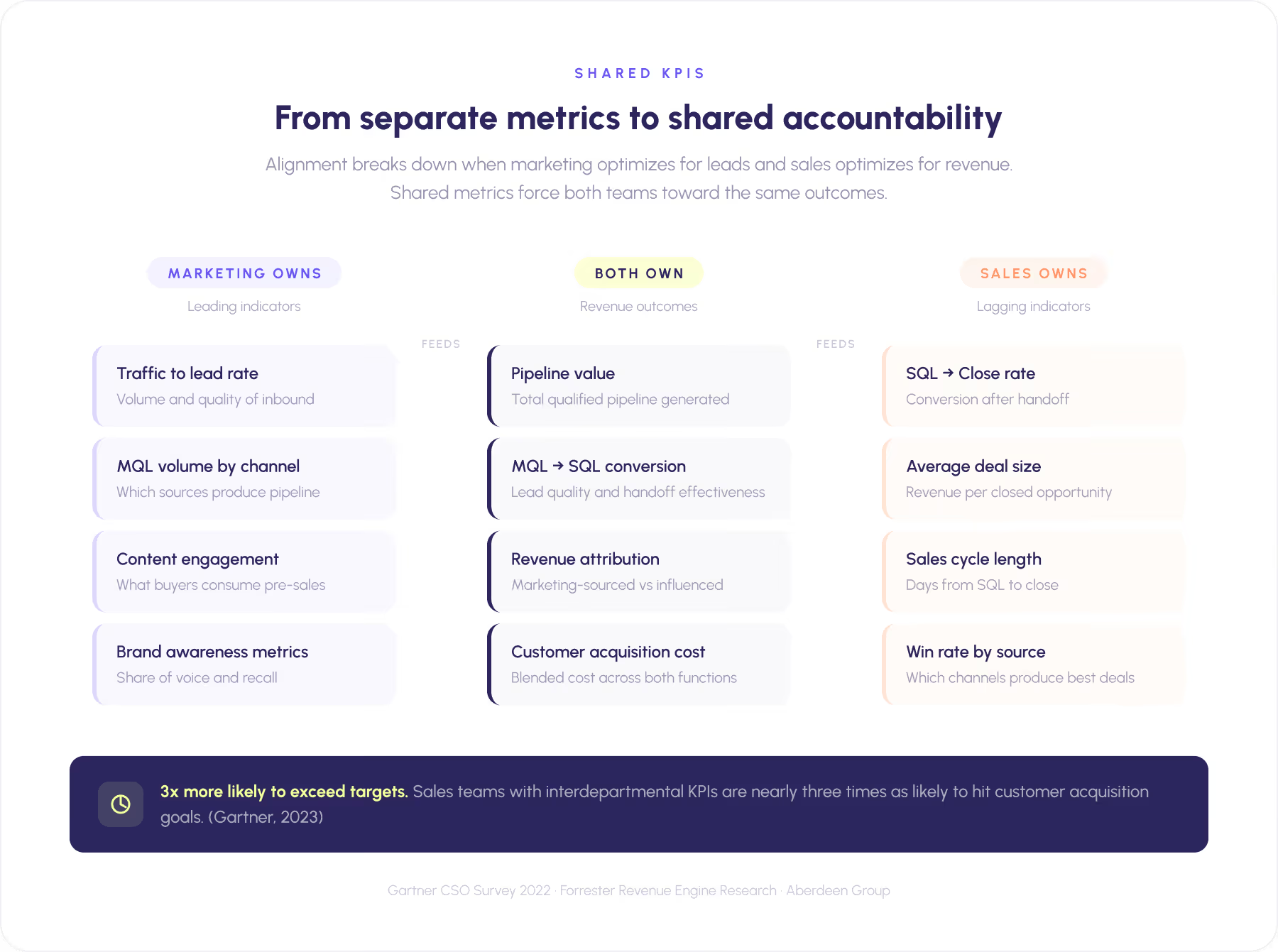
Gartner found that sales teams setting interdepartmental KPIs are nearly 3x as likely to exceed customer acquisition targets. Key performance indicators should include pipeline value, opportunity conversion rates, and revenue attribution.

"The goal should always be more revenue. From there you work downward. Marketing can then say: which are the best customers we can actually get, and how do we support getting those clients? Not just MQLs. The goal should be that the people we bring in turn into customers."
Build unified buyer personas
Creating detailed buyer personas requires collaboration between both departments. Sales teams can provide valuable insights into buyer needs and preferences, which helps marketing create more effective campaigns. The marketing side brings market research, competitive analysis, and customer data from lead generation activities. Together, the two develop personas grounded in real data rather than assumptions.
Effective buyer personas should capture firmographic information, the prospect's pain points and motivations, their buying process and decision criteria, and common objections that surface in sales conversations.
Map the buyer's journey together
Both departments should document the buyer's journey to align their sales and marketing strategies effectively. The modern B2B journey spans an average of 4.6 months. Buyers interact through 10 or more channels, and 86% of purchases stall during the buying process.
Mapping every touchpoint means identifying where marketing efforts end and sales processes begin, then designing handoff mechanisms. Prospects move back and forth between marketing content and sales interactions throughout the sales cycle. The distinction between "marketing territory" and "sales territory" is increasingly artificial.
Define lead qualification criteria
Marketing and sales teams should agree on the lead qualification criteria to ensure effective handoffs. Without a clear framework for transferring qualified leads from marketing to sales, confusion arises and opportunities get missed.
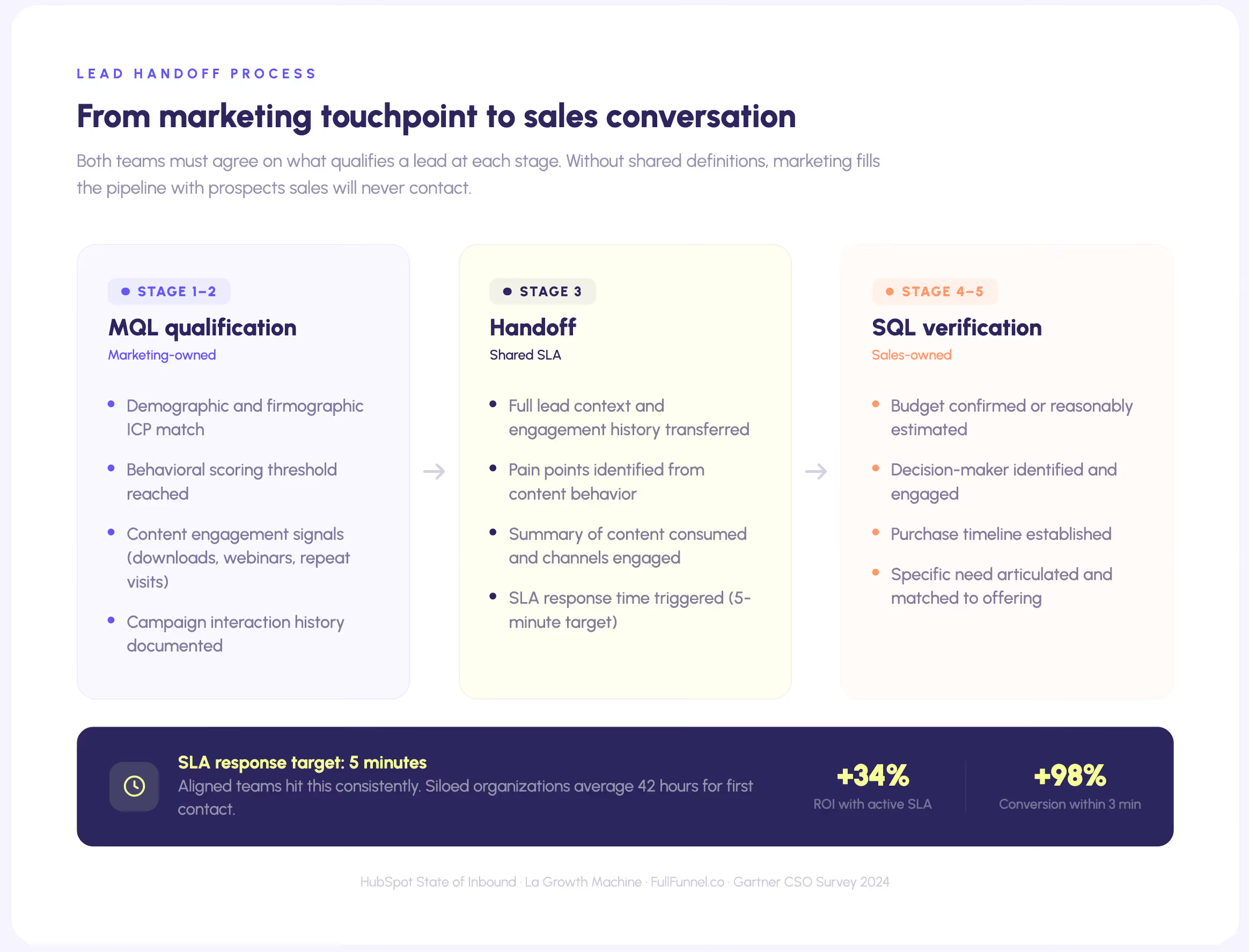
A marketing qualified lead should have a clear, agreed-upon definition that both teams contributed to building. One diagnostic exercise that consistently reveals how deep the disconnect runs: put your sales and marketing leaders in separate rooms and ask each to write down their definitions of MQL, SQL, and pipeline. Compare the answers. Different qualification criteria, different handoff points, different metrics.
The scoring process should incorporate demographic fit and behavioral signals from engagement with marketing campaigns and content. Establishing clear processes for lead handoff can prevent missed opportunities and ensure qualified leads are engaged at the right time.
Create service level agreements
Marketing and sales teams should agree on the lead-scoring process and develop SLAs to ensure timely responses to qualified leads. Companies with an active SLA are 34% more likely to experience greater year-over-year ROI.
An effective SLA should specify how many qualified leads marketing will deliver per period, how quickly sales reps will follow up, and how both teams will report on progress. Service level agreements create mutual accountability and make expectations explicit.
Establish communication cadences
Regular meetings between both departments can promote healthy interdepartmental communication. An effective cadence includes weekly pipeline and lead quality reviews, monthly feedback sessions, quarterly joint strategic planning, and annual buyer persona refreshes.
Getting everyone on the same page requires disciplined communication with fixed agendas, clear action items, and shared accountability for outcomes. Centralizing communication helps everyone stay aligned and informed across all marketing and sales activities.
Coordinate content and consistent messaging
Both teams should coordinate their content and campaigns to ensure consistent messaging. When marketing campaigns tell one story and sales pitches tell another, buyers notice. Trust evaporates.
Content coordination means aligning marketing content and marketing assets to specific stages of the sales cycle, giving sales reps visibility into upcoming campaigns, incorporating language from successful buyer interactions into materials, and ensuring campaigns reflect actual pain points buyers raise.
Build feedback loops
Feedback loops between the two functions drive continuous improvement in alignment efforts. Sales teams provide insights into customer needs, which helps marketing create more effective campaigns. The marketing function needs to know which assets salespeople actually use and which campaigns generate qualified leads that convert.
Implement closed-loop reporting for real-time feedback on lead quality and campaign performance. Analyze customer data to identify trends. Both teams should celebrate shared successes. Aligning sales and marketing efforts around continuous feedback prevents gradual drift back into silos.
Invest in joint training
Investing in joint training can improve collaboration quality. New hires from both the sales department and the marketing department should undergo the same foundation training in brand positioning and customer journey insights.
Research from Le Meunier-FitzHugh and Massey found that cross-functional project teams work effectively when structured well, and that placing both functions as a single unit improved performance outcomes. People on the marketing side and the sales function benefit from shared context. Both functions must stop building siloed go to market strategies and instead collaborate on getting more qualified leads in the pipeline.
Sales enablement and marketing content
What sales reps actually need
Aligned teams use valuable insights from their CRM system and broader GTM technology ecosystem, including marketing automation and sales enablement tools. Sales enablement connects content, training, and activity so that teams work to understand what actually influences deal outcomes.
The disconnect between what the marketing department produces and what the sales function needs is often dramatic. 59% of marketing managers believe they know what content the sales function needs, but only 35% of salespeople agree. Sales enablement bridges this gap by surfacing which content influences conversion rates at each stage of the sales funnel.
Aligning content to the sales cycle
Content should map directly to each deal stage. Early-stage assets build awareness and help generate leads through lead generation activities. Mid-stage material addresses specific objections and pain points. Late-stage collateral provides social proof for potential customers. Aligning sales interactions with supporting content means decision-makers get what they need when they need it.

Gartner's research found that 74% of buying teams experience internal conflict. That content must address the concerns of the entire buying committee.
Tools for sales and marketing alignment
Using platforms like Salesforce or HubSpot as the central hub allows both teams to view identical customer data on leads and campaigns. Integrating CRM with marketing automation systems ensures seamless data flow, allowing both functions to track leads, monitor progress, and access up-to-date data. This eliminates data silos that prevent effective collaboration.
A unified platform for GTM enablement connects content, training, and sales activity, so teams can see what actually influences deal outcomes. Platforms like monday CRM enable modern revenue teams to use real-time data sharing and predictive analytics. Demandbase offers a unified go-to-market platform that integrates commercial data, tools, and insights across go to market strategies.
Demandbase's closed-loop reporting tracks how marketing campaigns perform and monitors KPIs such as revenue performance and account engagement, helping coordinate marketing and sales efforts. The right tools depend on organizational needs, but the common thread is unified data that both teams trust.
Metrics for measuring sales and marketing alignment
Revenue and pipeline metrics
Track revenue performance indicators to measure the impact of alignment on business growth outcomes. Pipeline Velocity, the speed at which leads move through the sales funnel, serves as one of the clearest indicators of how well sales and marketing are coordinated.
Pipeline health metrics reveal how smoothly prospects move through the revenue funnel and help identify bottlenecks. The most valuable shared metrics include pipeline value, opportunity conversion rates, sales velocity, and revenue attribution. Establish shared goals and KPIs to ensure both teams are working towards common objectives. Regularly review progress to keep everyone accountable.
Lead quality and conversion metrics
Lead quality is the most contested metric in the sales and marketing relationship. Key indicators include marketing qualified lead to SQL conversion rate, lead-to-opportunity conversion rates, lead volume by channel, and lead response time.
Marketing generated leads should be tracked through the entire customer lifecycle, from first touch through closed deal. This full-funnel view prevents the common failure where marketing claims credit for lead generation while sales teams dismiss those same leads as unqualified. How you measure success determines what behaviors the organization rewards.
Team efficiency metrics
Team efficiency measures track how well aligned teams execute coordinated marketing and sales processes. These include content utilization rates, campaign-to-pipeline influence, and time from lead creation to first sales contact.
If marketing teams are rewarded for lead volume alone and sales processes go unconnected to attribution, neither function can demonstrate its true contribution. Sales efforts and marketing efforts must be tracked as connected activities, not independent workflows.
Common challenges in marketing and sales alignment
Cultural resistance
Sales and marketing professionals often develop strong in-group identities accompanied by conflict and mutual negative stereotyping. Sleep, Lam, and Hulland found that rewards focusing solely on one function widen the integration gap. Alignment efforts must address structural incentive problems. Behavioral interventions collapse under quarterly pressure unless backed by shared compensation models. The pattern is predictable: organizations launch alignment initiatives with executive sponsorship, make progress for two or three quarters, then gradually revert to siloed behavior as competing priorities take over. Only structural changes to incentives, reporting, and planning processes prevent this regression.
When alignment goes too far
The strongest research complicates the "more alignment is always better" assumption. Rouziès and Hulland found diminishing returns from integration. Some productive tension improves outcomes. Enforced agreement can suppress the creative friction that keeps marketing strategies adaptive. The goal is structured coordination with space for each function's distinctive perspective.
The future of sales and marketing alignment
From alignment to revenue operations
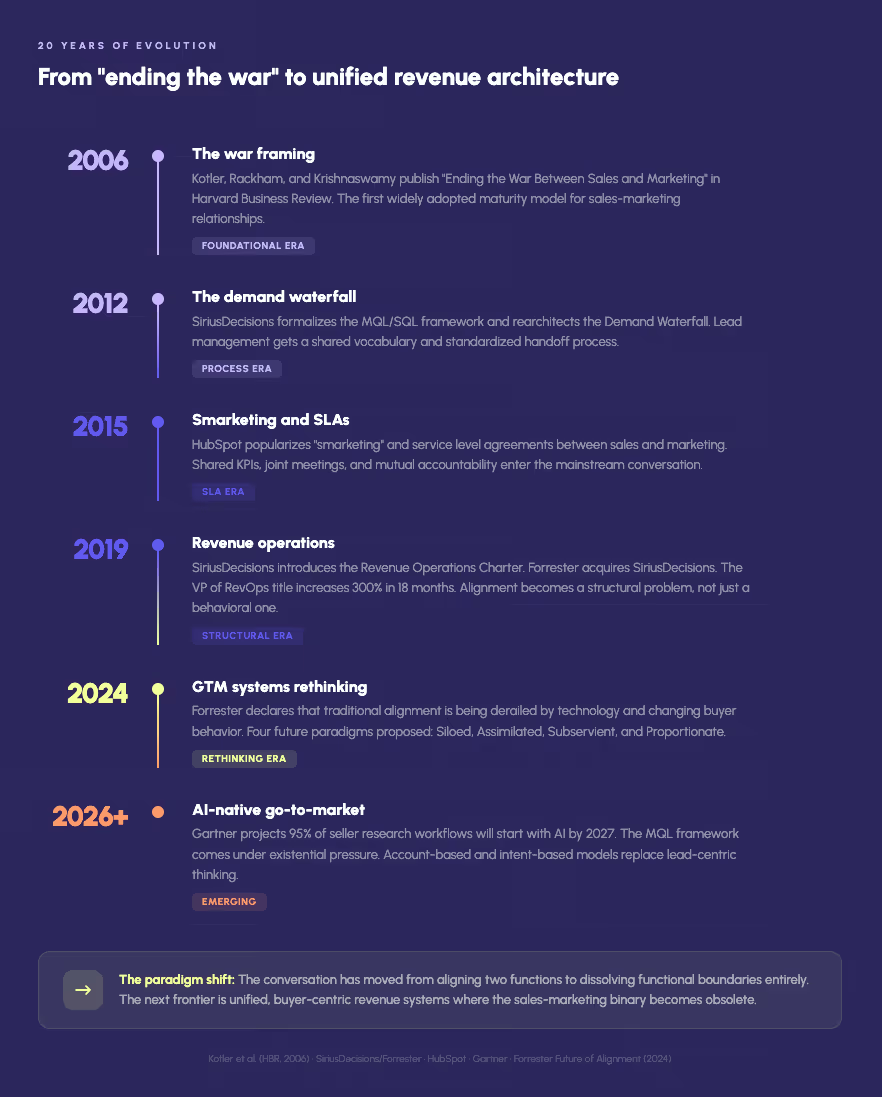
The VP of Revenue Operations title increased 300% in 18 months. By 2022, 48% of companies had a RevOps function. Revenue Operations unifies the commercial organization under a single revenue function, eliminating many coordination problems that behavioral initiatives struggle to solve.
AI and the changing buyer's journey
AI adoption in sales jumped from 39% to 81% in just two years. Gartner projects that by 2027, 95% of seller research workflows will begin with AI. But here's what most people miss: AI amplifies existing practices, whether aligned or misaligned. Bain's 2025 Technology Report warned that applying AI without process redesign means companies automate inefficiencies instead of removing them. Sales alignment and marketing alignment with AI requires deliberate architectural choices.
AI won't fix a lack of alignment. If your teams are misaligned now, AI just makes the misalignment faster. Sales alignment is a prerequisite, not an afterthought.
Beyond the MQL
The MQL framework is under pressure. 97% of website visitors remain anonymous, producing lead-to-close rates below 1%. The shift toward account-based marketing and intent-based prospecting represents a fundamental rethinking of how organizations generate leads and identify potential customers.
Companies using ABM report 40% reductions in their sales cycle. ABM works because it structurally requires joint target account selection, collaborative strategies, and unified measurement across marketing and sales. ABM forces sales and marketing teams to agree on which accounts matter before they generate leads, reversing the traditional sequence where marketing fills the funnel and hopes sales will follow up.
Getting started with your first 90 days
Aligning sales with marketing does not require a multi-year transformation program.
In the first 30 days, audit the current state carefully. Interview sales reps and marketing team members separately to understand where alignment breaks down. Document existing lead definitions, handoff marketing processes, and metrics each team uses to measure success.
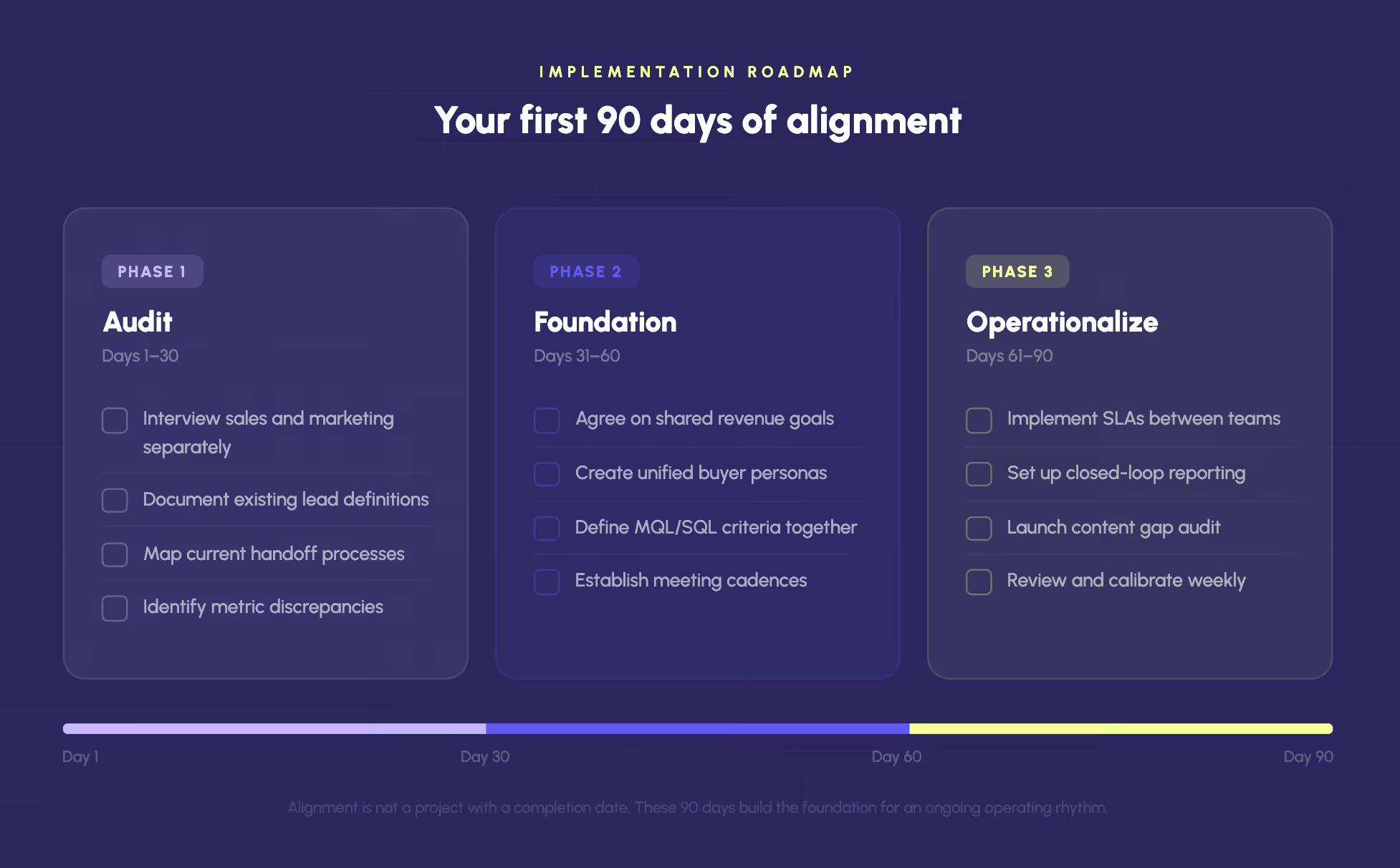
In days 31 through 60, build the foundation. Agree on shared revenue goals. Create or update buyer personas with input from both teams. Establish meeting cadences and communication frameworks.
In days 61 through 90, operationalize. Implement SLAs between the marketing department and sales. Set up closed-loop reporting so both teams are working from the same data. Launch a content audit to identify gaps in marketing content that sales reps need for active deals.
The most common mistake organizations make is treating alignment as a one-time project. Sales and marketing alignment is an ongoing discipline that requires regular recalibration as markets shift, buyer behaviors evolve, and teams grow. Successful sales organizations build alignment into their operating rhythm rather than launching periodic alignment initiatives that lose momentum within months.
Organizations that achieve sales and marketing alignment do so by making structural changes rather than issuing directives about collaboration. When incentives align, processes connect, and data flows freely between teams, alignment becomes the default. Teams work toward the same outcomes because the architecture makes any other approach impractical. That is how you achieve sales targets and sustained business growth simultaneously.
The what is not rocket science. It's the how that gets a bit trickier.

.png)