.svg)



A go to market strategy is a comprehensive plan that outlines how a company will launch a product or service to market, reach target customers, and achieve a competitive advantage. Whether you are introducing a new product in an existing market or expanding an existing product into a new market, a well defined strategy is the difference between a successful launch and a costly failure.
In this guide, you will learn everything about building a go to market (GTM) strategy from scratch, including frameworks, real-world examples, and the latest industry trends shaping GTM strategy in 2026.
Why every business needs a go to market Strategy
A go to market (GTM) strategy serves as an action plan that specifies how a company will reach target customers and introduce its products or services. Without a solid GTM strategy, businesses risk targeting the wrong audience, wasting marketing efforts, or entering an oversaturated market.
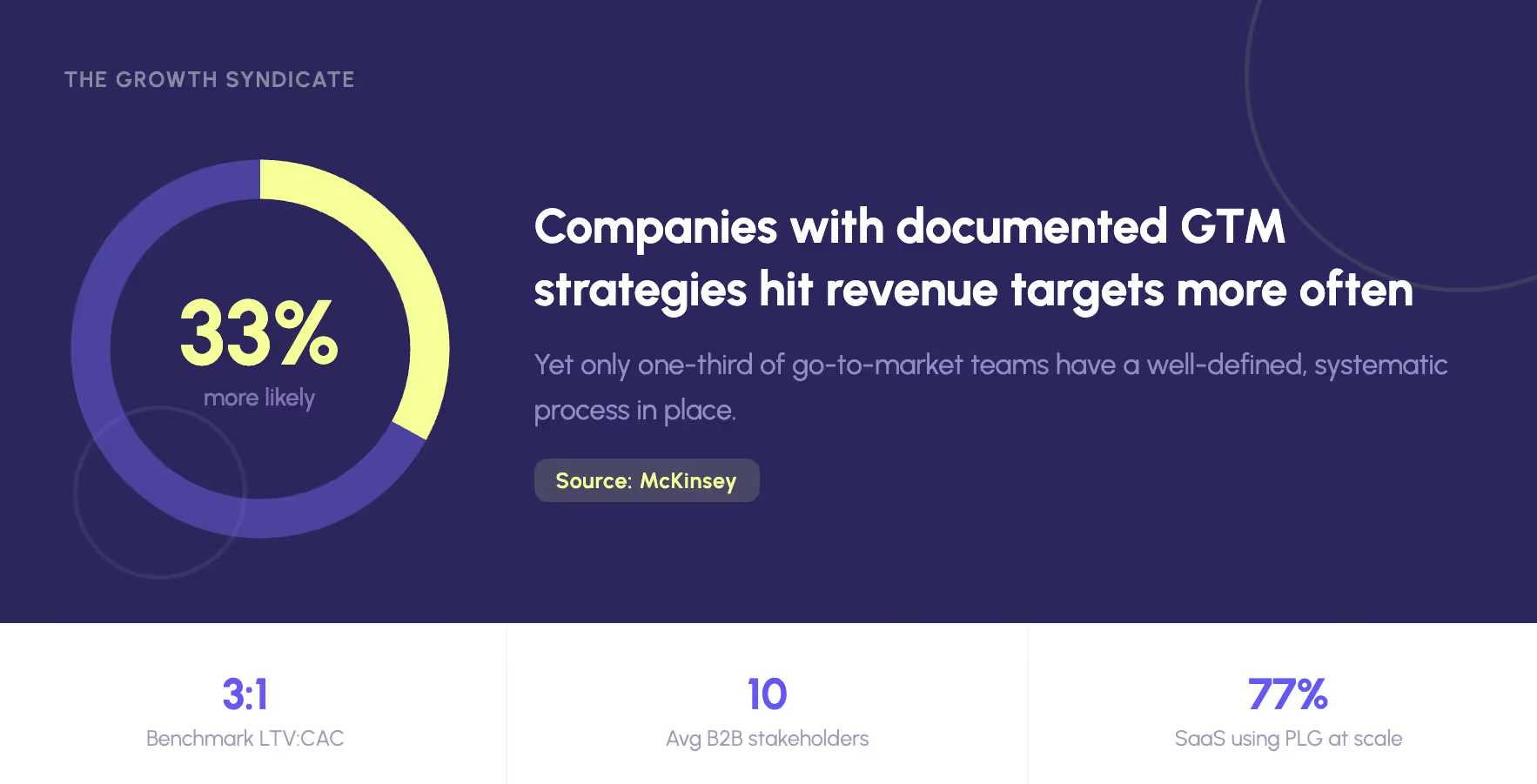
Research from McKinsey shows that companies with documented go to market strategies are 33% more likely to hit revenue targets. Yet only one-third of GTM teams have a well defined strategy in place.
A strong GTM strategy helps businesses avoid costly mistakes by aligning their product offerings with market demand. It increases the likelihood of acceptance by the target audience and ensures every team, including marketing and sales teams, is working toward the same business objectives.

Benefits of having a GTM strategy
A go to market plan provides several tangible advantages for businesses of all sizes. An effective market strategy reduces risk and accelerates growth in measurable ways.

First, it reduces costs by identifying promotional marketing channels with the highest return on investment. A GTM plan directs resources where they matter most rather than spreading your marketing efforts thin.
Second, a go to market strategy enhances brand awareness by defining the problem being solved and the target audience. This clarity helps your sales team and marketing teams find the right channels and messaging to raise brand awareness effectively.
Third, it allows for strong resource optimization, enabling businesses to deploy their teams effectively and efficiently. When your sales team understands the buying process and your marketing plan supports each stage of the sales funnel, revenue growth follows naturally.
Fourth, it leads to faster time to market for new product launches and campaigns. A clear go to market process accelerates the launch process and gets your product in front of potential customers sooner.
Finally, a go to market strategy increases growth potential by providing access to new niche markets and organized market data. It helps businesses understand their target audience's wants and needs, leading to better product positioning and messaging.
Go to market strategy vs. marketing strategy
One of the most common points of confusion is the difference between a go to market strategy and a marketing strategy. While related, they serve distinct purposes.
Scope, duration, and objectives
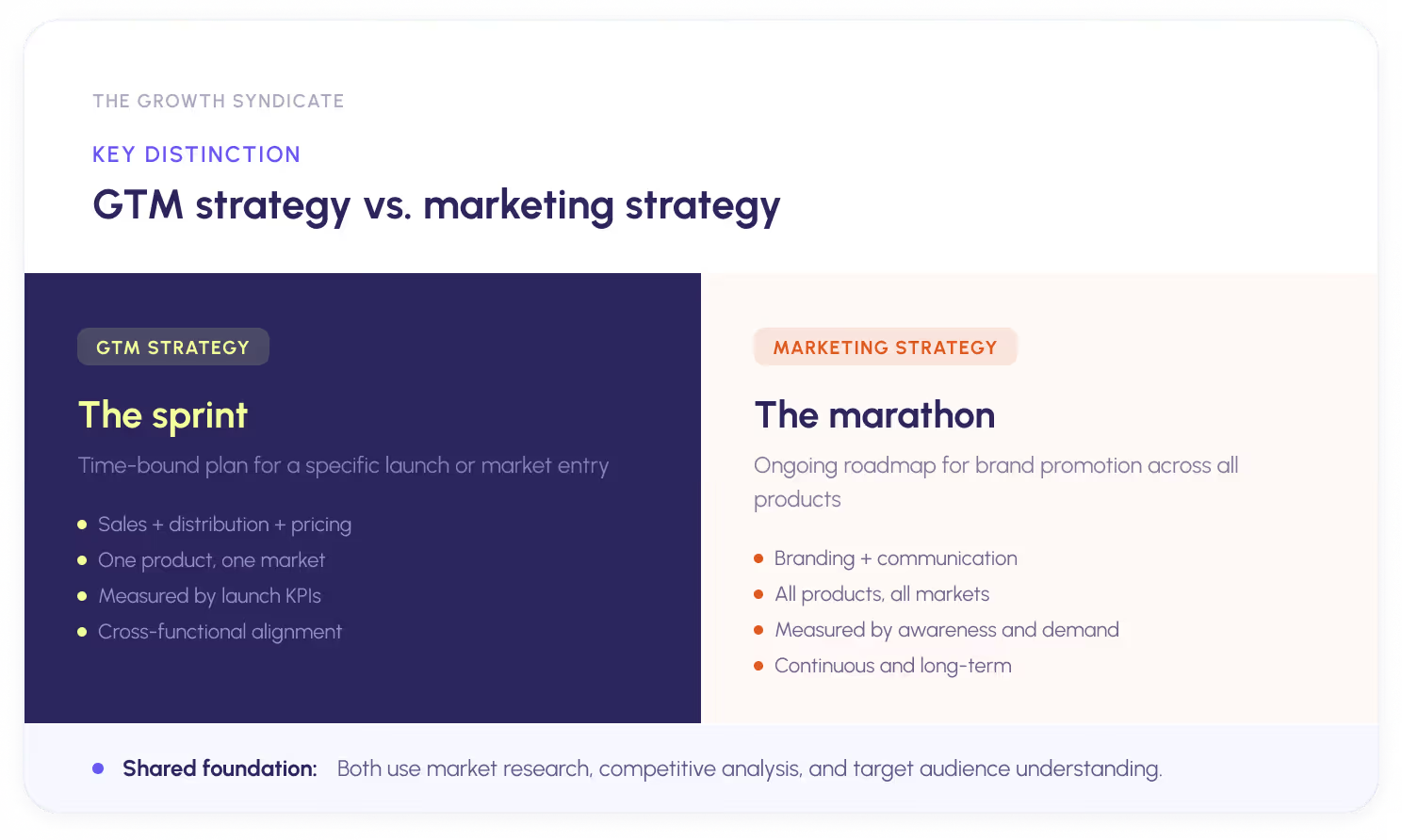
A go to market strategy is specifically for launching a product or expanding to a new market. It is a one-time or time-bound plan focused on achieving a specific product launch or market entry goal. The primary objective is to successfully introduce a product or enter a new market.
A marketing strategy, by contrast, details how you will execute your overall marketing strategy, like an annual roadmap or an overarching digital marketing strategy. It is continuous and long-term, covering brand promotion across all products and channels. The goal of a marketing strategy is to build awareness, drive demand, and retain customers over time.
A go to market strategy encompasses sales, distribution, pricing, and customer service. A marketing strategy focuses specifically on creating demand through branding and communication.
How they work together
Both go to market and marketing strategies use market and competitive analysis to inform their approaches. A go to market strategy should align with and inform the marketing strategy to ensure long-term success.
A go to market strategy requires a clear understanding of the target audience, while a marketing strategy also depends on target market understanding. Think of the GTM strategy as the sprint, and the marketing plan as the marathon.
Core components of a successful GTM strategy
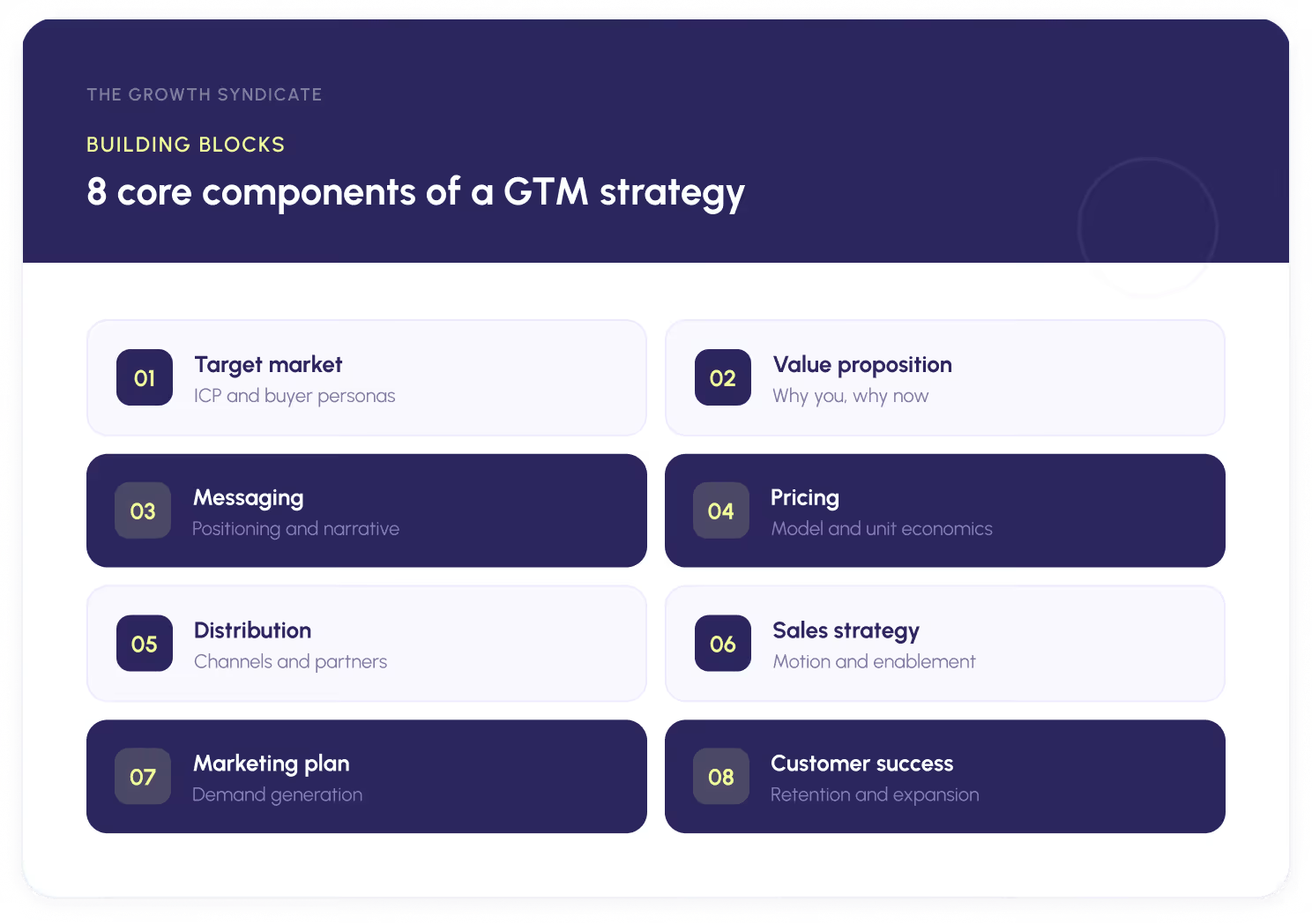
Every effective market strategy starts with the right building blocks. Key components of a GTM strategy include defining the target audience, crafting a unique value proposition, setting pricing, and selecting distribution channels. Let us break down each essential element.
Define your target market and ideal customer
The foundation of every go to market strategy is knowing exactly who you are selling to. This starts with identifying your target market and building detailed buyer personas.
For B2B companies, this means mapping the entire buying committee. Gartner data shows that the average B2B purchase now involves 10 stakeholders per decision, each consulting four to five information sources.
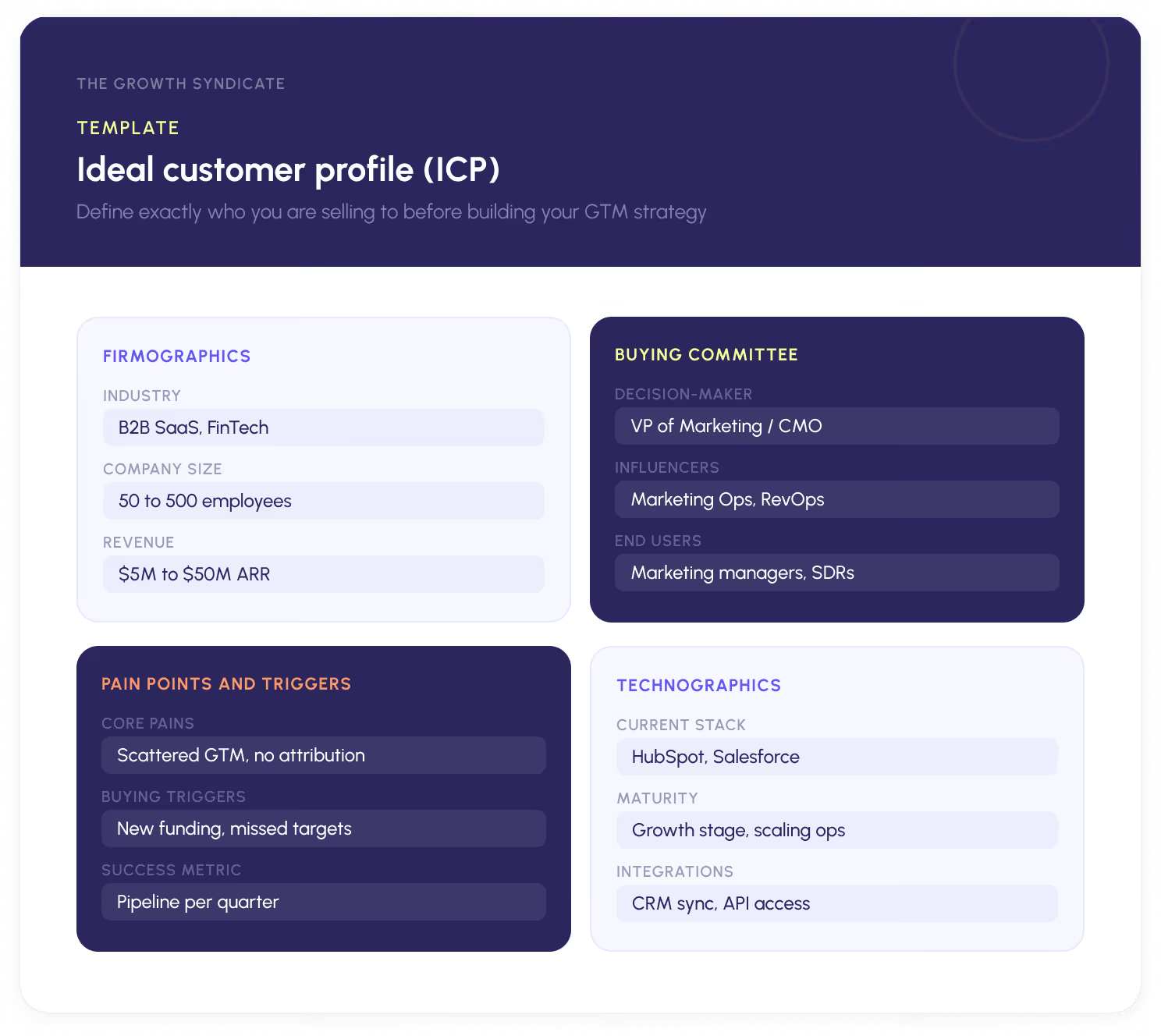
Identification of the ideal customer persona (ICP) is crucial in a GTM strategy. Your ICP should cover firmographic attributes, technographic details, behavioral patterns, and customer pain points. Without a well-defined ideal customer profile, your sales efforts and marketing efforts will lack focus.

Craft a compelling value proposition
A clear explanation of the value proposition is essential, detailing what the product does, who it is for, and why it is better than competitors. A go to market strategy should define the value proposition of the product or service, explaining why target customers should choose it over competitors' offerings.
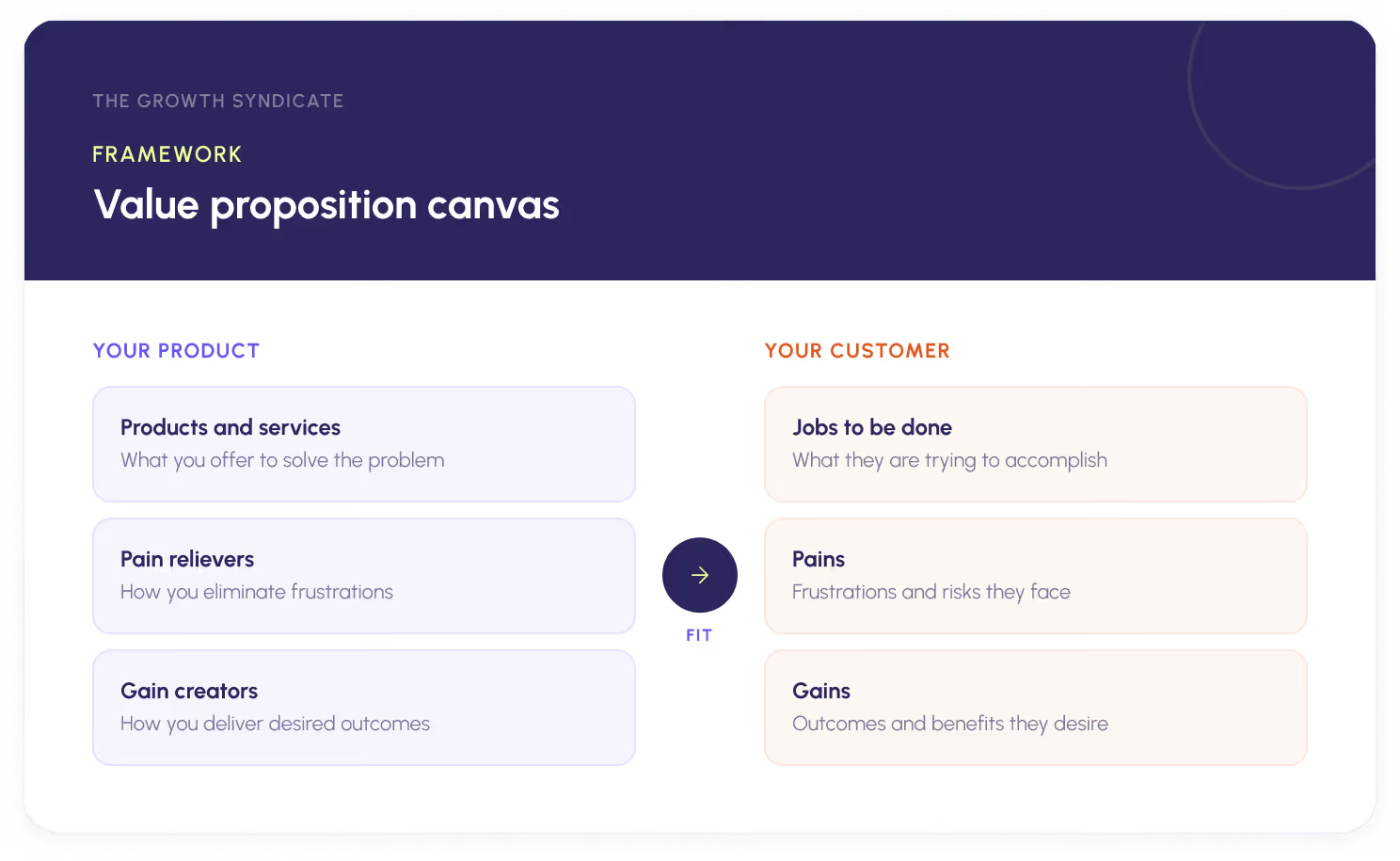
Clayton Christensen's Jobs-to-Be-Done framework remains the gold standard for understanding what job customers hire a product to accomplish. Your value proposition should speak directly to the pain points of your customer segment and show how your solution delivers outcomes they care about.
Develop key messaging and brand identity
Once you understand your ideal customer and value proposition, you need to develop key messaging that resonates with each buyer persona. This messaging should be consistent across all marketing channels and sales channels.
Your brand identity should communicate credibility and differentiate your product from direct and indirect competitors. Strong messaging connects customer pain points to specific product capabilities, creating a narrative that prospective customers find compelling.
Set your pricing strategy
Strategic pricing in a GTM strategy should be based on cost, demand, and competition. Your pricing strategy signals value and shapes unit economics.
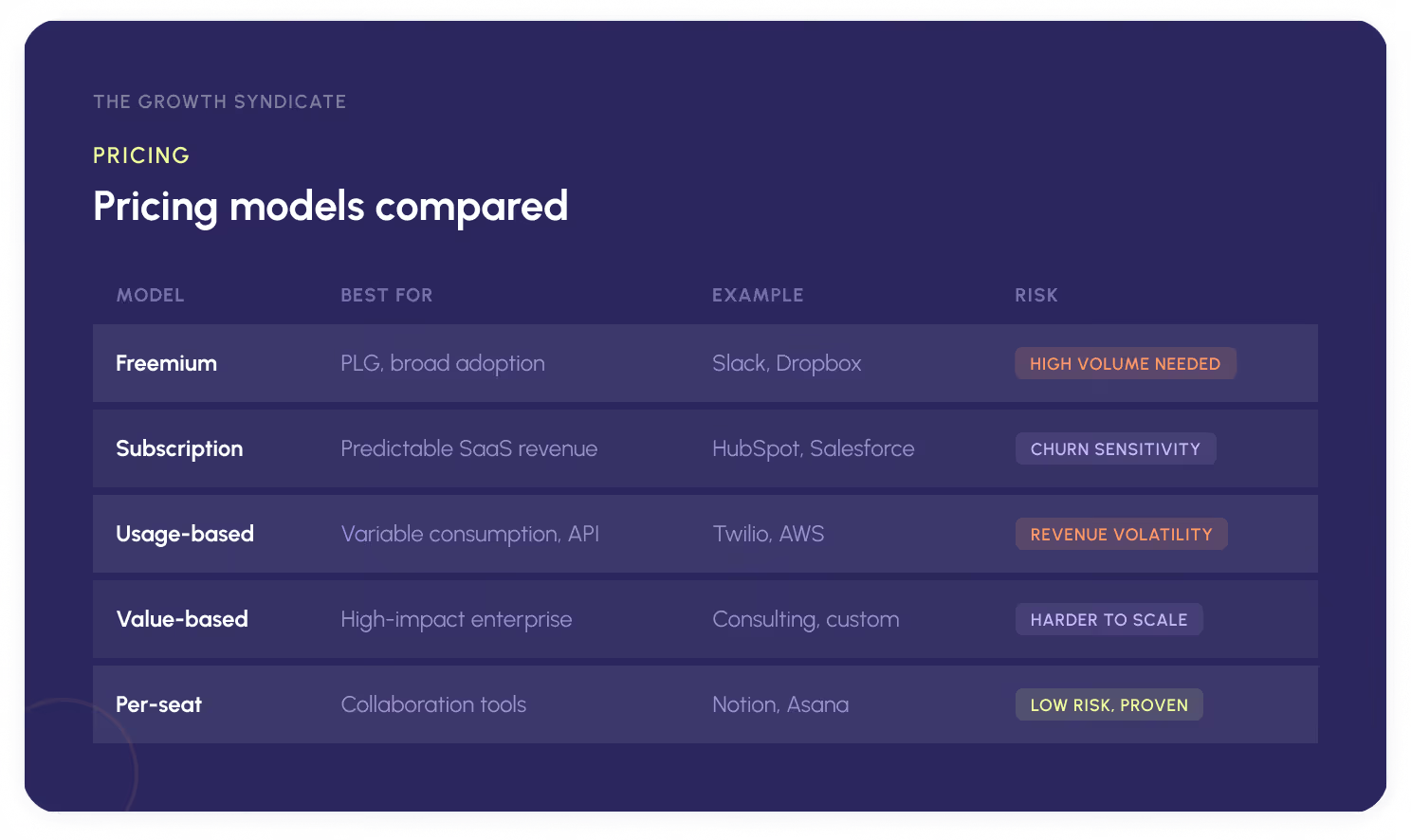
Options range from cost-plus and value-based pricing to freemium, usage-based, and subscription models. The choice matters enormously. Juicero's $700 price point became a cautionary tale, while Slack's generous free tier converted millions of users into paying teams.
To create a go to market strategy, businesses must identify their target market, clarify their value proposition, and define their pricing strategy in a way that aligns with customer expectations and market demand.
Choose your distribution channels
Distribution channels, such as direct sales or online platforms, are crucial in reaching customers. Your go to market plan should specify whether you will use direct sales, e-commerce, channel partners, marketplaces, or a hybrid distribution model.
The right sales channels depend on your product complexity, deal size, and target customers. Simple self-service products may thrive through online distribution channels, while complex enterprise solutions often require a field sales approach.
.avif)
Build your sales strategy and sales enablement plan
Your sales strategy specifies the human element of your GTM strategy: self-service, inside sales, field sales, or channel sales. Each approach should be calibrated to product complexity and deal size.
Sales enablement provides the tools, training, and collateral your team needs to close deals effectively. Without proper sales enablement, even the best go to market strategy can fall flat during execution.
Aligning internal teams, including marketing, sales, and product teams, ensures unified messaging and goals in a GTM strategy. When your sales team and marketing department operate in alignment, winning new customers becomes far more efficient.
Create your marketing plan
A marketing strategy includes both demand generation and brand-building components. Your marketing plan should cover paid, owned, and earned media across the most effective marketing channels for reaching your target audience.
Consider which social media platforms, content formats, and advertising channels will reach potential customers at each stage of the customer journey. Targeted campaigns are particularly effective for B2B companies pursuing high-value accounts.
Your marketing plan should also include strategies for increasing brand awareness through content marketing, thought leadership, and community engagement. The goal is to raise brand awareness while generating qualified leads for your sales funnel.
Plan for customer experience and customer success
A successful GTM strategy does not end at the point of sale. Customer experience and customer satisfaction directly impact customer retention and revenue growth.
Build customer success processes that ensure new customers achieve their desired outcomes quickly. Customer engagement through onboarding, training, and ongoing support helps reduce churn and drives customer lifetime value.
Customer feedback loops should be built into your go to market strategy from day one. Gathering and acting on customer insights ensures continuous improvement and stronger product-market fit.
How to create a go to market strategy
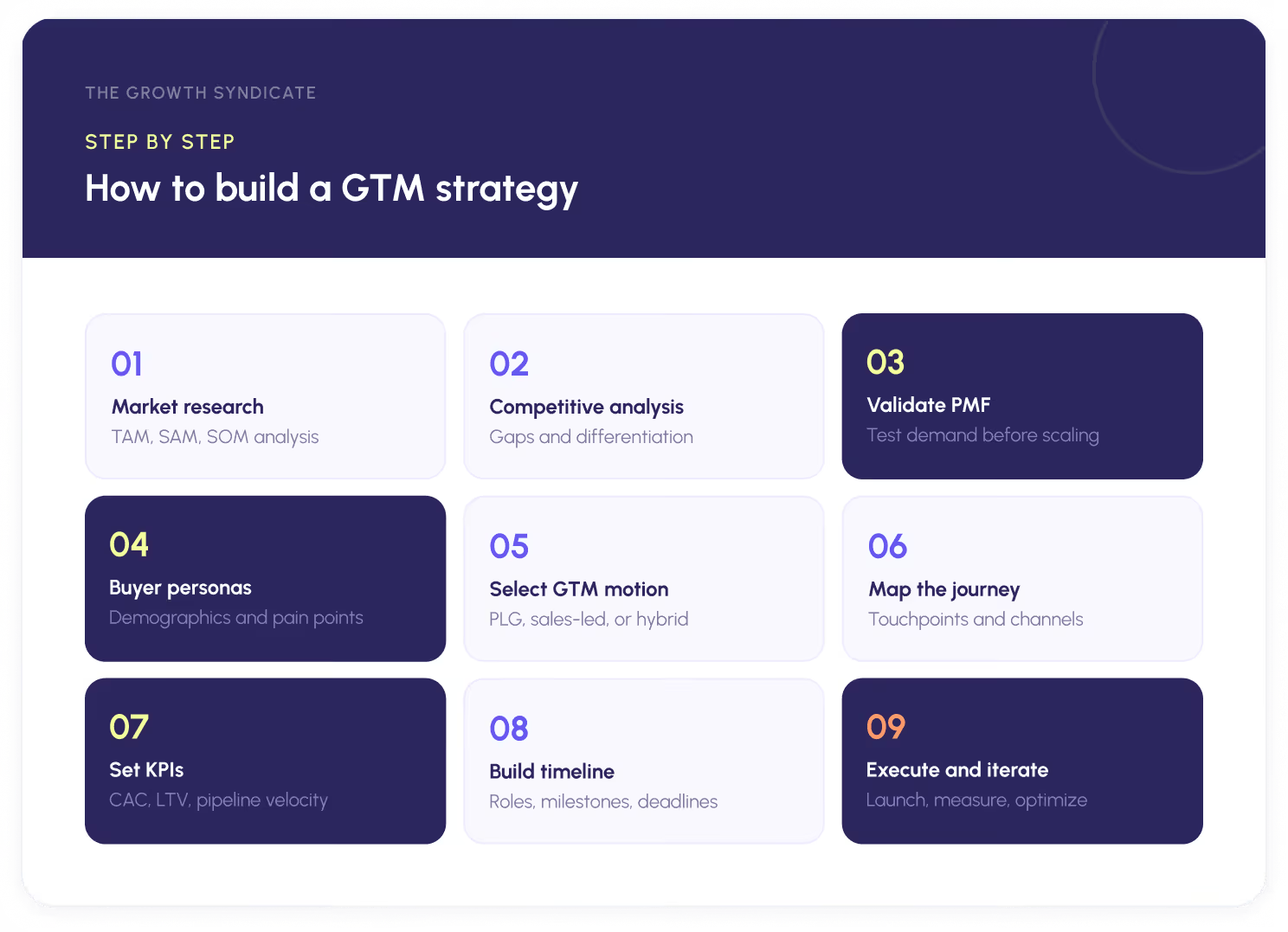
Developing a successful go to market (GTM) strategy starts with deep market analysis to understand your target customer segment. Here is a step-by-step go to market process.
Conduct thorough market research
Conducting thorough market research prevents wasted resources on products with weak demand or poor market fit. Start with Total Addressable Market (TAM), Serviceable Available Market (SAM), and Serviceable Obtainable Market (SOM) analysis.
Market research should also include competitive analysis to map the landscape and identify gaps your product can fill. Understanding market dynamics and market demand gives your GTM strategy a solid analytical foundation.
Run a competitive analysis
Analyze your direct and indirect competitors to understand their positioning, pricing, and weaknesses. A thorough competitive analysis reveals opportunities for differentiation and helps refine your competitive advantage.
Use this analysis to identify underserved customer segments and gaps in the market.
Validate product-market fit
Before committing significant resources, ensure genuine market demand exists. Organizations with structured GTM strategies are two to three times more likely to achieve commercial success.
Use customer feedback, surveys, and beta testing to validate that your product solves a real problem for your target customers. Customer insights gathered during this phase are invaluable for refining your value proposition.
Define your buyer personas
Build detailed buyer personas covering demographics, psychographics, pain points, and buying behaviors. For B2B, map the buying committee and each stakeholder's role.
Your buyer personas should inform everything from your marketing plan to your sales strategy. The more specifically you define your ideal customer, the more effectively you can reach them.
Select your GTM motion
Choose the go to market motion that best fits your product and market. The main options include product-led growth, sales-led growth, channel-led growth, and hybrid approaches.
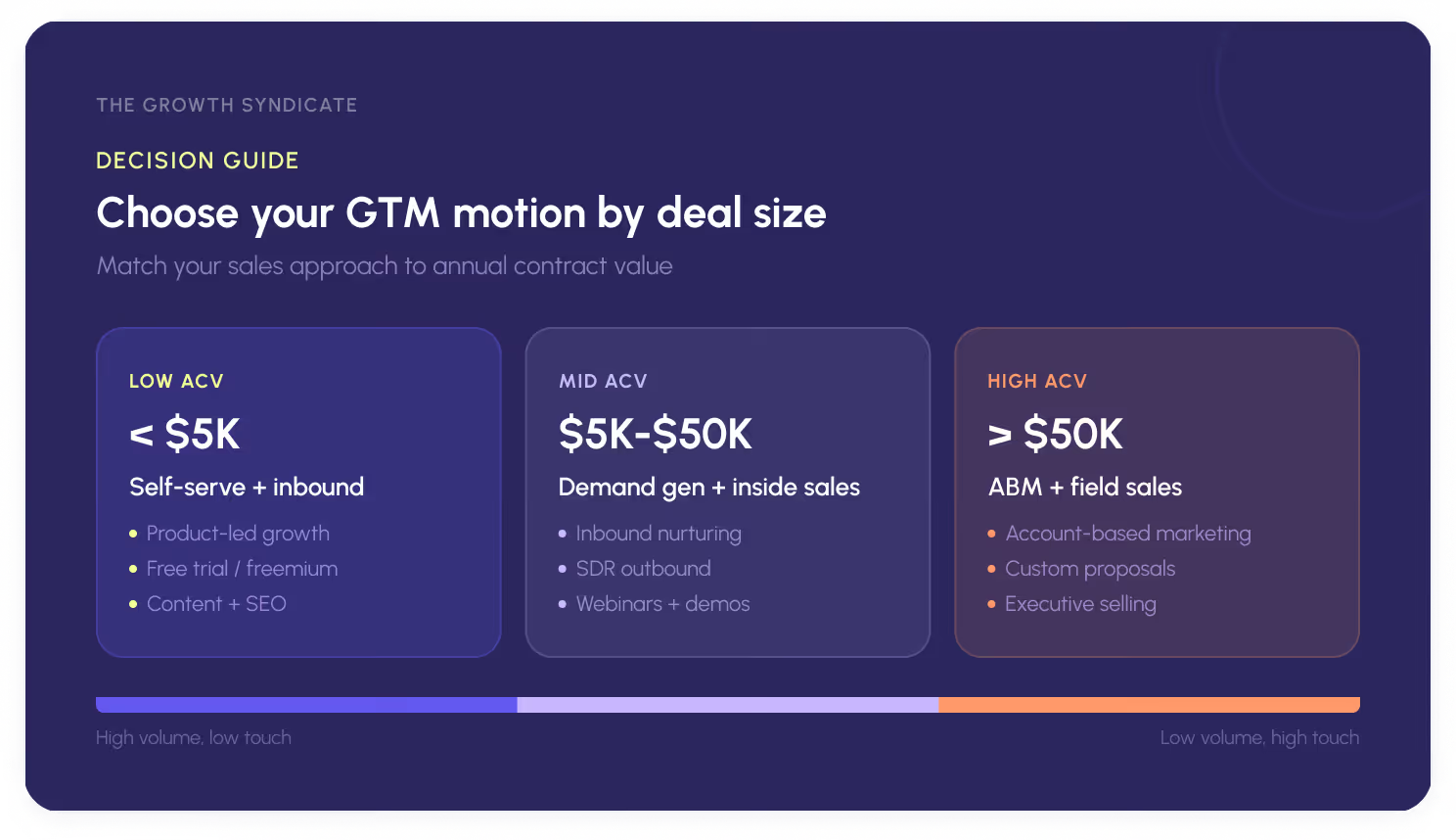
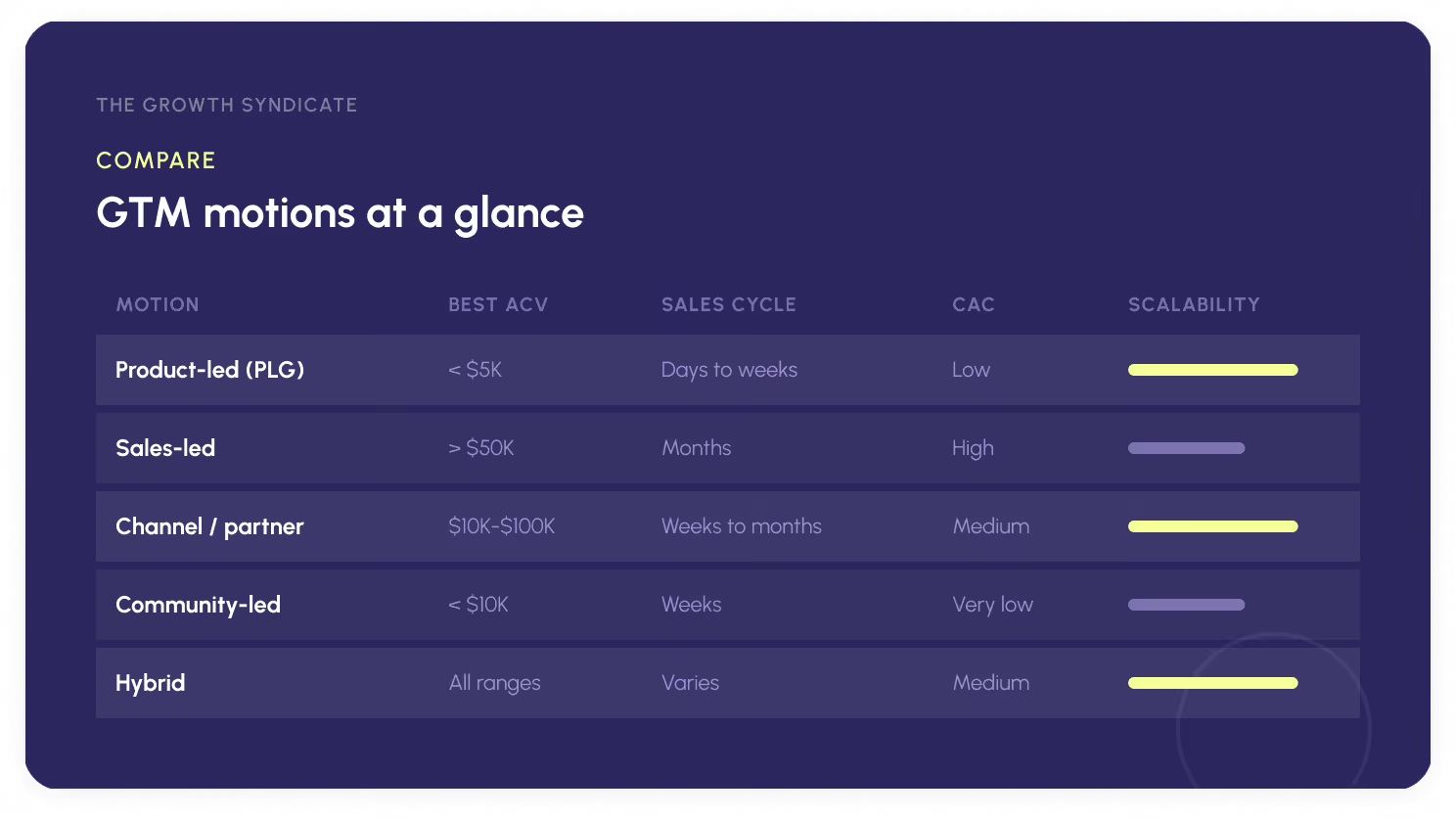
A practical heuristic: annual contract values below $5,000 favor product-led and inbound strategies. Values between $5,000 and $50,000 suit demand generation with inside sales. Above $50,000, account based marketing with field sales becomes more effective.
Map the customer journey
Understanding the customer journey from awareness through purchase is essential. Map each touchpoint where potential customers interact with your brand and add value at every stage.
The buying path is rarely linear. Modern buyers research solutions across multiple channels, consult peers, and evaluate alternatives before making a decision. Your GTM strategy must account for this complexity.
Set goals and key performance indicators
Setting concrete goals is essential for a successful go to market strategy, as it provides specific targets to aim for and a clear timeline. Define key performance indicators that measure what matters most.
Track metrics like customer acquisition cost, customer lifetime value, conversion rates, pipeline velocity, win rate, and net revenue retention. The benchmark LTV-to-CAC ratio remains 3:1 across most business models.
The success of a go to market strategy is dependent on the goals that are set, which should include metrics for measuring success. Track these KPIs regularly to ensure your GTM strategy stays on track.
Build a timeline and launch plan
A go to market strategy should include a timeline outlining when each element of the strategy will be implemented. Cross-functional coordination with clear roles and feedback loops is essential for a smooth launch process.
Use a project management tool to keep all teams aligned and track progress against milestones. A well-organized launch plan ensures nothing falls through the cracks during execution.
Execute, optimize, and iterate
During the product launch, focus on delivering a cohesive experience across all channels. Ensure your sales team has the sales enablement materials they need and your marketing plan is fully activated.
Monitor early feedback from users closely and be prepared to adjust your approach in real time. Effective execution requires agility and rapid response to market signals.
But a go to market strategy is not a one-time document. Treat it as an evolving framework that improves over time through data and direct input from customers.
Conduct quarterly reviews to catch shifting buyer patterns. What you learn should continuously feed back into your GTM strategy to drive revenue growth.
Types of go to market strategies
There are several distinct GTM strategy types, each suited to different products, markets, and business models. Understanding each approach helps you design the right market strategy mix for your situation. The best market strategy blends multiple motions based on your product and audience.
Product-led growth (PLG)
Product-led growth makes the product itself the primary growth engine through free trials, freemium models, and self-service onboarding. PLG companies achieve 30 to 50 percent lower sales and marketing costs relative to revenue. The customer experience itself drives adoption and expansion.
Sixty-one percent of Forbes Cloud 100 companies use PLG strategies. However, this approach demands an exceptional, self-explanatory product. For half of all products, more than 98% of new users become inactive within two weeks.
Companies like Slack, Dropbox, Figma, and Calendly have used PLG to build massive customer bases before adding sales-led motions.
Sales-led growth
Sales-led growth relies on dedicated sales teams for prospecting, qualification, demonstrations, and closing. It excels with complex products requiring customization, enterprise deals involving multiple stakeholders, and high annual contract values.
The sales cycle in sales-led models is typically longer, but deal sizes are larger. Sales cycle length varies from weeks to months depending on product complexity and the number of decision-makers involved.
Channel-led and partner-led strategies
Channel-led strategies leverage third-party networks for distribution. Microsoft generated over $143 billion in revenue over seven years through channel partnerships.
Partner-led growth is gaining traction as ecosystem-led growth (ELG) emerges as a major trend. Companies embracing ELG are 24% more likely to hit or exceed revenue targets, with partner-influenced deals averaging 60% larger.
Community-led growth
Community-led growth builds competitive moats through peer-to-peer advocacy. Notion's user community organically created thousands of templates that drove adoption to a $10 billion valuation.
This approach transforms existing customers into brand ambassadors who attract new potential customers organically, reducing acquisition costs significantly.
Hybrid approaches
The hybrid model has emerged as the clear winner for most companies. A marketing strategy includes elements from multiple GTM motions, blended to match different buyer groups and sales channels.
HubSpot runs freemium PLG for small businesses alongside dedicated sales for enterprise accounts. Seventy-seven percent of SaaS companies exceeding $250 million in annual recurring revenue now use PLG in some form, combined with sales-led motions.
Go to market strategy examples: Companies that got it right
Learning from successful go to market strategies provides practical insights for building your own GTM plan. Here are examples of companies that mastered their GTM approach.

Slack: From failed product to $27.7 billion acquisition
Slack's initial product launch failed, but a second attempt using customer feedback led to rapid user growth and market success. The company attracted 8,000 signups within 24 hours and reached 265,000 daily active users in year one.
Slack sold outcomes — messaging like "75% less email" resonated with its target market. The company grew to a $1.12 billion valuation within 12 months without outbound sales reps, proving that product effectively can drive growth.
Dropbox: Viral referrals that cut customer acquisition cost
Dropbox discovered that paid ads cost $233 to $338 per acquisition for a $99 product. The company launched a double-sided referral program giving both parties free storage.
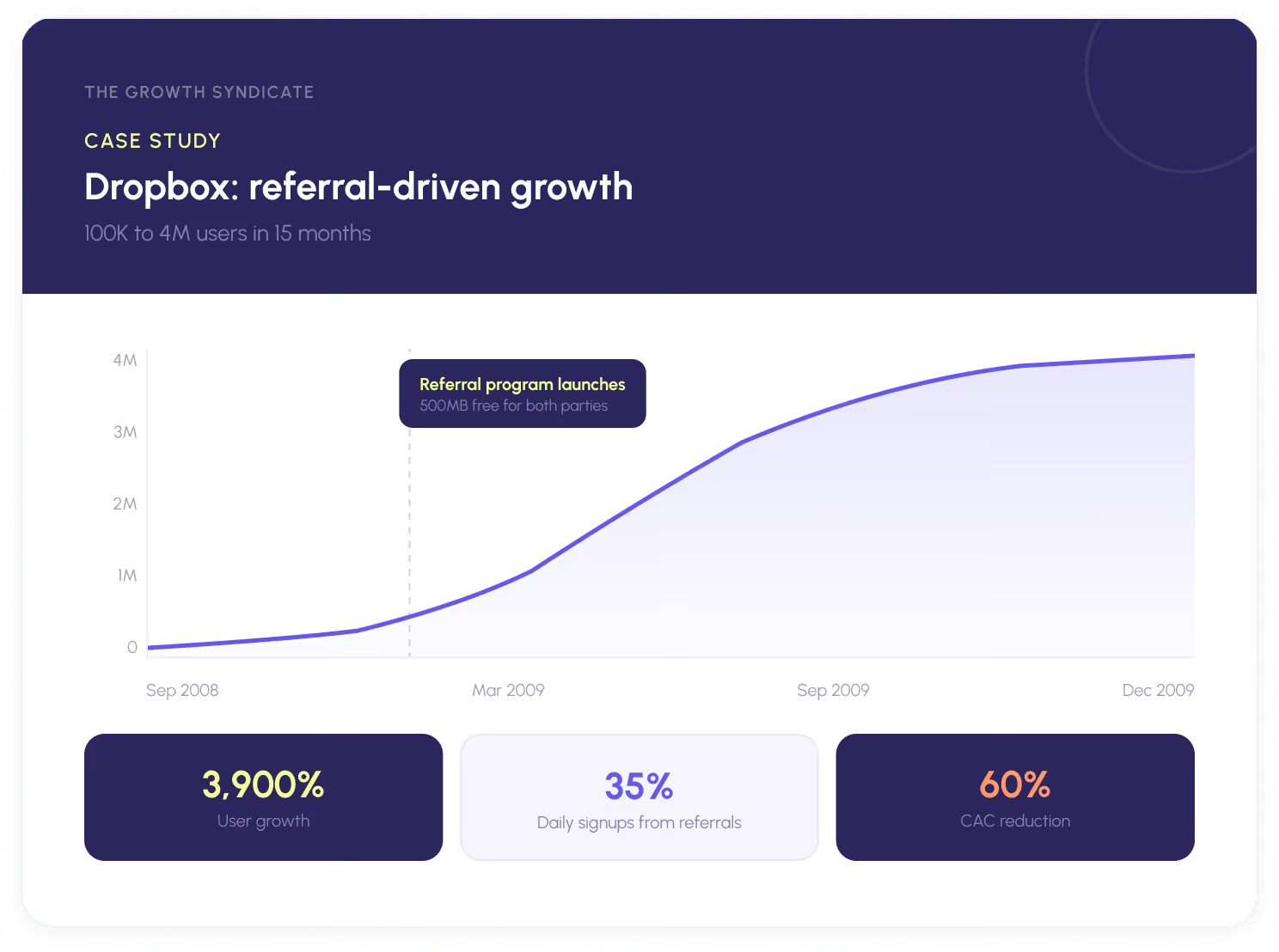
The result was growth from 100,000 to 4 million users in 15 months, with referrals driving 35% of daily signups. This reduced customer acquisition cost by 60% and became one of the most studied examples in business history.
Dollar Shave Club: Viral content disrupts an entire market
Dollar Shave Club disrupted Gillette's 70% market share through a $4,500 viral video and a direct-to-consumer subscription model. The video garnered 27 million views and generated 12,000 orders in 48 hours.
Revenue grew from $4 million to $240 million in four years, and Unilever acquired the company for $1 billion. This shows how bold messaging and an underserved customer segment can capture significant market share.
Oatly: Coffee shops as distribution strategy
Oatly's US launch saw revenue grow ten-fold between 2017 and 2018 by targeting coffee shops instead of traditional advertising. This unconventional choice of distribution channels reached the right target audience in context.
Rather than competing for shelf space, Oatly built customer base through baristas and specialty coffee culture, proving that creative channel selection can be a powerful competitive advantage.
Figma: Browser-based PLG to $67 billion valuation
Figma combined product-led growth with community-led growth by offering a browser-based design tool free for individuals. Every shared file became a viral loop, and collaboration turned users into advocates.
Figma achieved 60% market penetration among professional design teams in five years. The company launched product effectively through its target customers: designers and students who became internal evangelists.
Fitbit: Community-based customer engagement
Fitbit's success is attributed to its community-based approach, using social features and gamification to engage users. By making fitness tracking social, Fitbit built customer retention and expanded its customer base through word-of-mouth from existing customers.
Apple: iMac G3 and the power of clear positioning
Apple's 1998 launch of the iMac G3 was successful due to a clear understanding of its target market and a compelling value proposition. The product launch demonstrated how a well-crafted GTM strategy can reshape market share overnight.
B2B vs. B2C go to market strategies
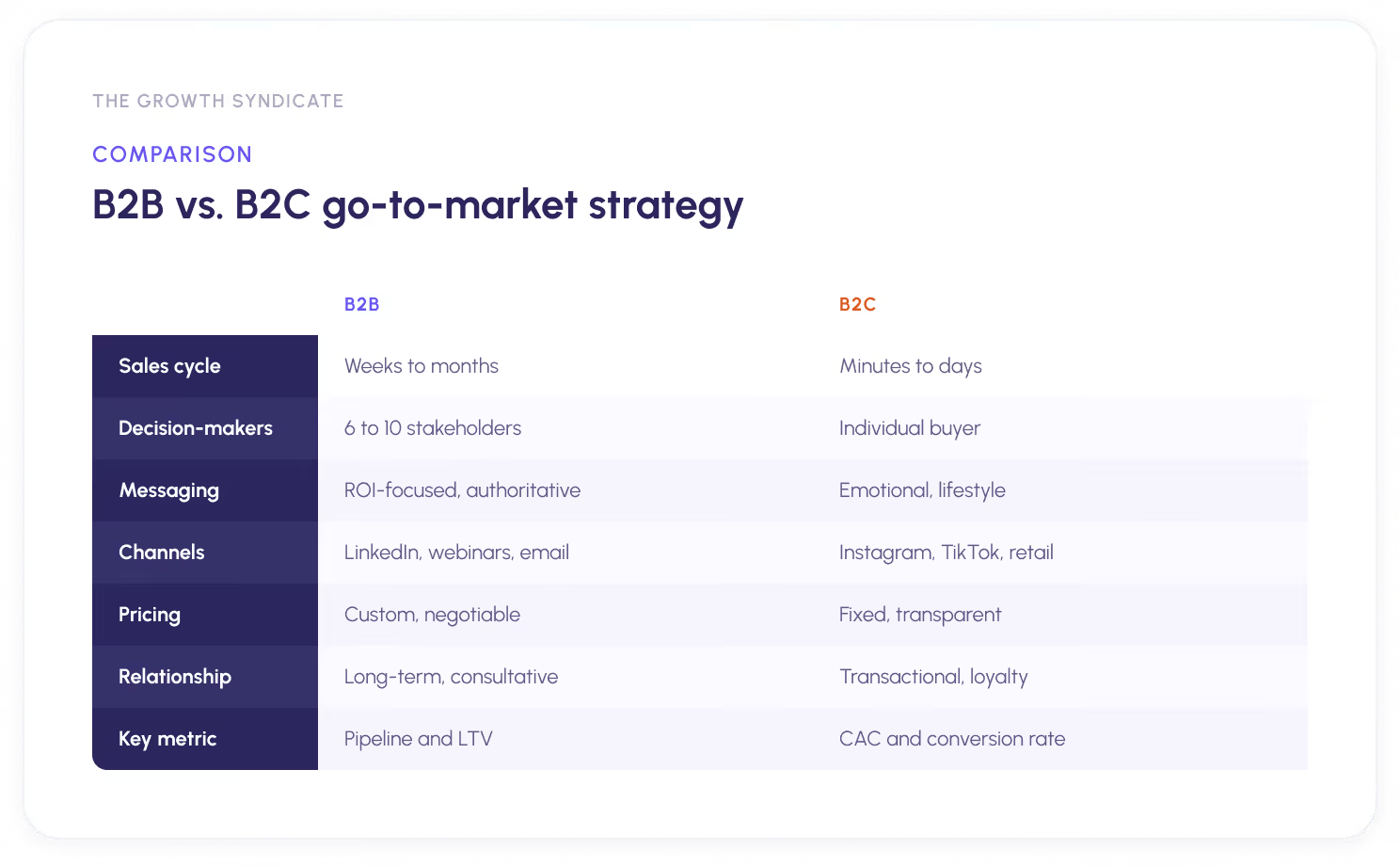
The approach to a go to market (GTM) strategy differs significantly between B2B and B2C contexts. Understanding these differences is essential for choosing the right GTM strategy.
B2B GTM strategy considerations
B2B sales cycles are longer and involve multiple decision-makers. The sales process includes discovery calls, demos, security reviews, and procurement involving committees of six to ten stakeholders.
B2B messaging must be authoritative and ROI-focused, built around white papers, case studies, and ROI calculators. Marketing channels like LinkedIn, email sequences, industry webinars, and trade shows dominate the B2B go to market plan.
Account based marketing has become essential in B2B GTM strategy, with organizations using ABM reporting 208% increases in marketing-generated revenue and 171% lifts in average contract value.
B2C GTM strategy considerations
B2C sales are faster, often decided by a single individual based on emotional appeal, brand affinity, or convenience. The buying timeline is significantly shorter, and buying decisions are more impulsive.
B2C marketing channels include Instagram, TikTok, influencer partnerships, and retail media networks. Pricing is typically fixed and transparent, with promotions driving growth. The customer experience across every touchpoint must be seamless.
B2C go to market strategies rely heavily on social proof, storytelling, and lifestyle branding to connect with prospective customers. The overall buying experience and customer satisfaction drive repeat purchases and word-of-mouth referrals.
Yet the lines between B2B and B2C are blurring. Fifty-two percent of B2B leaders plan to recruit marketing leaders with B2C backgrounds, and many companies now operate with hybrid approaches.
GTM strategy frameworks worth knowing
Several proven frameworks can guide your go to market strategy development. Each provides a different lens for making strategic decisions.
Crossing the chasm and the four Ps
Geoffrey Moore's framework identifies the gap between early adopters and the early majority. His prescription is the beachhead strategy: choosing a segment big enough to matter but small enough to dominate.
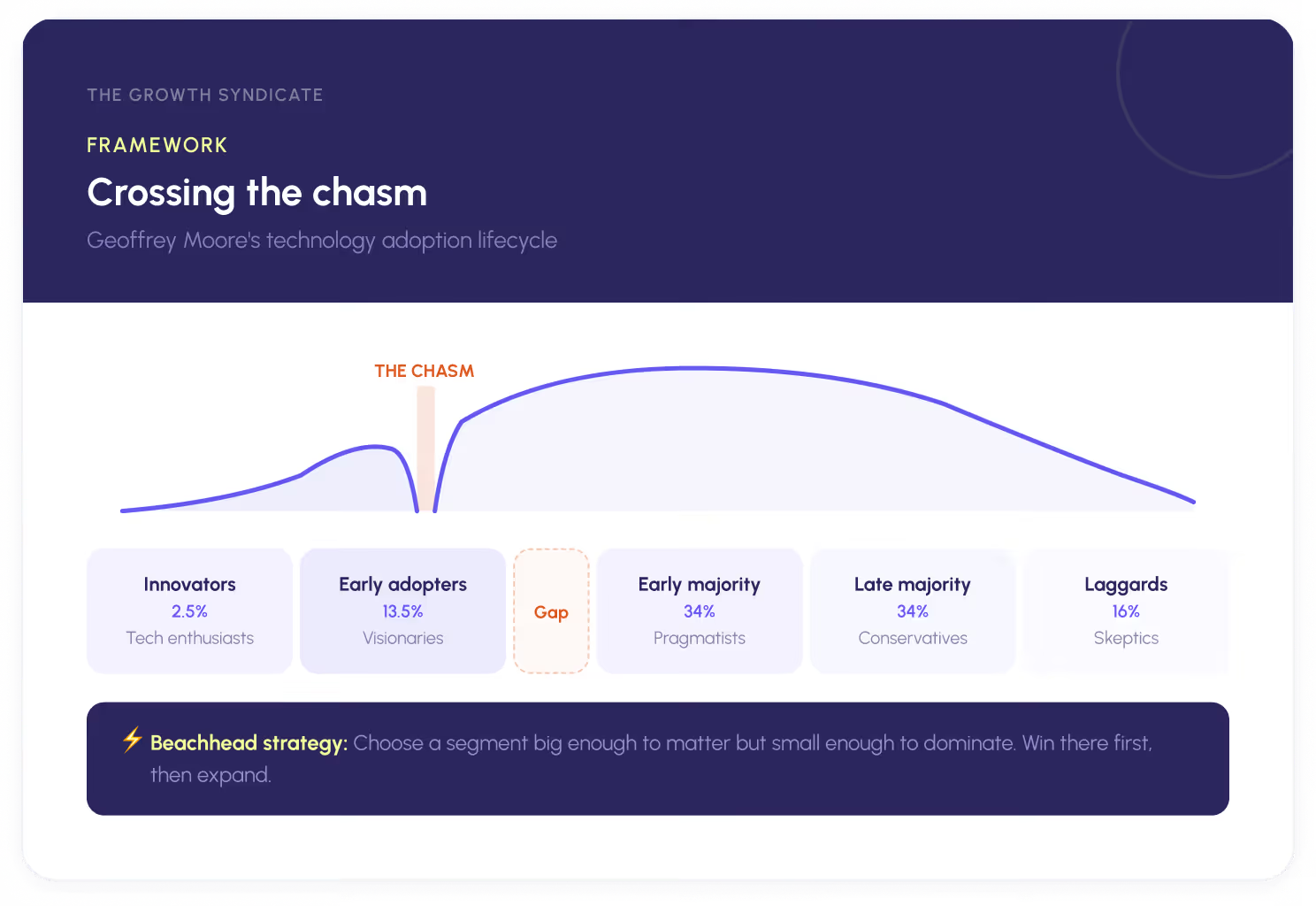
The Bowling Pin strategy extends this by using dominance in one niche to enter adjacent groups. This framework is valuable for technology companies entering a new market.
Complementing Moore's work, the four Ps of a go to market strategy are product, price, place, and promotion, which work together to shape how a product is brought to market. This classic framework remains a useful starting checklist for any GTM plan.
Value proposition Canvas
Alexander Osterwalder's framework connects customer jobs, pains, and gains to products, pain relievers, and gain creators. It directly informs GTM messaging and ensures your value proposition addresses real customer insights.
Bullseye framework
Gabriel Weinberg's Bullseye Framework provides a systematic method for identifying the best marketing channels — brainstorm all possible channels, test the most promising cheaply, then focus on the two to three delivering the best results.
AARRR (Pirate Metrics)
The Acquisition, Activation, Retention, Referral, Revenue framework gives GTM teams a funnel for measuring effectiveness at each stage. These metrics help identify where your sales funnel leaks and where to focus optimization efforts.
McKinsey's seven degrees of freedom
McKinsey's framework maps seven growth pathways: selling more to current customers, attracting new ones, creating new products, entering new geographies, using new distribution channels, moving into adjacent markets, and reshaping the competitive environment.
Common GTM strategy mistakes to avoid
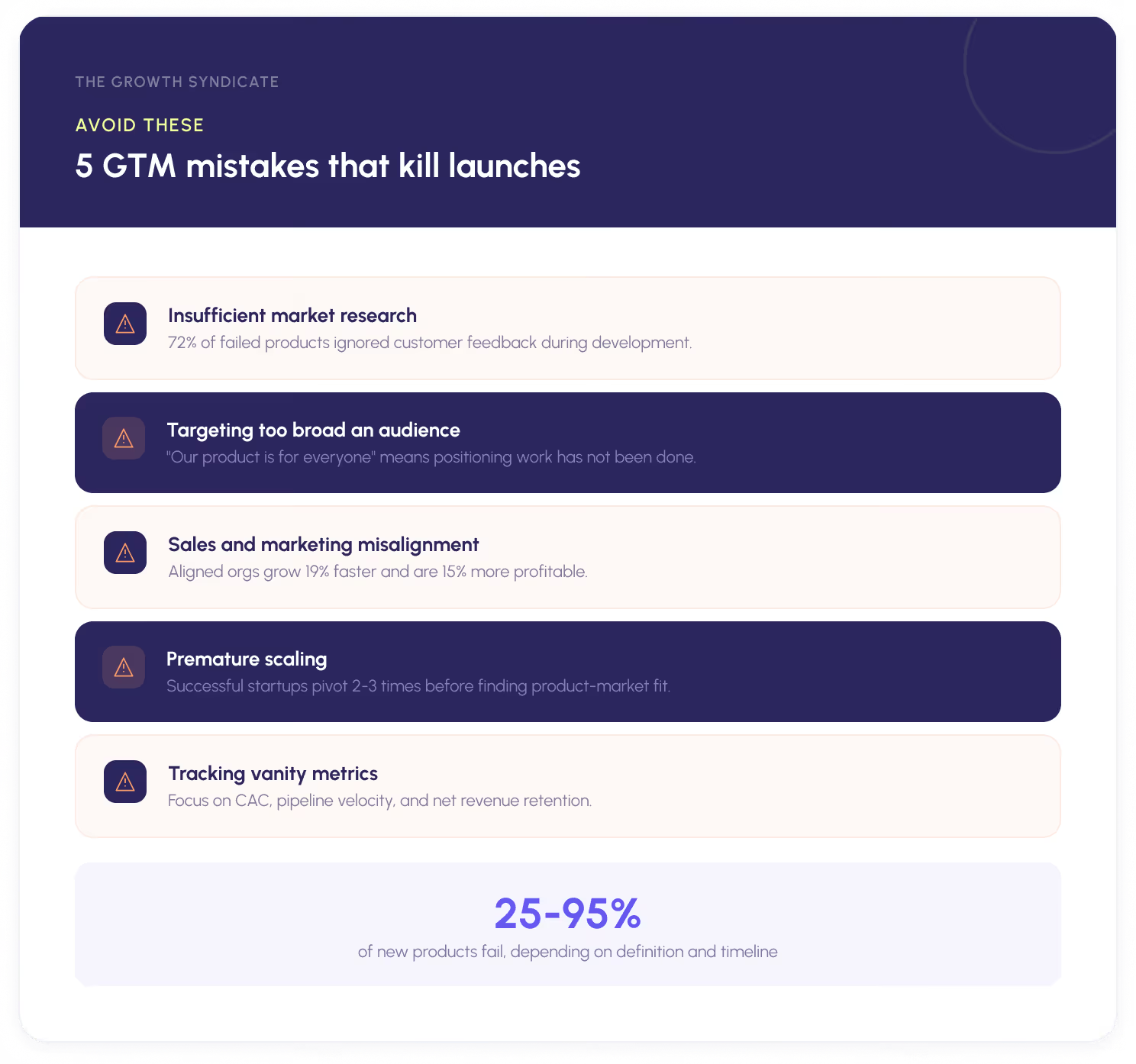
Even the best market strategy can fail in execution. Research suggests that between 25% and 95% of new products fail, depending on the definition used and the timeline measured. A strong GTM strategy helps reduce those odds, but common pitfalls still derail even promising launches. Recognizing these market strategy mistakes early can save significant time and resources.
Insufficient market research
Launching based on internal excitement rather than external evidence is the most common mistake. Seventy-two percent of failed products ignored customer feedback during development. Market research is not optional — it is the foundation of every effective GTM strategy.
Targeting too broad an audience
"Our product is for everyone" is a sign that positioning work has not been done. A solid GTM strategy requires a narrowly defined target market and specific buyer personas. Trying to serve everyone means serving no one well.
Sales and marketing misalignment
When sales and marketing teams operate in silos, messaging becomes inconsistent and leads cannot convert. Organizations with strong GTM alignment grow 19% faster and are 15% more profitable than peers with fragmented approaches.
Using a project management tool to coordinate between teams can help maintain alignment throughout the launch and execution phase.
Premature scaling
Scaling before confirming product-market fit wastes resources catastrophically. Successful startups pivot two to three times on average before finding PMF. Validate through customer insights and market analysis before pouring resources into growth.
Ignoring feedback and tracking vanity metrics
Customer feedback is not just for product development — it should shape your entire GTM strategy. Companies that act on what customers tell them achieve stronger loyalty and faster revenue growth.
Equally dangerous is measuring website traffic and social media likes instead of acquisition costs, pipeline velocity, and net revenue retention. Vanity metrics give teams a false sense of progress. Focus on fully-burdened metrics that reflect real business performance.
GTM Strategy trends shaping 2026
The go to market landscape is undergoing its most significant transformation in decades. Here are the trends reshaping how companies approach their GTM strategy and build a winning market strategy for the years ahead.
AI-powered GTM
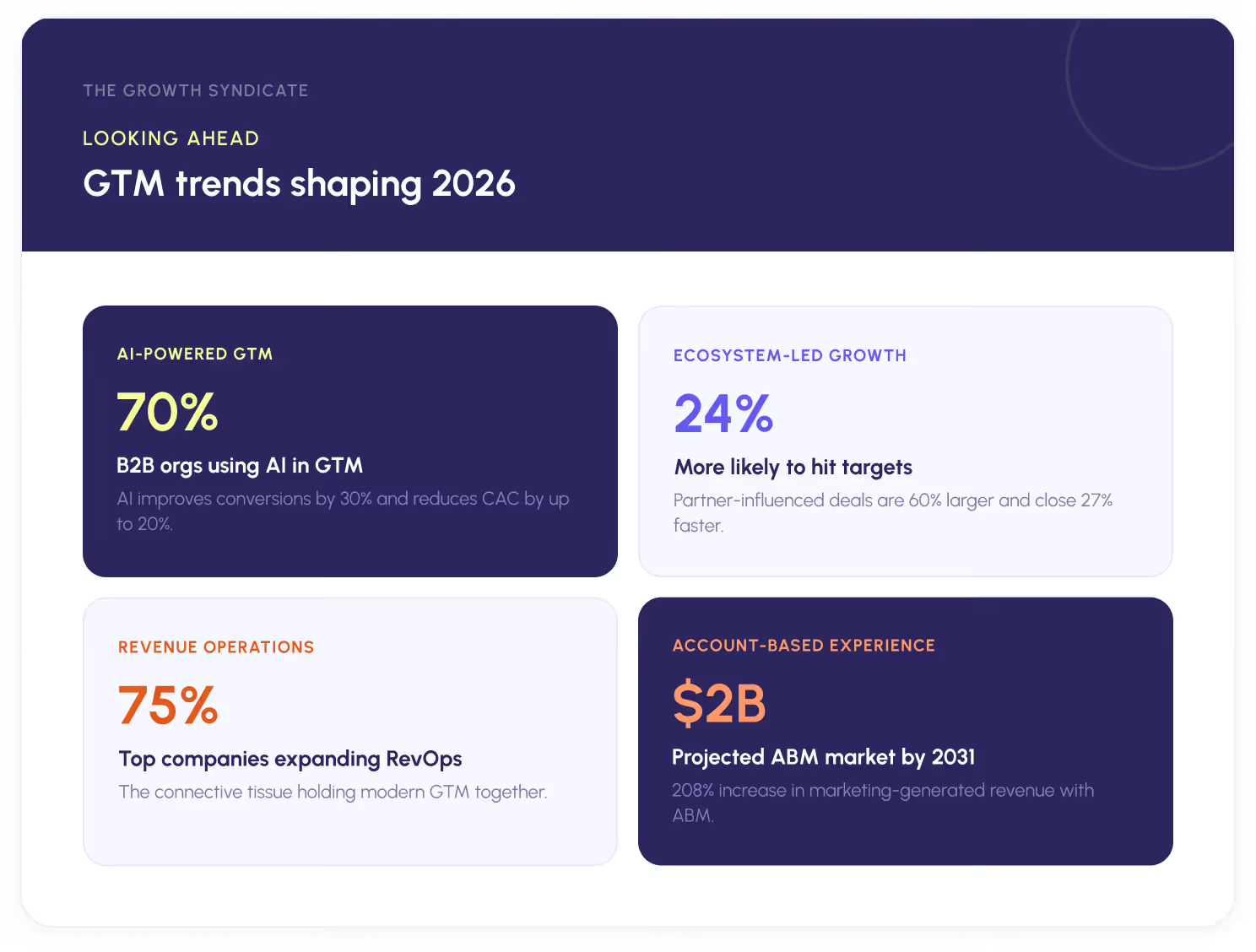
Gartner predicts that over 70% of B2B organizations will rely heavily on AI-powered GTM strategies. AI can improve conversion rates by 30% and reduce customer acquisition cost by up to 20%.
The emerging frontier is agentic AI — autonomous agents that research prospects, personalize messaging, and book meetings. A new discipline called AI Engine Optimization (AEO) is emerging as 51% of leaders plan to optimize for AI-driven search engines.
Ecosystem-led growth
Companies embracing ecosystem-led growth are 24% more likely to hit revenue targets. Partner-influenced deals average 60% larger and close 27% faster.
This trend represents a shift from isolated go to market efforts toward collaborative growth through partnerships, integrations, and shared customer bases.
Efficient growth over growth at all costs
The shift toward profitable, efficient growth is permanent. New efficiency metrics like burn multiple and gross margin payback period have joined traditional KPIs.
Revenue Operations (RevOps) has become the connective tissue holding modern GTM strategy together, with 75% of highest-growth companies planning to expand a RevOps function. A project management tool integrated with RevOps helps track the sales process end to end.
Account based experience (ABX)
Account based marketing has matured into Account-Based Experience, integrating marketing, sales, and post-sale support under a unified strategy. The global ABM market is projected to reach $2.02 billion by 2031.
ABX aligns every touchpoint around target accounts, driving higher conversion rates and larger deal sizes.
Bringing it all together
Creating a go to market (GTM) strategy requires a thorough, considered approach that aligns with the overall business objectives. The most important insight from the research is that execution quality matters more than motion selection — no single GTM strategy type correlates with higher growth when studied at scale.
A well-crafted go to market strategy streamlines the approach to entering new markets or launching products by identifying effective distribution channels, target audience, and messaging. Every successful product launch depends on a go to market (GTM) strategy that serves as your roadmap for turning a product into revenue.
The companies that define modern GTM strategy — Slack, Dropbox, Figma, HubSpot — share a common trait. They each found one powerful growth lever and built their entire market strategy around maximizing it before expanding to complementary motions.
As the field enters its AI-driven next chapter, focus on these fundamentals: know your ideal customer deeply, craft a value proposition that speaks to real pain points, choose two to three channels that reach your target audience, and align your sales team around a clear sales strategy.
A successful go to market strategy is not a static document — it is a living system that evolves with your market, your customers, and your product. Start with these principles, measure relentlessly through the right key performance indicators, and iterate based on customer feedback. That is how you reach the right market and drive sustainable revenue growth.
.png)