.svg)

Originally published May 20, 2026. Updated October 2, 2026 with what we learned running ChatGPT ads for B2B clients.
ChatGPT ads are live, self-serve, and expanding fast. Click-through rates run seven to ten times lower than Google Search, but conversion quality is 1.5 times higher. And as of late May 2026, the platform now charges on a cost-per-action basis, which turns it from an awareness experiment into something B2B marketers can measure against pipeline. For B2B marketers, the question is not whether to pay attention. It is whether to pay for placement.
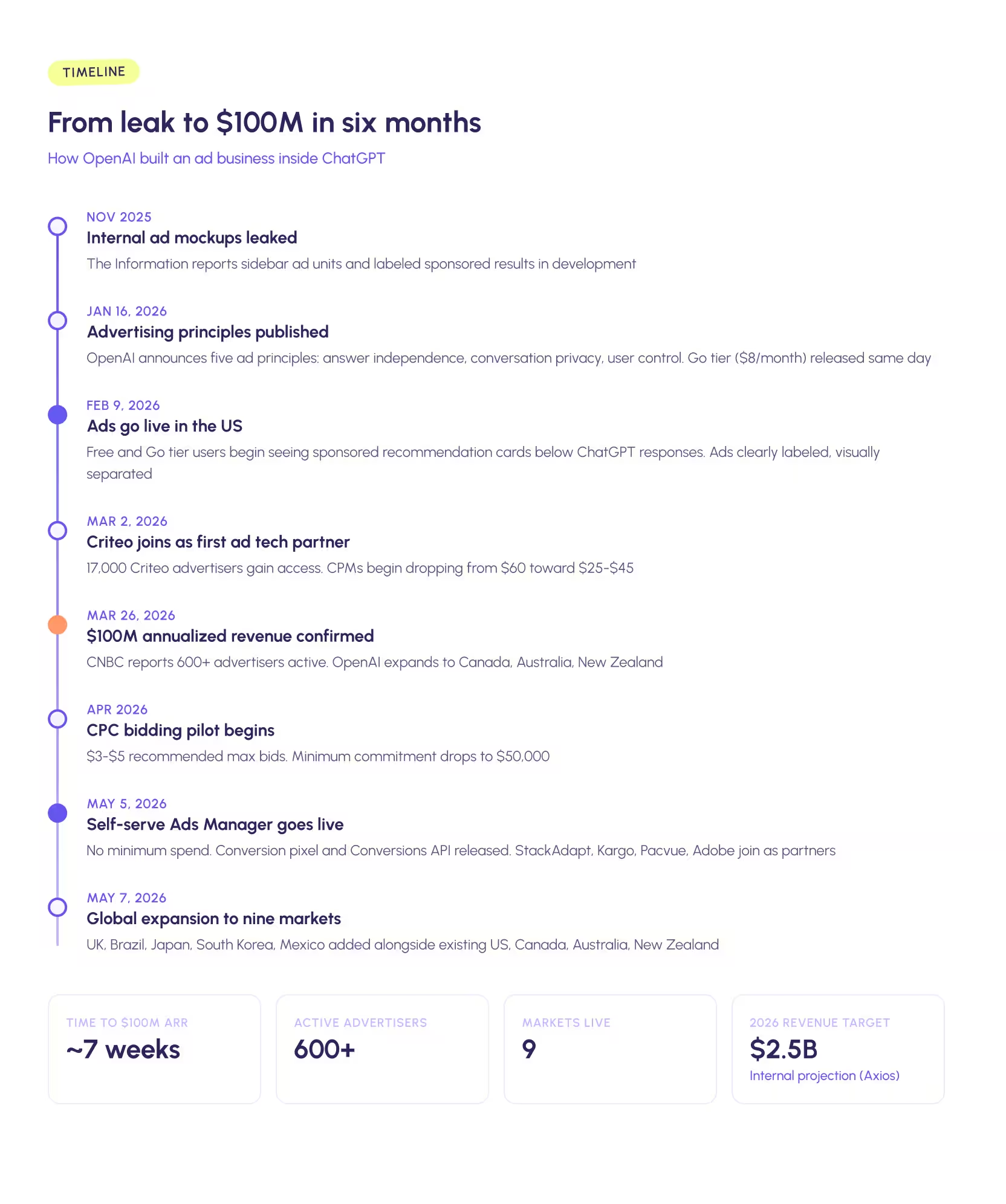
OpenAI announced plans to start showing ads in January 2026. By March, the new advertising in ChatGPT had crossed $100 million in annualized ad revenue. By May, paid placements had expanded to different regions across nine countries, a self-serve ads manager was live, and hundreds of millions of free-tier users were seeing ads below the answers ChatGPT provides.
That happened in four months. In the two weeks after that, OpenAI added cost-per-action bidding, conversion-optimized campaigns, and a redesigned ad unit, then confidentially filed for an IPO. The pace has not slowed.
For anyone interested in what this means for their work, the speed matters. These ads do not look like search ads. They do not behave like display ads. And the rules for what works are still being written in the coming weeks and months as OpenAI continues testing ads across different platforms and conversation types.
This is a practical breakdown. What the ads look like, what they cost, how ad relevance is determined, and what a responsible testing plan looks like while the platform remains in early testing.
Does ChatGPT do ads?
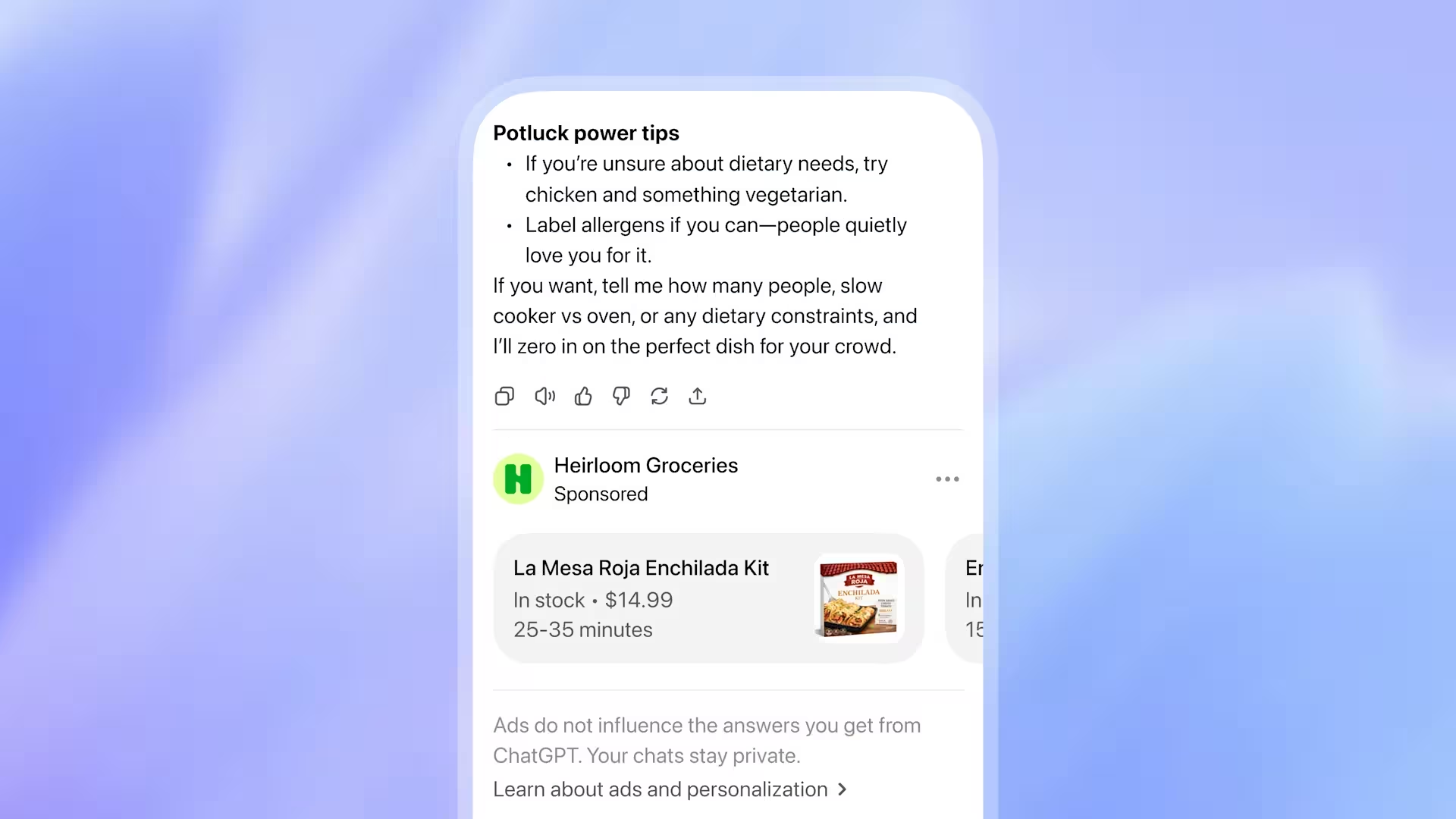
Yes. OpenAI began testing ads in February 2026 for users on ChatGPT's free tier and the $8/month Go plan. Each ad appears below ChatGPT's responses, clearly labeled as sponsored and visually separate from the answers the model provides.
Paid plans remain ad free. Plus ($20/month), Pro ($200/month), Business, Enterprise, and Edu users do not see ads in their accounts. This matters for B2B: your most senior prospects, the ones on plans funded by their employer, are likely on ad free tiers. The audience that does see ads skews toward individual contributors, founders at smaller companies, students, and researchers using the free version for personal tasks and general research.
OpenAI has stated that ads will never influence ChatGPT's responses. The firm calls this "answer independence," meaning the answers and the ads shown alongside them run on separate systems. Advertisers cannot pay to influence what the model recommends or shift ChatGPT's answers in their favor. Whether that boundary holds under commercial pressure is open, but for now, the architecture keeps them apart. That commitment is about to face external scrutiny: the European Commission is assessing whether ChatGPT qualifies as a Very Large Online Search Engine under the Digital Services Act, a designation that would force ad-transparency obligations onto the platform.
Why does ChatGPT have so many ads?
The short answer is infrastructure cost. ChatGPT has over 900 million weekly active accounts as of February 2026, hundreds of millions of whom use the free tier for free access to the model. Only a small fraction pay. Running the models behind those answers costs billions annually. Subscriptions alone cannot close that gap.
OpenAI's stated rationale is that ads fund broader access to AI, maintaining free and low-cost tiers so that more people get more access to artificial intelligence without paying $20 or $200 a month. The company also released the Go plan at $8/month, a cheaper option where users see ads but get more access than the free version offers.
Internal projections target $2.5 billion in ad revenue for 2026, scaling to $100 billion by 2030 (per Axios, April 2026). Those numbers require reaching 2.75 billion weekly users by decade's end. Whether realistic or not, the direction is clear: OpenAI is building an advertising business alongside subscriptions, maintaining both models simultaneously. Former Meta executive Dave Dugan joined as VP of Global Ad Solutions in March 2026 to expand the operation. In May, OpenAI deepened that bench, hiring former Meta executive Archana Joshi to build its ads go-to-market and revenue operations team and former Snap marketing-science lead Sam Mulinder, while recruiting its first advertising marketing science lead.
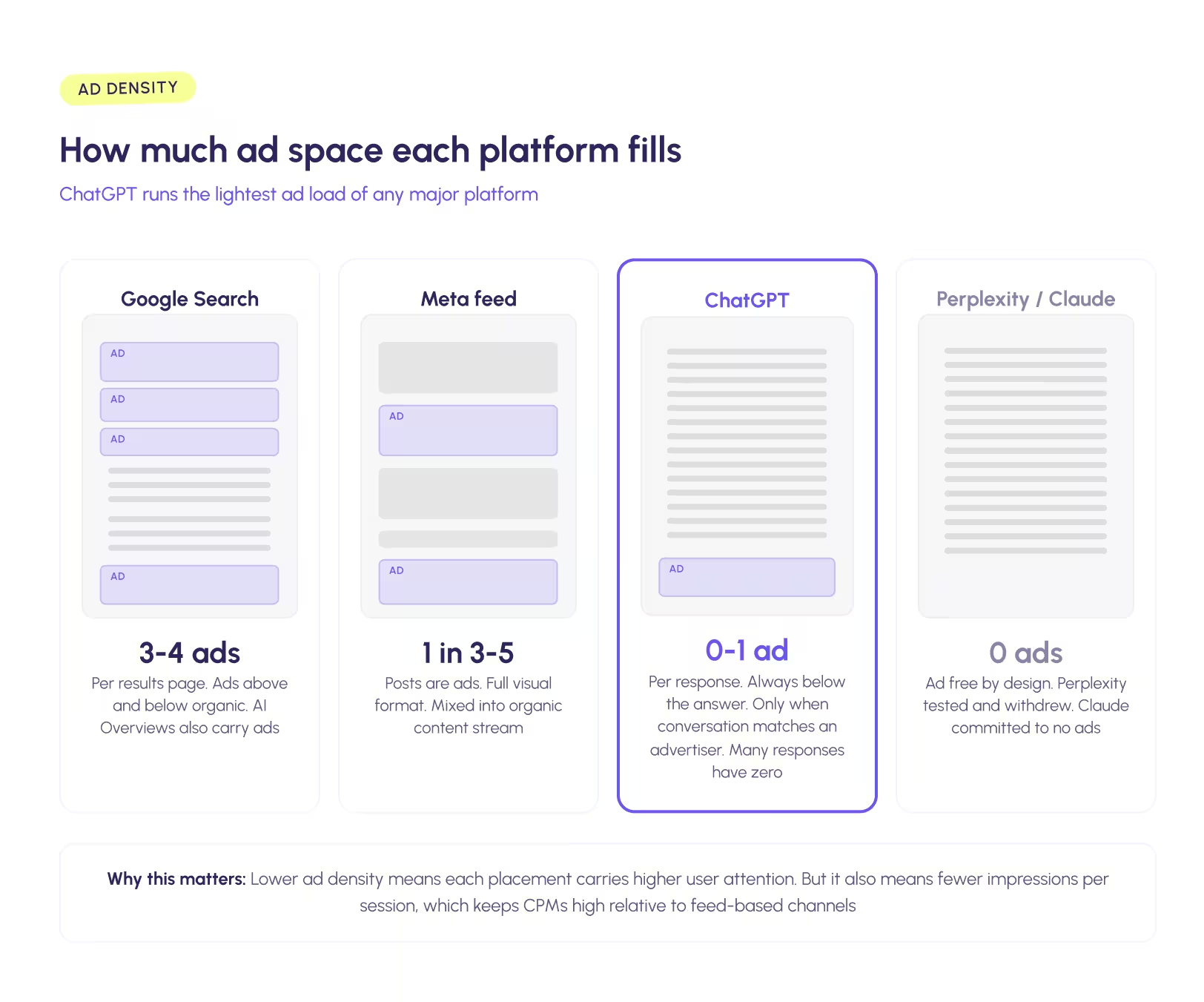
Ad volume remains controlled. The system shows a maximum of one ad per response, and an ad appears only when the conversation topic matches an advertiser's criteria. If a user's messages stay outside commercial categories, the conversation remains ad free. This single ad unit model is a deliberate contrast with the density of traditional digital advertising.
What are ChatGPT ads going to look like?
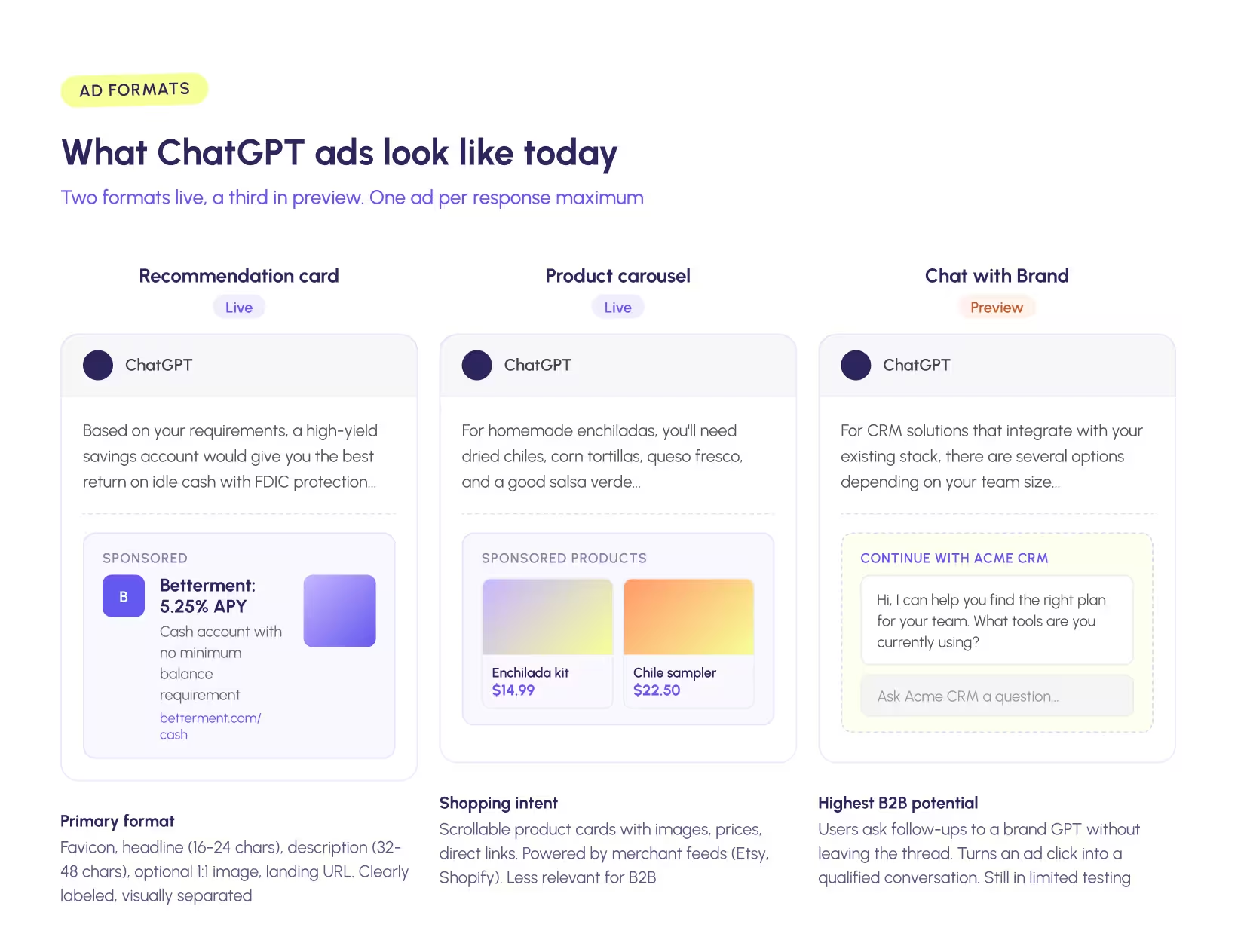
Two formats are live today, with a third in preview.
Recommendation cards
This is the primary format. An ad appears as a tinted card below ChatGPT's responses, containing the advertiser's name and favicon, a short headline (16 to 24 characters), a description (32 to 48 characters), an optional square image, and a URL. The card is clearly labeled "Sponsored" and visually separate from the answers above it.
Tracking from Adthena, which monitors over 300,000 daily prompts through its Ads Intelligence platform, shows that effective headlines follow a "Brand: Benefit" pattern. For example, a fintech advertiser might run "Betterment: 5.25% APY Cash Account." Specificity beats vague taglines. Because each ad appears after a relevant answer, the user already has enough information to judge the offer. Generic copy gets ignored.
Product carousels
For shopping-intent queries, ChatGPT shows scrollable product cards with images, prices, and direct links. Partners include Etsy and Shopify. The format is less relevant for B2B but shows where OpenAI plans to expand: toward richer placements with more images that respond to purchase decision signals.
Chat with Brand (preview)
The most interesting format for B2B is still in testing. "Ask ChatGPT about this ad" lets users open an ad into the thread for follow-up questions. Instead of clicking to a landing page, the user explores the product within the same exchange. For products that require explanation, this turns an ad click into a qualified inbound dialogue.
The redesigned ad unit (early test)
Starting May 21, OpenAI began an early test of a larger ad unit with a bigger image and dynamic call-to-action buttons such as "shop now," "book now," "sign up," and "learn more." This is a redesign of the core recommendation card rather than a new placement, and a dedicated e-commerce variant of it pulls in price and review data and can stack into a carousel-style layout. For now OpenAI's own algorithms choose which CTA appears, though the company has signaled advertisers may get control later. The "sign up" and "learn more" buttons are the most consequential change for B2B, because they map to lead and trial actions rather than direct purchase.
How much will ChatGPT ads cost?
Pricing has changed several times. Here is the trajectory.
February 2026 pricing
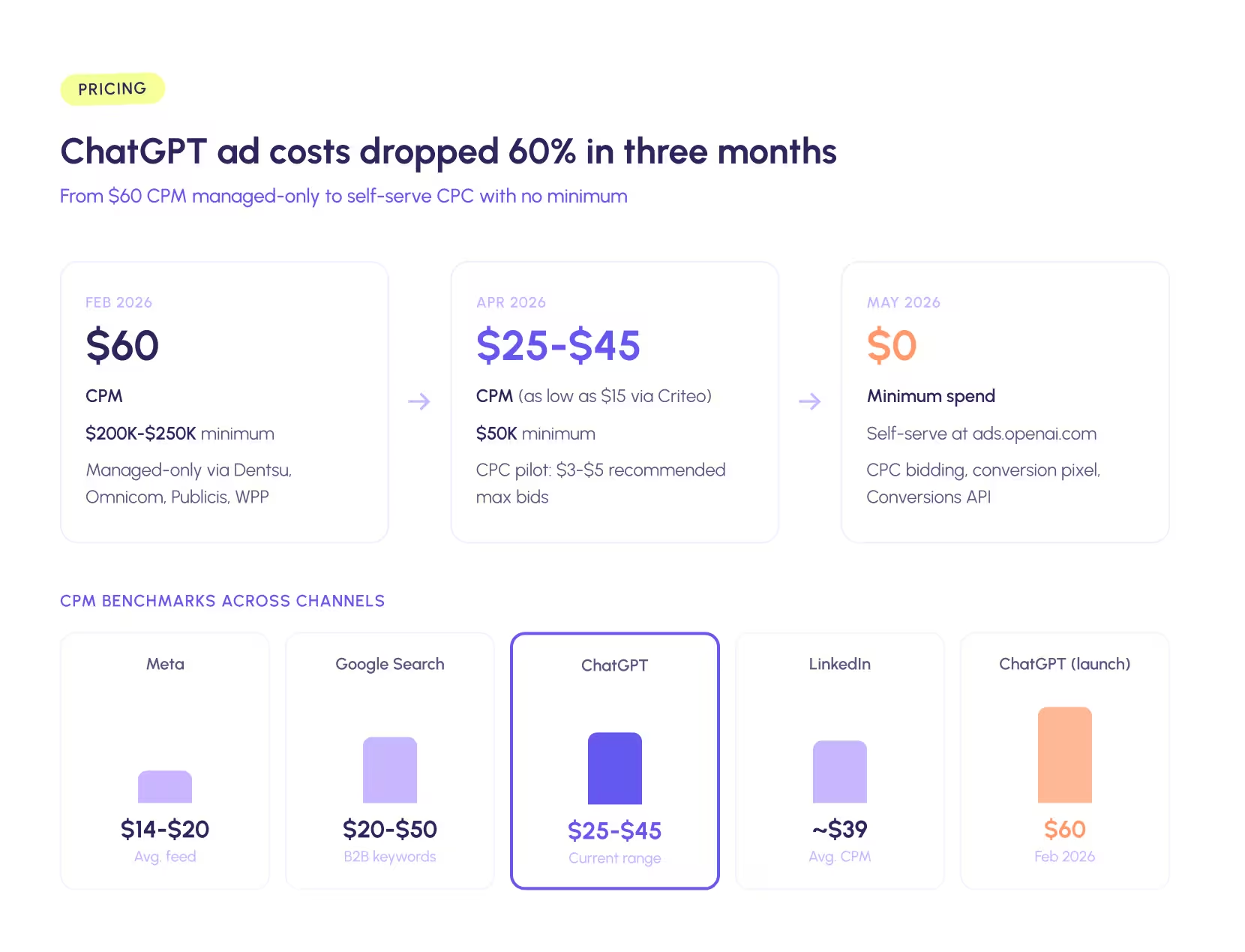
$60 CPM with a minimum commitment of $200,000 to $250,000. This was managed-only, available through agency partners Dentsu, Omnicom, Publicis, and WPP. At that price, only enterprise advertisers with large testing budgets could run ads.
.png)
April 2026 adjustment
Observed CPMs dropped to $25 to $45, with some advertisers accessing rates as low as $15 through Criteo, which joined as the first ad tech partner in March 2026. The minimum dropped to $50,000. CPC bidding was introduced in a pilot, with recommended max bids of $3 to $5 per click.
May 2026 self-serve opening
OpenAI opened its Ads Manager at ads.openai.com with no minimum spend. Any advertiser can now set up an account, set a CPC bid, deploy a conversion pixel, and run ads. StackAdapt, Kargo, Pacvue, and Adobe joined as additional tech partners alongside Criteo, giving advertisers multiple ways in.
Late May 2026: cost-per-action arrives
Around May 28, OpenAI switched on cost-per-action bidding for select advertisers, letting them pay only when a user clicks through, signs up, or makes a purchase. It then notified beta advertisers that conversion-optimized campaigns would begin rolling out June 5, with early access granted to any account that had conversions configured through the pixel or Conversions API by June 1. OpenAI also added commerce-media platform Skai as an integration partner. This is the change that makes ChatGPT comparable to Google and Meta on outcomes rather than impressions, and it is the single most important development for performance-minded B2B advertisers.
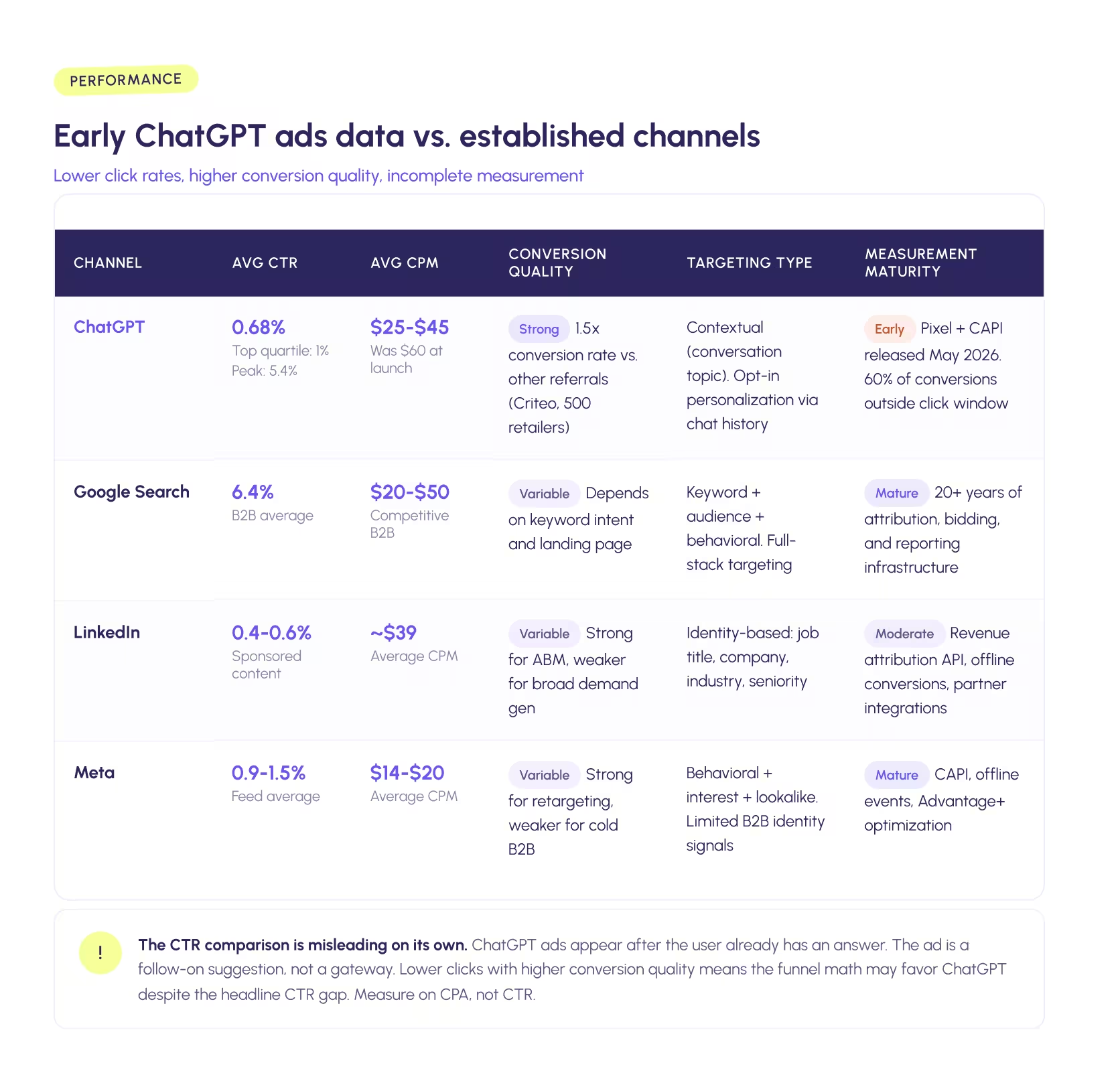
For reference: LinkedIn's average CPM is $39.19 (per Gupta Media's Social CPM Tracker, cited in Digiday April 2026). Meta's ranges widely by methodology, from $4.82 (Gupta Media) to $13.48 (Triple Whale, 2025 ecommerce median) to $19.81 (Superads, global all-industry median January 2026). Google Search varies widely but averages $20 to $50 for competitive B2B terms. The current CPM range of $25 to $45 positions it as a premium placement, priced above social and below where it started. Third-party tracking from AdClarity by BIScience put total ChatGPT ad spend at roughly $109 million for April 2026, with the firm projecting it could reach $500 million as more advertisers move off test budgets.
How does targeting work?
Ads in ChatGPT rely on contextual targeting, not behavioral tracking. This is a structural difference from Google or Meta, and it changes how advertisers need to think about AI advertising campaigns.
Topic-based matching
Advertisers provide descriptions of the questions and situations their ideal users bring to ChatGPT. The ad system matches those descriptions against the live conversation's topic. If multiple advertisers are eligible for a given query, the ad that is most relevant will be shown first. There are no keyword lists, no audience segments, and no retargeting based on past site visits (with one exception below).
Personalized ads (opt-in)
Users can toggle "Personalized Ads" in their settings, which allows OpenAI to use chat history, model memories, and prior ad interactions to improve relevance. Users who opt out still see ads, but those ads are optimized based only on the current thread's topic. User control over this setting is available in the settings menu: users can dismiss ads, share feedback, and control whether their data and interactions influence future ad selection. Note that OpenAI's April 30, 2026 US privacy policy update switched marketing cookies on by default for free-tier users. Whether personalization is opt-in or opt-out depends on when the account was created and the user's tier.
Custom audiences and geo-targeting (new)
On May 14, OpenAI added custom audience targeting, letting advertisers upload hashed customer lists of up to 512MB to either target or suppress specific users. On May 22 it added US geo-targeting down to state, DMA, and ZIP level, alongside daily and lifetime budgets. For B2B, the suppression use case matters as much as targeting: you can exclude existing customers from prospecting spend. Lookalike audiences remain in development.
What advertisers do not get
Advertisers never see users' chats, personal details, or messages. OpenAI does not sell user data to advertisers. Reporting consists of aggregated reporting on impressions, clicks, and downstream conversions (via a JavaScript pixel and Conversions API released in May 2026). This is materially more restrictive than what advertisers are used to on Google or Meta, and several early participants have noted the measurement gap publicly.
Where ads do not appear
Testing ads follows clear exclusion rules. Per OpenAI's own documentation, ads do not appear near sensitive topics including dating, health, finance, or politics. They do not appear in accounts where users are predicted to be under 18. They do not appear in Temporary Chats or after images generated by the model. Enterprise, Business, Edu, Plus, and Pro plans remain ad free. Users maintain full control over their conversation data regardless of whether they see ads. Note that as of April 2026, ads have been spotted in logged-out US sessions, so the earlier logged-out exclusion may no longer apply in all markets.
What is the early performance telling us?
The numbers are thin. But the signals that exist tell a specific story about how ads perform.
Click-through rates are low relative to search
Similarweb's May 2026 analysis puts the overall ChatGPT ads CTR at 0.68%. The top quartile of advertisers reaches 1%, and the best-performing brands hit 1.57%, with an observed peak of 5.4%. Search ads across Google and Microsoft average 6.66% CTR (per LocaliQ's 2025 benchmark of 16,000+ campaigns), meaning users click ChatGPT ads approximately seven to ten times less often in aggregate.
That comparison is misleading, though. ChatGPT ads appear after an answer, not before one. The user has already received what they came for. The ad is a suggestion, not a gateway. Lower CTR is structurally expected.
Conversion quality looks promising
Criteo found that users referred from ChatGPT and similar AI platforms convert at approximately 1.5 times the rate of other referral channels (sample of 500 US retailers, February 2026). The conversation has already done qualification work that a bare search query cannot. By the time someone clicks an ad, they have likely spent several messages refining what they need. For example, a user researching CRM software may have spent five or six exchanges narrowing requirements before an ad appears.
Revenue is growing, but FOMO is a factor
The ad pilot reached $100 million in annualized revenue in under two months, with over 600 advertisers participating. Digiday reported that much of this spending came from "test and innovation" budgets, with buyers joining partly out of fear of missing out. That is a useful caution: early adoption does not guarantee early returns.
Measurement is still catching up
OpenAI's conversion tracking only became available in May 2026. Before that, advertisers had visibility into impressions and clicks but limited ability to tie those to business outcomes. Even now, the measurement layer is young and the data is incomplete. Roughly 60% of attributable conversions happen outside the immediate click window, meaning last-click attribution will dramatically undercount the channel's contribution. Advertisers should plan for a 28-day attribution window and use the conversion data alongside brand lift studies.
Engagement is softening
One caution worth watching: Apptopia data cited by Digiday in late May showed daily time spent per ChatGPT user fell 18.3% between early March and mid-May, from 25.2 to 20.6 minutes, with a similar drop even among power users. There is no proven causal link to ads, but the economics of advertising in ChatGPT depend on users continuing to rely on the conversational interface, and softening engagement against aggressive monetization targets is a signal to track.
What we learned running ChatGPT ads
The numbers above are the public picture. Here is ours. We ran ChatGPT ads for B2B clients, and the gap between the pitch and the performance came down to three things you cannot see or control yet.
You can’t see which prompt triggered your ad
On Google, you get a search-term report: the exact queries that showed your ad, which you can read and act on. In ChatGPT, you set your context hints, the ads go out, and the reporting goes dark. You see clicks by campaign and nothing underneath. You never see the prompt that surfaced your ad or how the match was made.
For a channel whose entire pitch is matching your ad to the right conversation, you are asked to trust the match without ever seeing it. That is a hard sell for anyone spending real budget.
There are no negative keywords
This is the gap that costs money quietly. On Google, you exclude terms that signal no buying intent, like someone asking “what is X” or looking for a “free X tool.” ChatGPT has no exclusion at the campaign level at all.
A client targeting “Apache Kafka” also pays to appear when someone searches for Kafka the author. You cannot carve that out. So spend leaks toward informational and no-intent queries, and you create mismatched expectations: your paid product shows up for someone who wanted something free. They click, they bounce, you get billed.
The audience that sees ads is the wrong one for B2B
Ads only show to free-tier and Go users. In B2B, the person researching an agency or a platform is usually on a Pro or employer-funded plan, and sees no ads at all. The exact people you want to reach are structurally excluded from the inventory you are buying.
What that added up to
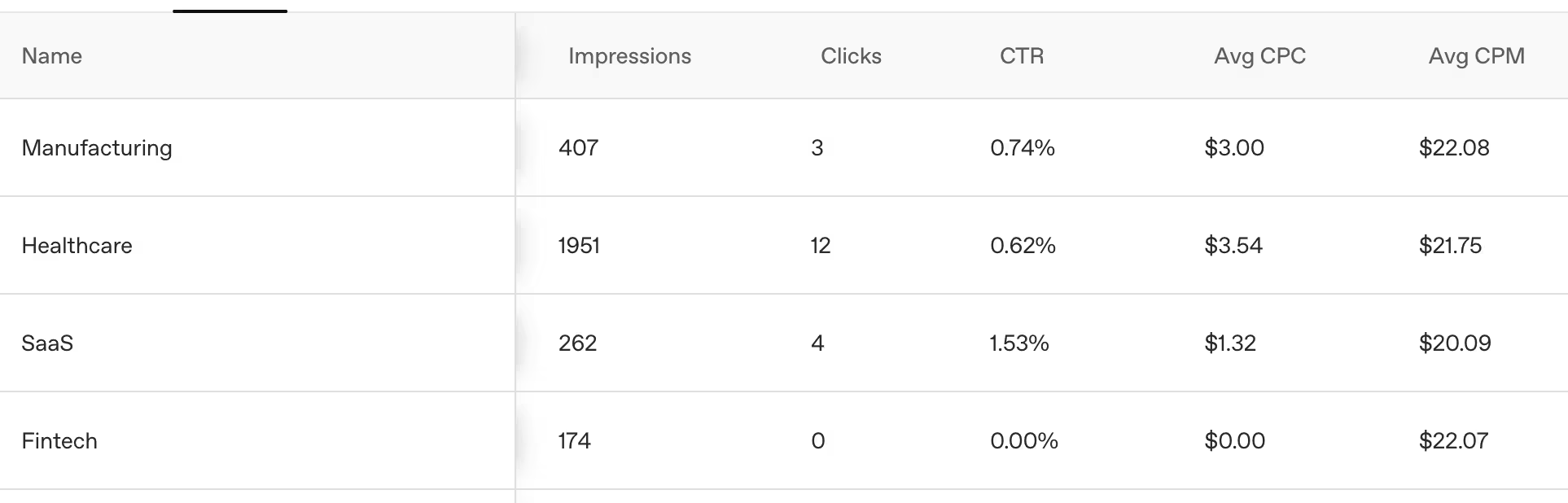
In the accounts we ran, we pulled the traffic into Google Analytics and found traffic with no meaningful downstream events. No key conversions, no subscriptions, no qualified pipeline. Specialists we compared notes with saw the same thing.
Worth separating one point from another: organic presence in ChatGPT and Claude is producing genuine leads for our clients right now. It is the paid layer for B2B that is not ready. AI-driven discovery works. Paying for placement inside it does not, yet.
Why it is working for B2C first
The channel is not failing everywhere. It is working for B2C, and the reason is structural.
B2C advertisers can connect a product feed and run catalog ads, the same shape as Google Shopping. Someone asks for good running-shoe options, scrolls past the organic answer, and sees shoppable cards with prices and reviews. That maps cleanly to purchase intent.
B2B gets a basic text card. No feed, no banners, no video, none of the richer formats you would use on LinkedIn to explain something that needs explaining. And none of the exclusion controls that make paid search precise. Same platform, very different fit depending on what you sell.
How do ChatGPT ads compare to other AI advertising platforms?
Four companies are now running or testing ads inside AI-powered conversations. Their approaches differ in ways that matter.
Google has been the most aggressive. Per Semrush's analysis, by October 2025 ads appeared on 25.56% of search results that included AI Overviews, up from 5.17% in March 2025. Google's AI Mode, which now serves over a billion users monthly, also carries ads. At Google Marketing Live on May 20, the company unveiled Gemini-powered formats for AI Mode, including conversational ads and highlighted answers, and confirmed it will bring ads to the standalone Gemini app later in 2026. The measurement infrastructure is the most mature, because it builds on two decades of search advertising data.
Microsoft Copilot serves ads through its Performance Max system and a newer "Showroom" format designed for AI conversation queries. Microsoft reports that Copilot ads convert 76% better than traditional search ads, though independent verification is limited.
Perplexity tested AI answers with labeled ads in 2025 and early 2026, then withdrew the program entirely. Executives told the Financial Times that ads can erode the credibility users rely on. That decision is worth noting: a direct competitor evaluated the same opportunity and concluded the trust cost was too high.
Anthropic, which makes Claude, is committed to an ad free model. The company ran Super Bowl LX commercials explicitly criticizing ads in ChatGPT, and saw Claude's App Store ranking jump from 41st to 7th within days. The campaign generated a 32% increase in downloads. People trust ChatGPT answers less when ads appear beside them, and people trust ad free products enough to switch.
For advertisers evaluating where to allocate budget across AI platforms, the practical conclusion is that ChatGPT and Google are where the ads inventory sits. LinkedIn remains the strongest identity-based targeting channel for B2B. And the AI market is splitting into ad-supported and ad free camps, which changes how consumers perceive each platform.
How to set up ChatGPT ads
The self-serve Ads Manager opened at ads.openai.com on May 5, 2026 with no minimum spend. Setup takes roughly an hour for a first campaign, plus a manual review period of several business days before ads can deliver. Here is the sequence.
Before you start
Confirm eligibility. Advertising in ChatGPT is currently available to advertisers in the US, Canada, Australia, New Zealand, UK, Brazil, Japan, South Korea, and Mexico. Eligible categories include consumer goods, local services, travel, digital products, education, and B2B software. Per OpenAI's published policy, excluded categories include dating, health, financial services, and politics, the same sensitive or regulated topics where ads do not appear in the product.
Third-party guides also list alcohol, tobacco, gambling, and legal services as restricted, though these are not confirmed in OpenAI's own documentation. OpenAI says it expects to expand eligible categories over time as its review systems mature, which is the change B2B finance and healthcare advertisers should watch for.
Gather your assets before opening the Ads Manager. You will need a business email tied to an OpenAI account, a business name and tax identifier, a credit card, a landing page with clear conversion intent (generic homepages often fail review), and 3 to 5 ad creative variations.
The creative specs are tight. Titles must be 16 to 24 characters. Copy must be 32 to 48 characters. Images must be at least 256 by 256 pixels, square format recommended. If you have run LinkedIn ads before, think of this as even more compressed: every word needs to earn its place.
Create your account
Go to ads.openai.com and sign in with the OpenAI account you want tied to the advertiser. Enter your legal name, address, category, and payment method. One person owns the account and invites teammates afterward. Account verification is manual and typically takes 5 to 15 business days, though wait times have shortened since the May 2026 self-serve opening. No ads will run until OpenAI's team has approved the account and billing is configured.
Set up billing and access
Inside the Ads Manager, add a billing profile with your business address and invoice email, then add a credit card. Once billing is live, invite teammates via Settings, Users, Invite. Each advertiser needs its own account, so agencies managing multiple clients will need multiple accounts.
Build the campaign
A campaign is the top-level container. It defines the objective, budget, and country targeting. Three objectives are now available: Reach (CPM bidding, default max $60), Clicks (CPC bidding, recommended $3 to $5), and, for accounts with conversion tracking live, cost-per-action bidding tied to a conversion event. For a first test, start with Clicks, then move to cost-per-action once the pixel has gathered data.
Set a daily or lifetime budget. There is no platform minimum, but daily budgets below $50 generate too little volume to produce usable data. A testing range of $100 to $300 per day over the first two weeks is practical.
Use a naming convention from the start. The dashboard does not offer strong filtering, so a format like "brand_q2_us_v1" saves time later.
Build the ad group with context hints
This is the most important step and the one most often underinvested in. The ad group defines targeting, and targeting runs on context hints rather than keywords.
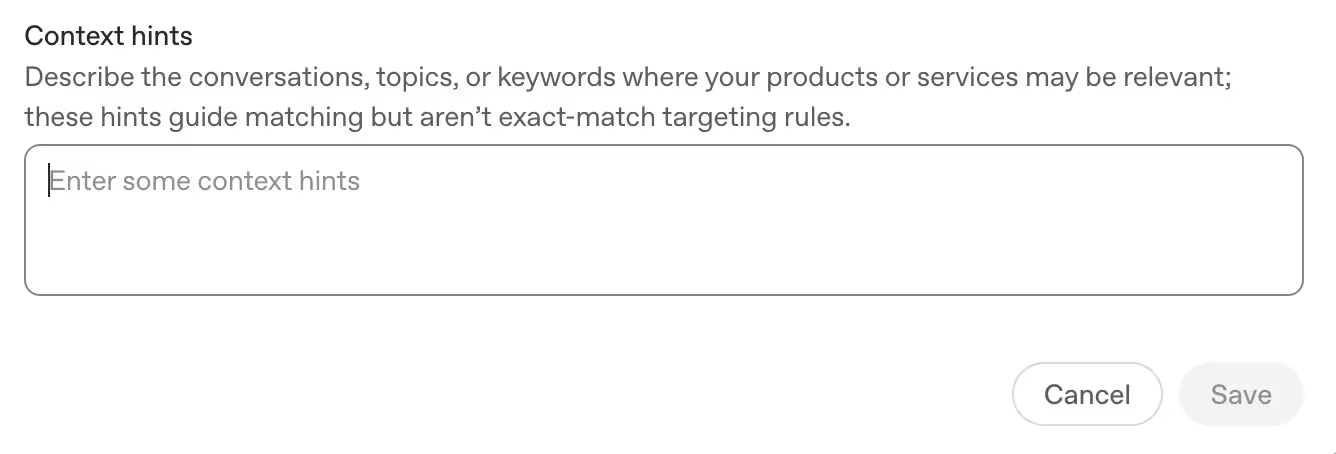
Hints are short phrases describing the topics, queries, or user intents where your product is relevant. The system interprets them alongside your ad copy, landing page, and the live thread. They are not keyword triggers. A single broad hint like "marketing" will not deliver reliably. A cluster like "B2B content strategy," "marketing reporting to sales," and "fractional CMO hiring" will.
Aim for 5 to 10 hints per ad group, all tightly focused on one intent. If you need to reach a second audience, build a second ad group. Mixing intents inside a single group weakens matching.
Build the ad creative
Each ad needs five elements: your advertiser name and favicon (pulled from account settings), a title (16 to 24 characters), copy (32 to 48 characters), a square image (minimum 256 by 256 pixels), and a landing page URL.
The character limits force a discipline most channels do not. Two patterns that work: the "Brand: Benefit" formula ("Acme: 40% faster setup") and the "Question: Answer" formula ("Need a CRM? Try Acme"). Both front-load the value proposition. Submit the ad for review. Approval typically takes under 24 hours.
Install the conversion pixel
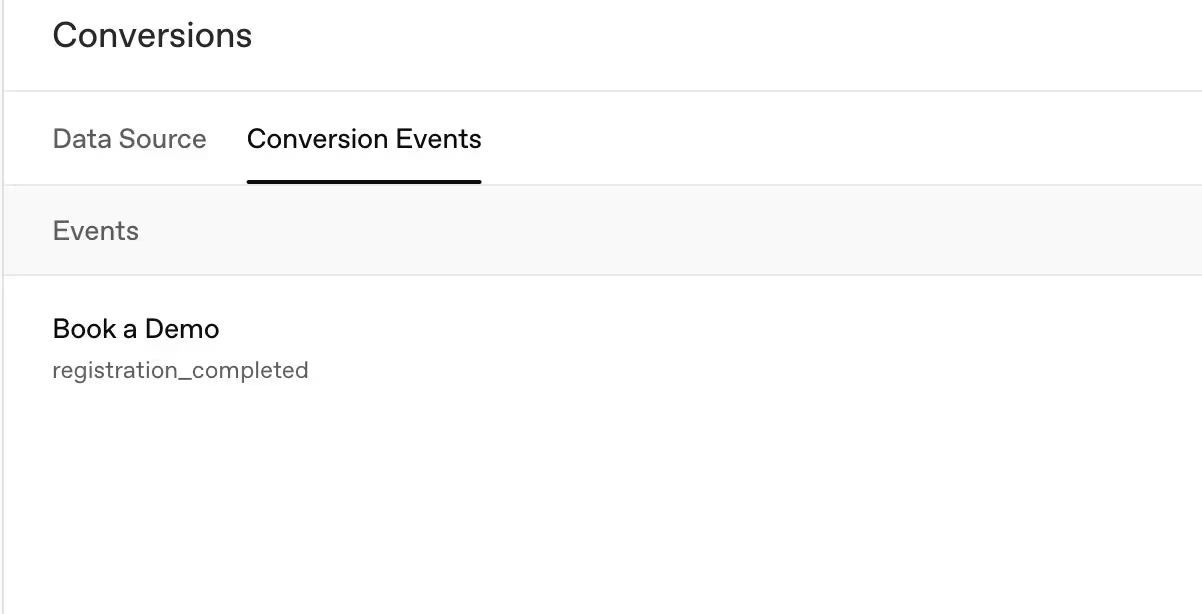
Deploy the OAIQ JavaScript pixel on registration, demo request, and purchase pages, and configure the Conversions API for server-side tracking. Both became available in May 2026. Without them, you have impressions and clicks but no way to measure what happens after the click.
Configure your attribution settings in the Ads Manager. Given that conversational research cycles tend to be longer than search clicks, use the longest attribution window available and monitor conversion paths closely. Many conversions from conversational ads happen well after the initial click, so short attribution windows will undercount the channel's contribution.
Monitor, iterate, decide
Reporting covers impressions, clicks, CTR, spend, and (with the pixel active) conversion events. A list-view reporting layer with campaign totals shipped on May 22. The data refreshes with a lag, so do not expect real-time dashboards. You control budget pacing and can pause at any time.
Run the campaign for at least two to three weeks before drawing conclusions. Rotate creative every 7 to 10 days. Compare performance against the decision thresholds in the next section: scale if CPA is within 1.5 times your Google Search benchmark, pause if above 2 times, hold if between.
What should B2B marketers do in the coming weeks?
The temptation is to either rush in or ignore ads in ChatGPT entirely. Both are mistakes. The responsible path is a controlled test with clear decision criteria, and a focus on organic visibility in parallel.
Register for the Ads Manager now
Even if you are not ready to spend, set up an account at ads.openai.com and deploy the conversion pixel on your key pages. Data collection should start before campaigns do. There is no minimum commitment.
Audit your organic AI visibility first
Paid ads in ChatGPT appear below the organic answer. If your brand does not show up in the answers ChatGPT gives when people ask about your category, fixing that is more valuable than buying the ad card below an answer that ignores you. Run your top 20 buying-intent prompts through ChatGPT, Claude, Gemini, and Perplexity. Note where you appear and where competitors appear instead. This is the next phase of SEO for every B2B business interested in maintaining its visibility.
Run a focused pilot
Pick a single high-intent topic where your product has clear relevance. Set CPC bids in the $3 to $5 range. Test four to six variants using the "Brand: Benefit" headline format with specific numbers. For example, "Acme: 40% faster onboarding" outperforms "Acme: Better software." Budget $5,000 to $15,000 over 60 to 90 days. Measure on a 28-day click attribution window minimum.
Set a decision threshold before you start
If blended CPA is within 1.5 times your Google Search CPA after 90 days, the channel justifies scaling. If it runs above twice your benchmark with no improvement trend, reallocate to GEO and LinkedIn. Write this down before you begin. Sunk-cost reasoning is the most common budget leak in new-channel testing.
Watch user trust
People trust ChatGPT less when it carries ads. That is the reason Perplexity withdrew and Anthropic built an entire brand campaign around being ad free. If user trust erodes measurably, watch NPS surveys, satisfaction data, and your own conversion rates. The economics of advertising in ChatGPT depend on users continuing to rely on the conversation experience. If that changes, costs go up and returns go down. Monitor this with the same focus you give cost per acquisition.
The bigger picture
Ads in ChatGPT are one part of a larger shift. The places where B2B buyers research products and services are moving from search engines to AI tools that give direct answers. G2's 2026 survey of over 1,000 B2B software buyers found that 51% now begin software research with an AI chatbot more often than with Google, up from 29% in April 2025.
That shift gives marketers two jobs. The first is Generative Engine Optimization: making sure your brand and your differentiators are present in the AI systems that generate answers. The second is paid placement: buying the ad card when organic presence alone is not enough.
Neither replaces the other. Paid without organic authority is expensive and unconvincing. Organic without paid cedes the ad slot to competitors. The advertisers who will get the most from this next phase are the ones who treat both as a single system rather than separate line items.
OpenAI plans to expand ads to more countries and more ad formats in the coming weeks. Since its February launch, the company has moved to expand testing across different regions, with South Korea, Australia, Canada, the UK, Brazil, Japan, and Mexico all now live. The trajectory from here is set by three things: the cost-per-action and conversion-optimized models that arrived at the end of May, the IPO that OpenAI filed confidentially around May 22 and is targeting for September, and the EU's pending decision on whether to regulate ChatGPT as a search engine. Whether marketers interested in B2B should allocate meaningful budget depends on their audience composition, their organic visibility in the answers ChatGPT produces, and their willingness to operate on a platform where the rules are still being written.
Frequently asked questions
Why did OpenAI introduce ads?
The introduction of ads is a direct response to the gap between usage and revenue. The platform has grown to over 900 million weekly active accounts, but only a small fraction pay for a subscription. Infrastructure costs run into billions annually, and subscriptions alone cannot cover it. Ads fund broader access by supporting the free and Go tiers, letting OpenAI monetize its large user base without forcing everyone onto a paid plan.
How can people tell the difference between ads and regular answers?
Ads are clearly labeled as sponsored and visually distinct from the organic answers provided by the model. Each ad appears in a tinted card below the response, marked with a "Sponsored" tag, the brand's name, and their favicon. The model's answers are generated independently of the ads shown alongside them, and brands cannot pay to influence what it recommends.
Can the tool help marketers write better ads?
Yes, and this is distinct from the ad platform itself. The model can streamline marketing and ad creation by serving as an intelligent assistant for brainstorming, copywriting, image generation, and campaign planning. It can generate multiple variations of ad copy tailored to specific channels and character limits, using frameworks like PAS (Problem, Agitation, Solution) or AIDA (Attention, Interest, Desire, Action). For the ad platform specifically, where headlines max out at 24 characters and descriptions at 48, this kind of compression work is useful.
What is the best way to prompt it for marketing work?
Effective prompts should be structured like a marketing brief, providing specific audience personas, constraints, and guidelines rather than open-ended requests. Asking "write a headline for a B2B SaaS CRM targeting mid-market operations managers, max 24 characters, emphasize time saved" produces tighter output than "write me an ad." The more specific the input, the fewer rounds of revision.
Can it help with ad copy testing and keyword research?
The model can generate diverse copy variations for A/B testing and streamline keyword research for online advertising. Give it your landing page URL, your target audience, and your character limits, and it will produce ten to twenty headline and description variants in minutes. It can also categorize keywords by search intent (informational, navigational, or transactional) to map them to different stages of a marketing funnel, which is useful when building context hints for the ad platform.
Can it write video ad scripts or visual briefs?
It can write detailed ad scripts and visual briefs for video and display campaigns. It works best when given a structure to follow: specify the length, the audience, the tone, and the key message. It can also draft storyboard-level scene descriptions that a creative team or video editor can work from.
How can it help with audience research?
The model can help define Ideal Customer Profiles (ICPs), draft surveys, and analyze customer reviews to identify recurring pain points. Paste in a batch of reviews or support tickets and ask it to cluster the complaints by theme. The output is a starting point for positioning, messaging, and ad targeting rather than a replacement for proper research, but it compresses the first pass from days to minutes.
Can it build full marketing campaigns?
It can assist in building comprehensive marketing campaigns by generating ideas for email sequences, blog posts, video scripts, and social media content, all in a single session if prompted correctly. The constraint is quality control: the output needs human review, editing, and brand voice enforcement before it ships. Treat it as a first-draft engine with a fast clock, not a finished-product machine.
What changed with ChatGPT ads in late May 2026?
Three things. OpenAI switched on cost-per-action bidding so advertisers pay on clicks, sign-ups, or purchases rather than impressions, and began rolling out conversion-optimized campaigns from June 5. It tested a redesigned ad unit with a larger image and dynamic call-to-action buttons. And it added custom audience targeting and US geo-targeting to the self-serve Ads Manager. Alongside the product changes, OpenAI confidentially filed for an IPO and drew an EU review over whether ChatGPT should be regulated as a search engine. This guide was originally published when the pilot launched and is updated as the platform changes, so treat the dates above as the record of what shipped when.
Is it worth running for B2B right now?
For most B2B advertisers, not yet. The platform is cheap to start and self-serve, and OpenAI is shipping new features almost weekly.
But two gaps keep it from working as a performance channel: there is no search-term reporting, so you cannot see which prompts trigger your ads, and there are no negative keywords, so you cannot exclude no-intent searches. Until both exist, B2B spend tends to produce traffic rather than pipeline.
The direction is encouraging. OpenAI is actively asking advertisers what is missing, and reporting depth and exclusion controls are the obvious next additions.
Our read is that the channel becomes viable for B2B within the next 6 to 12 months. Until then, the smart move is a small controlled test with clear decision thresholds, while putting the real effort into organic visibility in the answers themselves.
.png)