.svg)



Most B2B companies don't have a marketing problem, but most suffer from a lack of visibility. They can't see where their marketing strategy is actually working and where it's leaking revenue.
A marketing audit solves this. It's useful to think of it as a diagnostic step that separates companies growing deliberately from companies growing by accident (or not at all).
We believe that the manner in which most businesses approach a marketing audits is fundamentally broken (and has been for a while, to be honest).
In most cases, they treat it as a channel review. Just scroll through some dashboards, flag a few underperforming campaigns, produce a report. Sorry to say, but that's not a marketing audit. That's a performance summary dressed up as strategy.
A real marketing audit asks a different question entirely: “Is the current way marketing is structured capable of delivering on company strategic goals?”
Not "are our ads performing?" but "is our marketing function, the team, the strategy, the channels, the positioning, set up to contribute to where this business needs to go?"
That reframing changes everything about what you look at and what you find. Any useful marketing audit is an objective review of your entire marketing function measured against business outcomes, not a scorecard of channel metrics.
Alright, so what is a marketing audit?
Marketing audit is a comprehensive, structured evaluation of an organization's marketing elements, strategies, and practices.
It examines everything from your target audience definition and brand positioning to your marketing channels, campaigns, and marketing metrics, and critically, how the elements of a marketing function work together (or fail to). It's the difference between reviewing individual parts and understanding the system.
But here's what separates a useful marketing audit from an expensive slide deck: a real audit operates at three distinct levels, not just one.
The three levels of a marketing audit
Strategic level. This is where you assess whether marketing is aligned with business goals at the highest level. Is your ICP accurate? Is your positioning differentiated? How do you compare against competitors? Is your pricing strategy right for the market you're in? Are your marketing goals connected to revenue growth and market share, or have they drifted into vanity territory? These questions determine whether your marketing investment can succeed before a single campaign runs.
Functional level. This is where you evaluate how marketing is organized and resourced. Is the team structured to deliver? Is budget allocated proportionally to priorities? Are marketing materials and brand messaging consistent across channels? Are your marketing systems (CRM, automation, analytics) actually supporting your process, or creating friction? Are sales and marketing working from the same playbook, or operating in silos? This level also touches human resources questions: do you have the right people in the right roles, or are there capability gaps holding everything back?
Technical level. This is the channel-by-channel performance review most people think of when they hear "marketing audit." ROI by channel, campaign optimization, conversion tracking, SEO audit findings, ad spend efficiency. You're checking Google Analytics data, reviewing paid media dashboards, examining email performance. Important, but only meaningful when connected to the strategic and functional layers above it.
Most marketing audits only operate at the technical level. They give you a channel overview, but that channel overview isn't linked to anything: not to strategic goals, not to team capability, not to competitive positioning. And that's precisely why they fail to drive change.

"A marketing audit is basically not a channel review. A real marketing audit is about whether the current way that marketing is structured is capable of delivering company strategic goals. You always have to make sure that your marketing is aligned with your business strategy. That's the really important part."
Most audits only scratch the surface. A real audit connects channel data to strategic and functional context, producing decisions, not just dashboards.
.avif)
Why most marketing audits fail
Here's the uncomfortable truth: most marketing audits fail not because of bad methodology, but because of who does them and what they connect findings to.
When junior analysts run an audit, you get a channel overview. Google Ads isn't performing because of X, Y, Z. Social media engagement is down. Email open rates are below benchmark. All technically accurate, but none of it linked to key marketing objectives. None of it answering the question a CEO actually cares about: do we need to increase marketing spend? Move budget from one channel to another? Hire a VP of demand generation? Expand to a new market? Without strategic context, even the most thorough marketing audit process produces data without producing valuable insights.
"Marketing tends to be very scattered. The marketing team does a lot of things but they don't connect, and most of the time that comes from the fact that they're reactive. It's all very much the activity and almost none of the outcome. Siloed marketing creates a lot of top-funnel noise, but it's not driving revenue." — Joliene van Grieken, Co-founder, The Growth Syndicate
.avif)
"Marketing tends to be very scattered. The marketing team does a lot of things but they don't connect, and most of the time that comes from the fact that they're reactive. It's all very much the activity and almost none of the outcome. Siloed marketing creates a lot of top-funnel noise, but it's not driving revenue."
The activity looks like marketing, but it's not connected to outcomes. A marketing audit should expose this. But it can only expose it if the people doing the audit understand the business well enough to connect operational findings to strategic implications.
The audit as part of strategic foundations
One more thing that changes how you think about a marketing audit: it's not supposed to be treated like a standalone exercise. It's one component of a broader strategic foundation that includes ICP definition, positioning, brand messaging, and competitor analysis. You need those elements in place, or at least being developed in parallel, for an audit to produce genuinely useful findings.
An audit without ICP clarity tells you channels are underperforming but can't tell you why. An audit without positioning work tells you messaging is inconsistent but can't tell you what it should say instead. The audit is the diagnostic lens; the strategic foundation is the context that makes the diagnosis meaningful.
Scenarios where you need a marketing audit
If your marketing team is busy but your pipeline isn't growing, that's the clearest signal. But there are a few reasons beyond stalled growth where a marketing audit becomes essential.
Proving what's actually happening to leadership
One of the most powerful functions of a marketing audit is as a persuasion tool. In many B2B companies, particularly PE-backed firms where marketing scrutiny is high, leadership either believes marketing is doing fine when it isn't, or suspects it's failing but can't articulate why.
The audit creates an objective, evidence-based record. It tells the C-suite “here's what's actually happening.” Here's what's underperforming and why. And here's what we can do to fix it. The marketing audit report, starting with a clear executive summary of key audit findings, gives leadership the confidence to act because it replaces opinion with evidence.
"The end goal of an audit is for you to have a clear idea of what we're going to do short, mid, long term. You thought you were doing okay, but this is why you're not. This is what we can do to actually do good, and it's going to result in more revenue."
Aligning marketing with business objectives
A marketing audit ensures your current marketing efforts actually serve your business goals: not last quarter's goals, not the goals your competitors seem to have, but your actual strategic priorities. Without this alignment check, marketing efforts drift toward comfortable activities rather than impactful ones. For PE-backed companies navigating growth plateaus or preparing for exits, this alignment is existential. Your CEO won't be asking "are we doing enough social media?" The questions that matter are about budget allocation, team structure, market expansion, and revenue contribution. The audit connects marketing objectives to those questions.
Evaluating your marketing objectives against SMART criteria (Specific, Measurable, Achievable, Realistic, and Time-Bound) is part of this process, but it goes deeper. The audit should assess whether your marketing goals even reflect the right business outcomes, or whether they've drifted into vanity metrics. When key marketing objectives are misaligned with company strategy, even excellent execution produces the wrong results.
Identifying what's working and what isn't
A marketing audit identifies the biggest strengths and weaknesses of your current marketing strategy across all three levels. At the strategic level, it reveals whether your ICP, positioning, and competitive approach are sound. At the functional level, it surfaces team structure problems, budget misallocation, and brand inconsistencies. At the technical level, it shows which marketing channels generate qualified leads versus which just generate noise, which marketing campaigns drive conversion versus which burn budget, and how your performance compares to industry benchmarks.
This isn't academic. When you discover that 80% of your marketing-qualified leads come from organic search while your team spends 60% of its time on social media campaigns with negligible conversion, that's a resource allocation problem the audit makes visible. Your marketing efforts may be perfectly executed, but pointed at the wrong targets. The marketing strategy that got you to €10M won't get you to €50M.
Optimizing resource allocation
Every marketing team operates with finite resources. The audit helps you allocate your marketing budget where it will have the highest impact by identifying inefficient channels and marketing tactics that consume effort without producing results. For companies in the €5M–100M revenue range, this can mean the difference between a marketing function that's a cost center and one that's a revenue driver. Without a clear picture of where marketing spend is going and what it's returning, every marketing investment is a gamble.
Staying ahead of market shifts
External analysis is a critical component of any marketing audit. Examining market trends, emerging trends in your organization's industry, and your competitive landscape helps ensure you're not optimizing for a market that no longer exists. Customer needs evolve, competitors adjust, and new channels emerge. Your marketing strategy should respond to these shifts, and an audit reveals where it hasn't. Marketing efforts and marketing campaigns that were effective twelve months ago may now be producing diminishing returns in a changed environment. Customer feedback, win/loss analysis, and market research are essential inputs here. They ground your audit in how buyers actually behave, not how your team assumes they behave.
How to conduct a marketing audit: a step-by-step approach
There's no shortage of marketing audit checklists online. The challenge isn't knowing what to look at; it's knowing how to look at it in a way that produces actionable insights rather than information overload. A marketing audit checklist gives you the items; a well-designed marketing audit process gives you the logic connecting them.
Here's the approach we use at The Growth Syndicate when conducting a marketing audit, refined across dozens of engagements for scaling B2B companies. Whether you're conducting a marketing audit internally or bringing in outside help, this framework will help you gain insights that actually drive decisions.
Define the purpose and scope
Before touching any data, clarify what business questions the audit must answer. Are you trying to identify why pipeline has stalled? Evaluating whether to double down on demand generation or demand capture? Assessing team effectiveness before a restructure? The answers shape whether you need a full marketing strategy audit or a more targeted review.
The scope decision matters too. A comprehensive audit examines your entire marketing operation, from CRM health and website performance to channel effectiveness and competitive positioning. A more focused audit might zero in on your digital marketing performance, your content marketing ROI, or your marketing communications consistency. Either way, define the scope upfront so findings feed directly into your marketing plan.
Involving stakeholders early ensures agreement on coverage, data sources, and what the final marketing audit report should look like. The worst outcome is an audit nobody trusts because leadership feels the wrong questions were addressed.
Audit data quality first
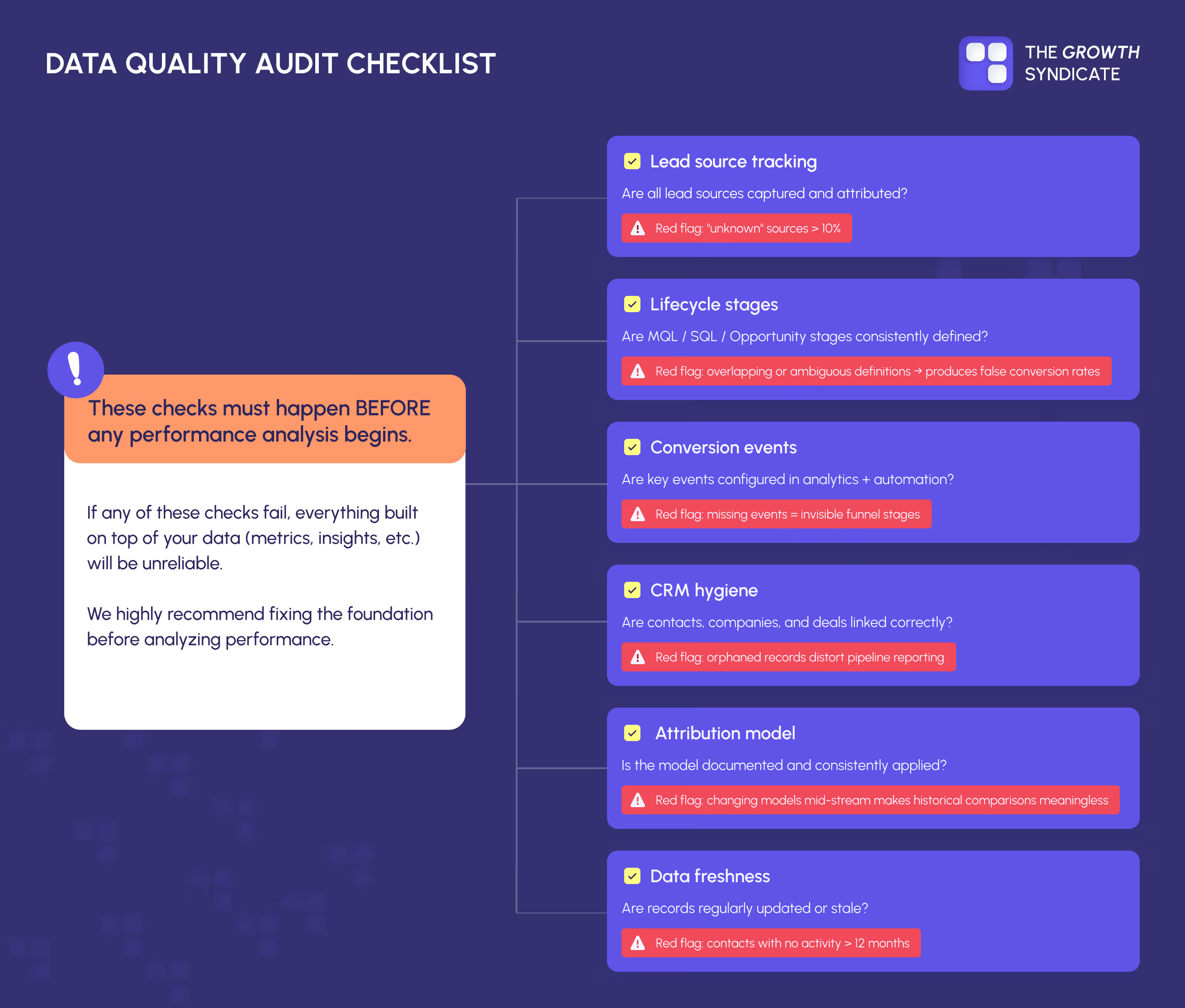
This is where most audits go wrong. They jump straight into analyzing marketing metrics without first verifying whether the data is reliable.
Before you can assess funnel conversion rates, lead source attribution, or campaign ROI, you need to audit the data itself. In our marketing audit process, data quality is the first thing we examine, before CRM analysis, before website performance, before channel review. Questions to ask include: Is your CRM actually capturing all lead sources accurately? Are lifecycle stages and lead statuses consistently defined? Are conversion events properly configured in Google Analytics and your marketing automation platform? Is there data that's clearly faulty or missing?
If the foundation is unreliable, everything built on top of it will be misleading. We've seen companies make major strategic marketing decisions based on attribution data that was fundamentally broken, investing in channels that appeared to perform well simply because tracking was set up incorrectly.
Map your funnel
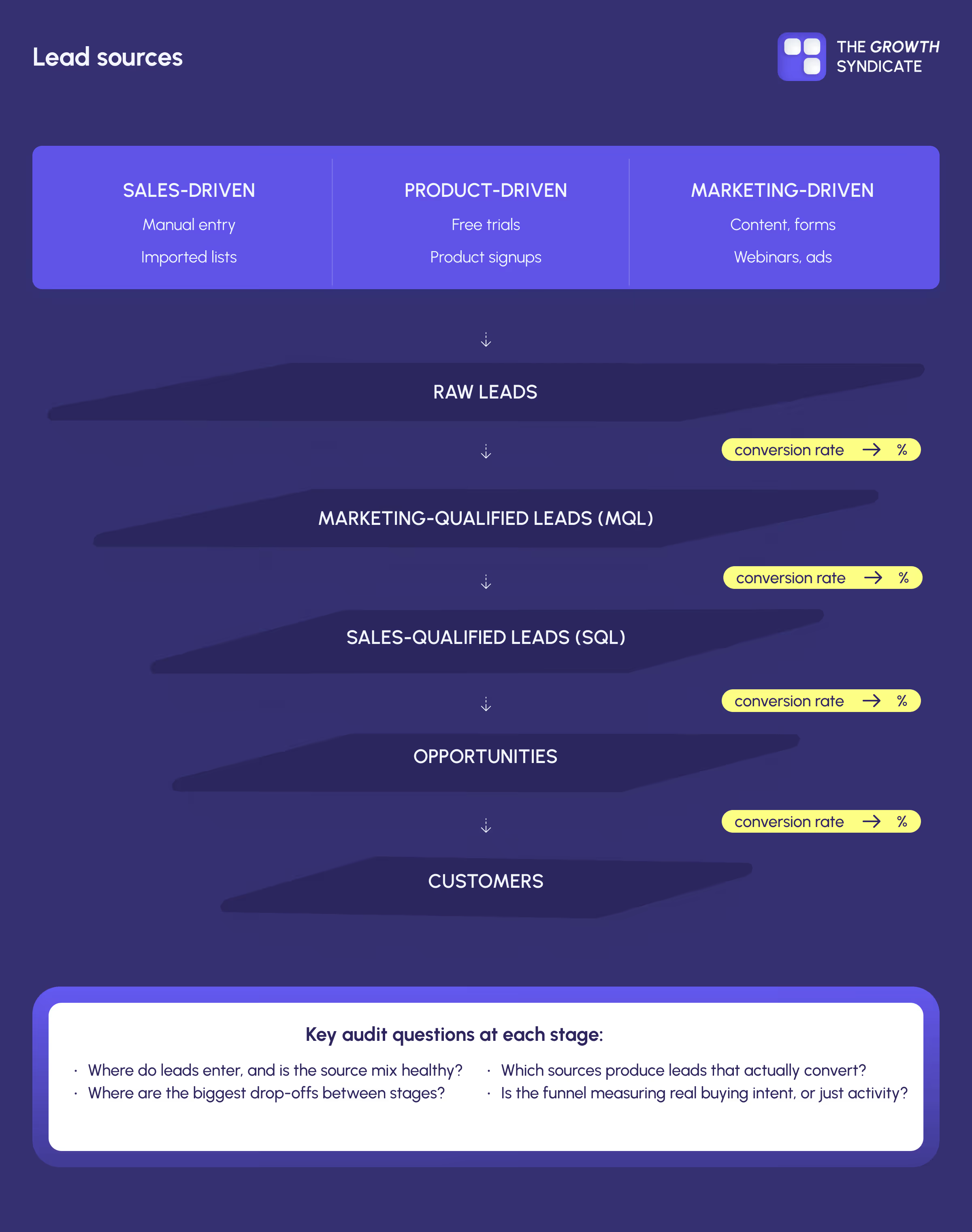
With clean data (or at least awareness of where data gaps exist), the next step is mapping your complete marketing and sales funnel. This means documenting how leads enter your system, how they progress from raw leads to marketing-qualified leads to sales-qualified leads to opportunities to customers, and what the conversion rates look like between each stage.
The funnel map should also capture how you acquire leads across different sources: sales-driven (manual entry, imported lists), product-driven (free trial signups, product signups), and marketing-driven (contact forms, demo requests, content downloads, newsletter signups, webinar registrations). Understanding this mix is fundamental to knowing where to invest.
A word of nuance here: as Ferdinand Goetzen, co-founder of The Growth Syndicate, often emphasizes, funnels are useful internal tools, but they can become dangerously misleading when treated as literal representations of the customer journey.

B2B buying is messy, non-linear, and involves multiple stakeholders. The funnel gives you a measurement scaffold; it shouldn't constrain how you think about the buyer experience.
Evaluate website performance
Your website is the hub of your digital marketing ecosystem. A successful marketing audit evaluates it from both quantitative and qualitative perspectives.
Quantitative review: Track your website funnel metrics: visits, engaged users, conversion events. Identify where the drop-offs happen. A site with strong traffic but no downstream conversion events configured means you have a measurement gap, not necessarily a performance gap.
Technical performance: Evaluate page load speed, mobile-friendliness, crawlability, indexability, URL structure, on-page SEO elements, and broken links. These factors directly impact your organic search performance and user experience. If you haven't done a standalone SEO audit recently, this is the place to include one.
Qualitative review: This is the human side of website analysis. For your homepage: Is the value proposition clear? Is it obvious how you deliver value? Is there sufficient social proof? Is there a clear call-to-action? Are core benefits and features communicated effectively? Do your marketing materials (landing pages, case studies, product pages) actually support the customer journey, or do they create friction? Beyond the homepage, assess wayfinding (can visitors find what they need?) and landing page effectiveness.
Analyze your marketing channels
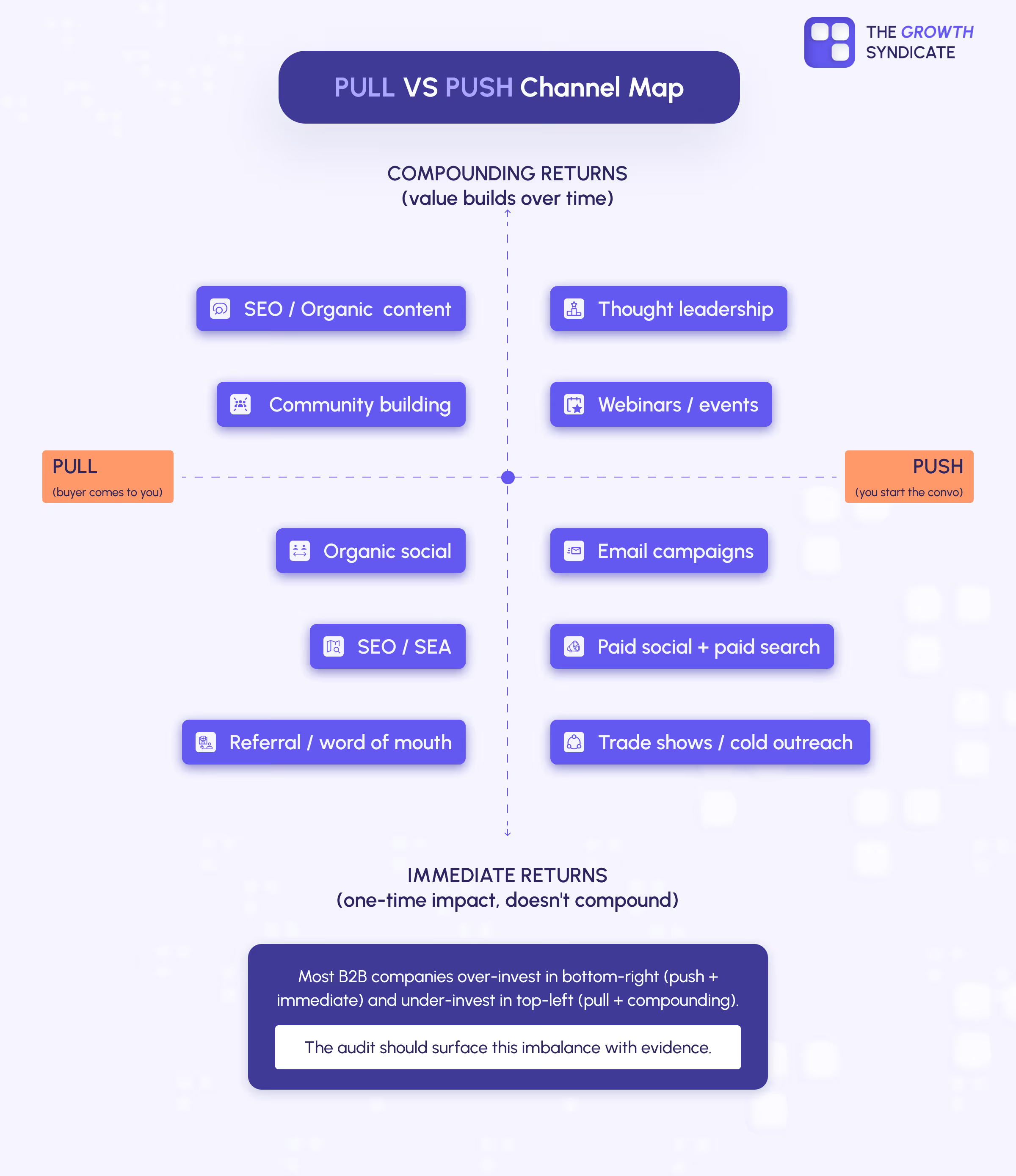
A channel-by-channel review reveals where your marketing performance is strong and where marketing investment is being wasted. We find it useful to frame this through the pull vs. push distinction:
Pull channels are customer-initiated, meaning the buyer comes to you. These include content marketing, SEO/SEA, organic social media engagement, and webinars. They focus on value and education and tend to build compounding returns over time.
Push channels are marketer-initiated, meaning you start the conversation. Paid ads, trade shows, email marketing outreach, and cold calling fall here. They're more direct and often more immediately measurable, but they don't compound the same way.
For each channel, assess both organic and paid performance. Your social media platforms should be evaluated on actual business impact (leads generated, pipeline influenced) rather than vanity metrics like follower counts. Your paid search and paid social should be measured against customer acquisition cost and return on ad spend. Assess whether your marketing campaigns are reaching the right audiences and whether marketing efforts across channels are coordinated or fragmented.
Don't neglect earned media and public relations. While harder to measure, they contribute significantly to brand positioning and the trust signals that influence B2B buying committees.
Conduct competitive and market analysis
An audit without external context is just navel-gazing. Your competitive analysis should examine how competitors in your organization's industry position themselves, which marketing channels they invest in, what messaging they use, and where the gaps in their approach create opportunities for you. A thorough competitive analysis reveals not just who you're up against, but where the whitespace exists.
Combine this with market research into your target audience, including their needs, preferences, motivations, and behaviors. Customer personas that were accurate two years ago may no longer reflect who's actually buying. Validate them against current data, customer feedback from sales conversations, and actual win/loss patterns. Check whether your market segmentation still holds, whether your positioning is differentiated, and whether your pricing strategy aligns with perceived value. This external market research often reveals that your marketing strategy is optimized for a competitive landscape that has shifted underneath you.
A SWOT analysis is a useful synthesis tool here, pulling together your internal strengths and weaknesses with external opportunities and threats. But resist the temptation to make a SWOT analysis generic. Every item in your SWOT should be specific enough to inform your marketing plan directly. Vague entries like "strong brand" or "competitive market" produce vague action items.
Assess demand generation and demand capture
This is where many audits add unique value, distinguishing between your ability to create demand (building awareness and consideration among out-of-market buyers) and your ability to capture demand (converting in-market buyers who are actively looking for a solution).
Most B2B companies over-index on demand capture (bottom-funnel tactics) and under-invest in demand generation (building the brand recognition and thought leadership that ensures they're in the consideration set when buyers do enter the market). The audit should surface this imbalance with evidence.
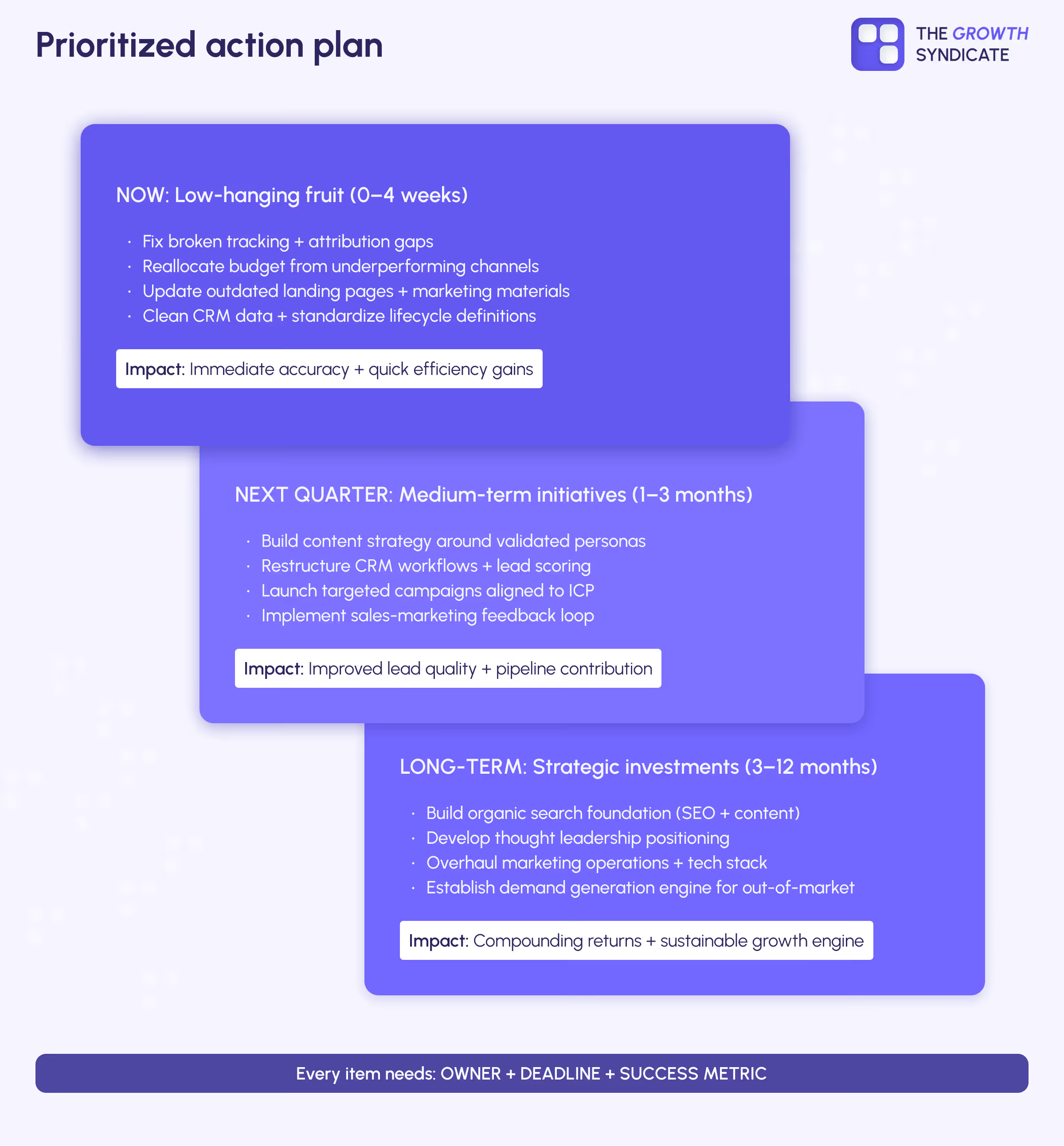
Translate findings into prioritized action
The marketing audit report is not the deliverable. The action plan is.
A common failure mode is an audit that produces excellent findings but no clear path forward. The most useful audit output is a marketing plan organized by time horizon: what you do now, what you do next quarter, and what you build over the next twelve months. Your marketing audit report should open with an executive summary that distills key audit findings into a clear narrative. This is what leadership will actually read. The key insights need to stand on their own without requiring someone to wade through fifty pages of data.
We organize opportunities into three categories.
Low-hanging fruit are quick wins you can implement immediately: fixing broken tracking, reallocating budget from underperforming channels, updating outdated marketing materials and landing pages.
Medium-term initiatives require one to three months: building content strategy around validated customer personas, restructuring CRM workflows, launching targeted marketing campaigns.
Long-term investments are strategic shifts requiring three to twelve months: building an organic search foundation, developing thought leadership positioning, overhauling marketing operations.
Every action item needs a clear owner, a defined deadline, and measurable success metrics. An audit without ownership is a document. An audit with ownership is a marketing plan that drives growth.
What a marketing audit looks like in practice
Theory is useful. But the real value of a marketing audit becomes clear when you see what it uncovers, and what changes as a result. Here's how the audit process has played out with companies we've worked with.
Frends: From scattered channels to predictable pipeline
Frends is a Finnish enterprise iPaaS platform helping organizations integrate systems across regulated industries. The company had a capable marketing team and genuine product strength, but demand generation wasn't keeping pace with growth ambitions. Marketing activity was high across multiple markets, but unfocused.
Marketing was heavily oriented toward brand metrics (engagement, awareness, top-of-funnel visibility) but wasn't structured to contribute to revenue. The team stayed in the part of the funnel they understood, and found it hard to bridge the gap to pipeline. Campaigns ran without clear prioritization. Sales and marketing were both working hard, just not from the same playbook.
The strategic foundation work, which included our audit process, revealed several issues the internal team hadn't connected. At the strategic level, the company was spreading effort across too many markets and verticals simultaneously, diluting impact everywhere.
The underlying foundation was unstable. Various marketing elements had been added over time without coherence, like adding bones to a skeleton held together with duct tape. Everything looked busy, but nothing compounded.
At the functional level, sales and marketing were operating in silos, with no shared visibility into which accounts were engaging or where pipeline was forming.
Marketing ran in isolation, focused on its own metrics and its own priorities. Part of the reason was systemic: leadership had been burned enough times that they'd stopped including marketing in revenue conversations, which only reinforced the cycle of reactivity.
At the technical level, channels that looked busy weren't actually driving qualified demand.
The audit findings led to a focused approach: narrow to two industries (municipalities and energy) in one market (Sweden), build an ABM motion around thought leadership rather than direct-response ads, and create a shared engagement tracking system that gave sales real-time visibility into which accounts were interacting with marketing content.

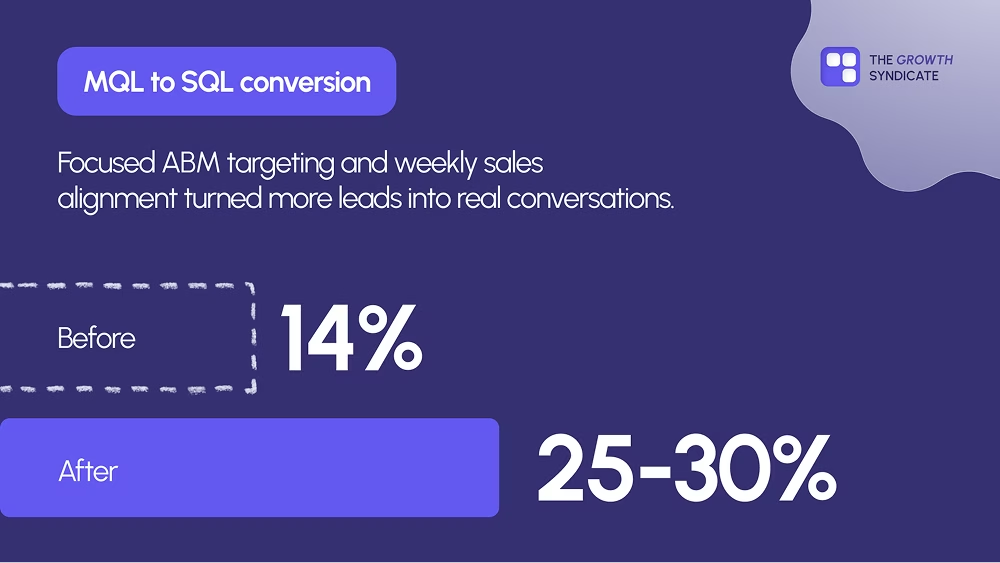
The results: 24 direct opportunities attributable to the new ABM and paid programs. 300+ engaged high-value accounts across target industries. MQL-to-SQL conversion improved from 14% to 25–30%. Website click-through rates tripled from 0.18% to 0.54%. The model built in Sweden is now being replicated across the UK and DACH regions.
As Frends CEO Jukka Rautio put it: "ABM turned intent into pipeline. Sales now enters conversations with real context instead of cold intros. It's the clearest link we've seen between marketing and reliable pipeline."
Read the full Frends case study →
Marketing audit best practices
Make it recurring, not one-off
A marketing audit should be objective, systematic, and recurring. Most marketing experts recommend conducting marketing audits on an annual basis, though companies with complex marketing strategies or rapidly shifting markets may benefit from semi-annual reviews. The best time to perform marketing audits is before major planning cycles, big budget decisions, or when entering a new market. Your marketing strategy should evolve with each audit cycle, not stay frozen while the market moves.
Schedule the next audit before concluding the current one. Conducting a marketing audit is an ongoing process, not a single event.
Involve the right stakeholders
An audit works best when marketing, sales, and leadership teams are aligned around the process. This doesn't mean audit-by-committee. It means ensuring the people who will act on the findings have input into what's being examined and trust the data being used.
Focus on revenue, not activity
This cannot be overstated. The purpose of a marketing audit is to connect activities to business outcomes. Track your marketing KPIs, but make sure your key performance indicators include pipeline contribution, conversion rates at each funnel stage, customer acquisition cost, and customer lifetime value. The key performance indicators that matter are the ones connected to revenue. Social media metrics, website traffic, and email open rates matter only insofar as they contribute to marketing goals tied to growth.
As Joliene van Grieken warns: marketers who use the dark funnel as an excuse to measure nothing are hiding.
"You can't track every touchpoint, but you can still measure enough signals to indicate intent — engagement over time, multi-stakeholder website visits, content interactions. Don't hide in the victim bubble. The funnel isn't perfect, but you can still figure it out."
The most valuable insights from an effective marketing audit come from connecting these signals to actual pipeline movement.
Ensure senior people do the audit
This is a point most guides won't make, but it matters enormously. A strategic marketing audit should start from a high-level understanding of business goals, ICP, and competitive context.
"If you have junior people doing the audit, you end up with just a channel overview — but that's not linked to anything. It's not linked to what matters at the top. The audit also helps you understand how your marketing team is set up: this is not performing, this is not relevant, this we have to hire, this we have to remove."
If the people running your audit don't have the strategic experience to connect channel performance to business outcomes, you'll end up with a technically accurate but strategically useless document. This is also why internal marketing audits often underperform. It's not that the team lacks skill, but that it's difficult to evaluate your own work with the necessary distance and seniority. The difference between "your Google Ads CPC is too high" and "you're investing in paid search for keywords that don't align with your ICP's buying journey" is the difference between a channel review and a strategic marketing audit.
Don't audit in a vacuum
A marketing audit is one part of a bigger puzzle. Integrate your results into your next planning cycle. Use the audit as the starting point for your annual marketing plan, not a separate exercise that sits in a different folder. And recognize that conducting a marketing audit in isolation, without the context from ICP definition, positioning work, and competitive analysis, limits its value. The findings should directly inform your marketing plan, marketing budget allocation, and team priorities.
Frequently asked questions
What is a marketing audit? (Marketing audit definition)
A marketing audit is a systematic evaluation of all elements of a marketing function, including your strategy, channels, campaigns, messaging, team structure, and metrics, measured against your business goals. The marketing audit definition we use goes further: it's an objective review that operates at strategic, functional, and technical levels, identifying what's working, what's not, and where the opportunities are.
How often should you perform marketing audits?
Most companies benefit from conducting a comprehensive marketing audit annually, with functional audits (focused on specific areas like SEO, social media, or email) every six months. The frequency depends on your marketing budget, the complexity of your strategy, and how quickly your market is changing. Companies experiencing rapid growth or market shifts should consider more frequent audit cycles.
What does a comprehensive marketing audit include?
A comprehensive audit typically reviews market segmentation, brand positioning, target audience definition, customer personas, pricing strategy, channels of distribution, marketing communications, marketing operations, customer service touchpoints, competitor analysis, and marketing metrics. It should also assess data quality, CRM health, website performance, team structure, budget allocation, marketing materials consistency, and channel effectiveness. The most thorough audits also incorporate customer feedback, market research, and a SWOT analysis of the competitive landscape.
Can you do your own marketing audit?
You can conduct your own marketing audit, particularly if you have strong analytical skills and access to the relevant data. A marketing audit checklist is a good starting point that ensures you cover all elements systematically. However, an external perspective often catches blind spots that internal marketing audits miss, especially around assumptions about your target audience, competitive positioning, and channel effectiveness. There's also a structural challenge: it's difficult to be fully objective when you're auditing your own work. If you do run your own audit, involve stakeholders from sales and leadership to counterbalance internal bias.
What should a marketing audit checklist cover?
An effective audit checklist should cover: data quality and CRM health, funnel mapping and conversion rates, website performance (quantitative, technical, and qualitative), channel-by-channel analysis (both pull and push channels), competitive analysis and market research, demand generation vs. demand capture balance, marketing goals alignment with business objectives, team structure and capability assessment, marketing materials and brand consistency review, customer journey mapping, and a prioritized action plan. A sample marketing audit checklist organized around our three-level framework (strategic, functional, technical) ensures nothing falls through the cracks.
What's the difference between a marketing audit and a marketing strategy?
The audit is the diagnostic: it examines your current state and identifies gaps, strengths, and opportunities. A marketing strategy is the marketing plan that defines where you're going and how you'll get there. The audit should inform the strategy, not the other way around. At The Growth Syndicate, the marketing strategy audit is one component of a broader strategic foundation that also includes ICP definition, positioning, and brand messaging. Together, they give you both the diagnosis and the prescription.
What are the most common marketing audit mistakes?
The biggest mistakes include: auditing without first verifying data quality, focusing on marketing activities rather than business outcomes, only auditing at the technical level without examining strategic and functional issues, having junior staff run an audit that requires senior strategic judgment, failing to connect internal findings with external market research, not involving key stakeholders, and producing findings without assigning clear ownership and deadlines. Another common mistake is treating the marketing audit process as a one-time event rather than a recurring discipline.
How long does a marketing audit take?
A comprehensive audit for a mid-sized B2B company typically takes 3–6 weeks, depending on the complexity of your marketing operation and the availability of relevant data. At The Growth Syndicate, our full Marketing & GTM Audit is part of a 6-week strategic foundations engagement that also covers ICP, positioning, and marketing plan development. More focused digital marketing audit reviews can be completed in 1–2 weeks.